
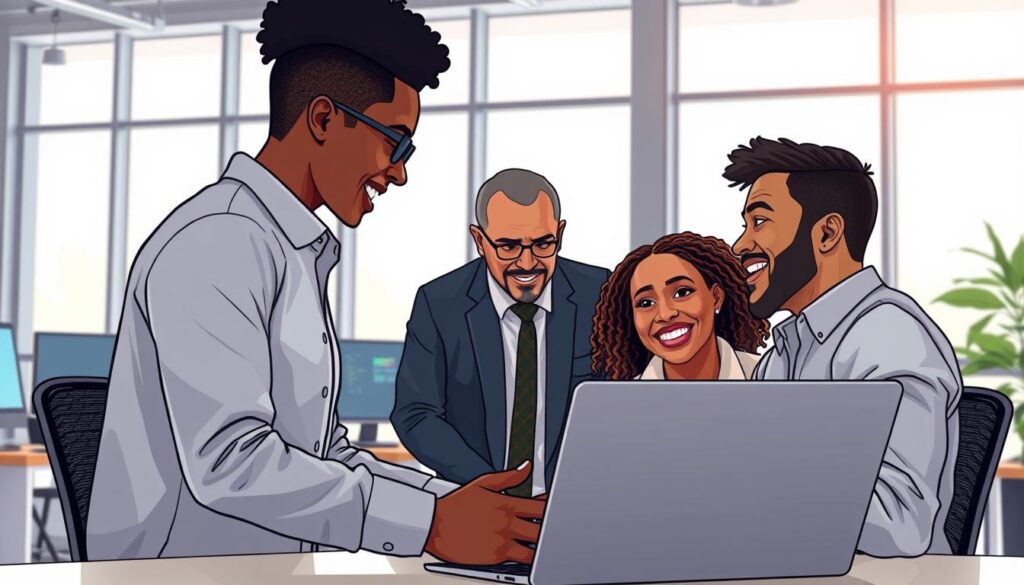
Modern industry faces a silent crisis regarding professional development. Automation takes over routine tasks, leaving your organization without a traditional way to mentor new staff. This shift creates a profound void in how talent grows within a corporate environment.
You must now focus on intentional skill acquisition over just watching. Legacy methods for career growth won’t work in an automated economy. Who Trains New Workers? This question is key to your business’s future. By tackling The AI Apprenticeship Gap, you keep your team ready for complex challenges. A deliberate strategy is your best way forward.
The Current State of AI Workforce Development
Intelligent systems are changing what employers look for in new hires in the U.S. As companies use these tools more, AI workforce development is now a key focus for HR teams. You need to keep up with these changes to stay ahead in your field.
The Rapid Evolution of Artificial Intelligence Roles
The rise of generative AI has changed entry-level jobs a lot. Tasks that used to take a lot of manual work are now done by machines. This means new employees need to think more strategically and manage the outputs of these machines.
Job descriptions are changing fast because of this. Employers want people who can mix human creativity with machine efficiency. Being able to adapt to these new expectations is key to your career success.
Why Traditional Education Struggles to Keep Pace
Traditional schools often can’t update their courses fast enough to keep up with tech changes. They give a solid theoretical base but often lack the technical proficiency needed for the job. This gap leaves many graduates feeling unready for today’s workplaces.
The tech world changes too quickly for standard degree programs to keep up. By the time a textbook is published, the tech it talks about might already be outdated. You should look into extra training to get the practical skills classrooms often can’t provide.
The Growing Demand for Practical AI Skills in the United States
There’s a big increase in AI skills demand as companies try to outdo each other. Employers want people who can apply AI in real-world situations. This has led to more alternative training options.
Apprenticeships have grown 88% from 2015, with over 670,000 people now in these programs. These programs offer a practical pathway to learn the skills you need without traditional school. Investing in these specialized training programs could shape your career path in the future.
The AI Apprenticeship Gap: Who Trains New Workers?
Have you ever thought about how new workers will learn when many tasks are automated? The AI Apprenticeship Gap is growing because generative AI now does tasks that used to train entry-level jobs. Without these tasks, new employees find it hard to learn the skills needed for more advanced roles.

The Role of Tech Giants in Internal Upskilling
Big tech companies are creating their own ways to train new employees. They know that on-the-job training is key to staying ahead in a fast-changing world. By mixing learning into daily work, they make sure new hires learn from real-world experiences.
Government Initiatives and Public-Private Partnerships
Government and private groups are working together to meet the growing need for AI skills. Many places offer workforce development grants to help companies create training programs. These partnerships aim to make high-tech education more accessible and keep the job market strong.
The Emergence of Specialized AI Bootcamps and Training Providers
Independent training providers are stepping in where schools used to. These bootcamps focus on quick learning, helping workers move into tech roles fast. They often work with industry leaders to make sure their training meets current needs.
Evaluating the Effectiveness of Short-Term Certification Programs
Short-term certifications can be a fast way in, but their lasting value is debated. Success depends on the quality of the curriculum and if it matches real-world needs. Look for programs that focus on practical projects, not just theory.
The Importance of Mentorship in AI Apprenticeships
Just technical training isn’t enough; experienced mentors are key. Mentorship helps bridge the gap between knowledge and solving real problems. Pairing new talent with experts leads to a culture of growth and innovation.
Barriers to Scaling AI Training Programs
Across the United States, companies face big challenges in adding AI education to their work. State lawmakers have passed 28 new bills this year to improve career and technical education. They aim to address the lack of skilled workers. Yet, many companies find it hard to turn these policies into real, effective training.
High Costs of Infrastructure and Compute Resources
Setting up an AI-ready environment is very expensive. You need top-notch computing power and cloud infrastructure to run today’s AI models. Without big investments, even the best plans can’t offer the practical experience needed for learning.
Many companies are exploring workforce development grants to help with these costs. These grants can be a big help, but they’re hard to get, and often only available to larger organizations. Relying on grants can make it hard to keep training programs going long-term.
The Scarcity of Qualified AI Educators and Mentors
Even with the right equipment, you need skilled teachers. There’s a big shortage of instructors who know AI well and can teach it. This makes it tough to grow training programs beyond a small group.
Finding mentors is also a big challenge. Finding experts to guide employees is hard for HR teams. This forces many companies to use expensive consultants instead of building their own knowledge base.
Disparities in Access to AI Training Across Different Industries
Training access is not the same for all industries. Tech-heavy sectors move fast, but others, like many skilled trades, find it hard to keep up. They struggle to figure out what industry-recognized credentials mean in today’s fast-changing world.
Workers in AI-resistant careers might not feel the need to learn new skills. This creates a big gap in digital skills. To bridge this gap, each industry needs its own plan. Without a unified approach, AI’s benefits will only reach a few areas of the workforce.
Strategies for Bridging the Skills Divide
To bridge the skills gap, leaders must act intentionally and allocate resources wisely. Companies that focus on AI workforce development can better handle today’s automation challenges. By planning carefully, you can turn skill shortages into chances for growth.
How You Can Leverage Corporate Training Partnerships
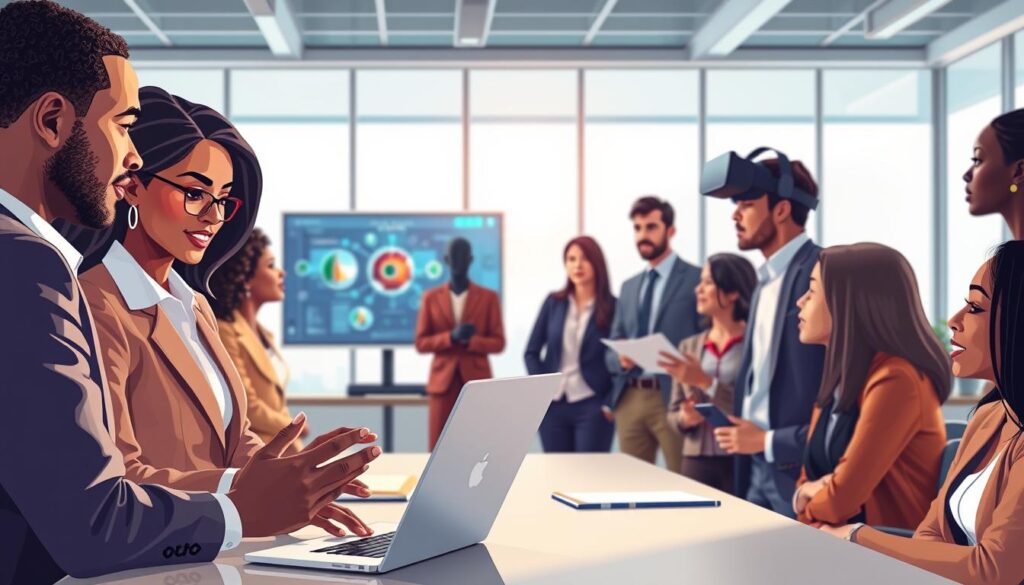
Working with outside groups brings in specialized knowledge and industry-recognized credentials. These partnerships offer a clear plan for on-the-job training. This ensures your team gets hands-on experience along with theoretical knowledge.
Look at Louisiana’s new law, which offers tax breaks for hiring apprentices and interns. Using these incentives can make hiring new talent cheaper. These programs help create a flow of skilled workers that fit your needs.
Building Internal Pathways for Employee Reskilling
Reskilling goes beyond online courses; it needs a mentorship culture. Use cognitive apprenticeship to let senior leaders share their decision-making. This helps junior team members learn to handle complex problems.
Clear career paths keep employees loyal and committed. When they see their skills growing with the company, they’re more eager to learn. Structured mentorship helps pass on knowledge while teaching new skills.
Utilizing Open-Source Resources for Continuous Learning
Staying ahead means always improving. Use open-source AI learning platforms to give your team the latest tools without high costs. These platforms update quickly, keeping your team innovative.
Encourage your team to work on or study these projects. It promotes teamwork and makes high-level training accessible. By using these tools daily, you build a team ready for any change.
Conclusion
Preparing for an automated future means changing how we see professional growth. The work world is always changing as machine learning tools become common in offices.
Many people find safety in skilled trades. These jobs are hard for AI to replace because they need hands-on skills and problem-solving that machines can’t do.
Your company should focus on training employees to keep up with new tech. By investing in your team, you make sure human skills stay important. Start by looking into open-source AI learning platforms for training at all levels.
Everyone in the work world needs to help with training. By growing continuously, you protect your job and help the economy grow. Start learning new systems now to stay ahead in the changing job market.