

Information and education only. This article does not replace personalized medical advice. Consult a qualified healthcare professional about your situation, and never delay seeking care because of something you read here. Read our full disclaimer.
AI researchers are studying ways to analyze muscles in medical images. That is promising work, but it does not mean an ordinary watch, chatbot, or fitness app can reliably detect muscle loss before you notice it. The answer depends on the particular tool, the data it uses, and how it has been evaluated.
Muscle health involves more than one number
Sarcopenia involves loss of muscle strength and muscle tissue associated with aging. NIH’s explanation of sarcopenia describes how it can affect activities such as walking, rising from a chair, and carrying groceries. Assessment methods and definitions vary; a single consumer score cannot establish the condition.
If you notice persistent weakness or increasing difficulty with daily activities, discuss it with a healthcare professional. These changes can have different causes. Let the clinician decide what examination or testing is appropriate.
What an AI research result actually shows
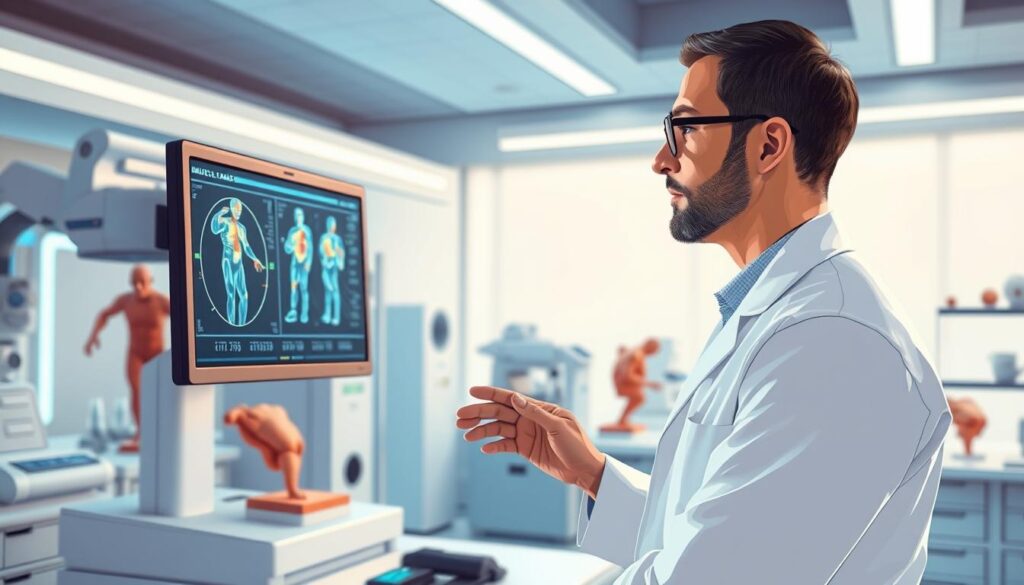
A 2025 research paper by Piecuch and colleagues explored a machine-learning method for identifying differences in muscle shape using 103 segmented imaging volumes. It is an example of research on a defined dataset, not evidence that a consumer wearable can diagnose sarcopenia.
To evaluate a broader claim, ask whether the method was tested on people outside the development dataset, what it was compared with, and what errors occurred. Measuring a feature in an image, identifying a condition, and predicting future disability are distinct goals. Evidence for one does not automatically establish the others.
Keep activity data in context
A falling step count tells you that the device recorded fewer steps. It does not explain why. Changes in routine, device use, illness, or mobility may affect the record. Likewise, a normal activity total does not establish normal muscle strength.
Do not ask an app to turn those numbers into a diagnosis. If you bring a report to an appointment, include the dates and any relevant changes in how you wore or used the device. Missing data should stay marked as missing.
Use AI to prepare better questions
You can ask for help organizing your own observations without uploading scans or requesting a clinical interpretation. A simple prompt is:
Turn these notes about everyday tasks into a short appointment agenda. Preserve dates and descriptions. Separate what I observed from questions to ask. Do not diagnose muscle loss or recommend tests, supplements, or an exercise prescription.
Check the summary before sharing it. Useful questions might include: “What could explain this change?” “Would an assessment of strength or walking help?” and “Who can help me choose appropriate activity and nutrition goals?”
Choose a practical next step
NIH describes strength activity and adequate nutrition as relevant to maintaining muscle health. The appropriate approach depends on your situation. Ask your care team about new weakness and how to build a suitable plan, particularly if you have medical restrictions.
For help assessing a proposed routine, see our guide to checking AI exercise plans after 60. Start with a question that matters in your daily life, and let technology help you describe it clearly.
AI disclosure: This article was drafted and revised using AI.