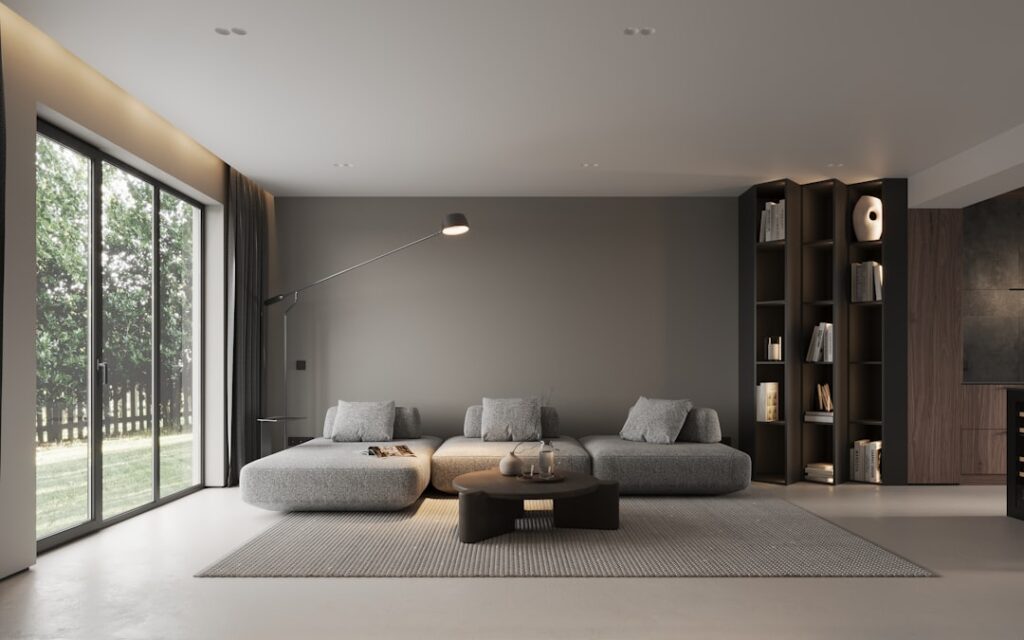
An AI room image can help you discover that you prefer warm wood, fewer objects, or a reading corner near the window. It cannot establish that the sofa will fit through your doorway or that removing a wall is safe.
Use AI to explore choices and explain your preferences. Keep measurements, product checks, and any building work tied to the real room and the people qualified to assess it.
Start with the room’s actual problem
Write a short brief before generating pictures. What is not working: storage, lighting, seating, clutter, or a layout that makes moving around awkward? Say what must stay, what you can change, and how much you want to spend in total.
A fictional example: “We want two comfortable reading places in our existing living room. Keep the sofa, bookcase, window, and doors. We can move furniture and add a lamp, but we are not changing wiring or walls.” This brief gives the AI useful limits without pretending it has inspected the home.
Ask everyone who uses the space about their needs. Do not assume that a particular age requires a particular style, chair, or accessibility feature. Preferences and practical requirements deserve to be stated directly.
Separate a style image from a measured plan
A generated room picture is a visual proposal. Look closely for changed windows, missing doors, impossible furniture shapes, blocked routes, and objects that quietly shrink between versions. Attractive lighting can also make a material look different from its real sample.
A floor-planning tool serves a different purpose. For example, Houzz Pro’s room-scanning documentation describes capturing room features and editing wall measurements. The details and supported devices matter; a generated image alone is not an equivalent measurement process.
Record important dimensions yourself or have the relevant professional measure them. Check the room, the proposed furniture, the delivery route, and the space needed to use doors, drawers, and seating. Do not order expensive items on the strength of a picture’s apparent scale.
Request a few constrained alternatives
Try this prompt with a written description or a photo you are comfortable sharing:
Suggest three modest style directions for this room. Keep the existing doors, windows, sofa, and bookcase. Explain which colors, textiles, and lighting choices distinguish each option. Label any dimensions or products you cannot verify. Do not propose structural or electrical changes.
If using an image tool, add that the output is a concept image. Even a carefully written instruction may not preserve every feature, so compare the result with the original before saving it.
For privacy, remove visible mail, family photographs, address details, and security information from anything you upload. A simple room description may be enough if you do not want to share a photograph of your home.
Translate the favorite idea into real choices
Make a short list of what you actually intend to change. “Warmer reading light” or “a washable blue cushion cover” is easier to research than an entire imaginary room. Check the manufacturer information for dimensions, materials, care, and relevant compatibility.
View paint or fabric samples in the room when possible. An image on a screen is not a reliable promise of the color you will see in daylight or under your existing lights.
Include delivery, installation where needed, taxes, and disposal in the budget. Keep a separate “optional later” list so a small refresh does not turn into a room full of unplanned purchases. An AI-generated price list needs checking against real current listings.
Use a design brief to get better help
If you hire a designer or contractor, share the concept as a description of what you like, along with the original room information and your budget. Ask which parts are feasible and what would need assessment, permits, or specialist work. Do not present AI output as a construction drawing or an approved plan.
The same honesty applies if you are considering offering design services. Producing an appealing image is not the same as being qualified to specify building work. State the scope of what you provide and get the necessary expertise rather than promising results you cannot verify.
For connected lighting or other small automations, see starting with one useful smart home routine. For project preparation, see AI and DIY planning.
A successful refresh is one that works in the real room. AI can make the conversation easier, but measured facts and everyday use should decide what you buy and change.
Updated September 23, 2026. Prepared with AI assistance and checked against the sources linked above. Examples described as fictional are illustrations, not reports of product testing. See our disclaimer.
Featured image: Prydumano Design / Unsplash. Image for illustration, not a verified plan or a project completed by this site.


