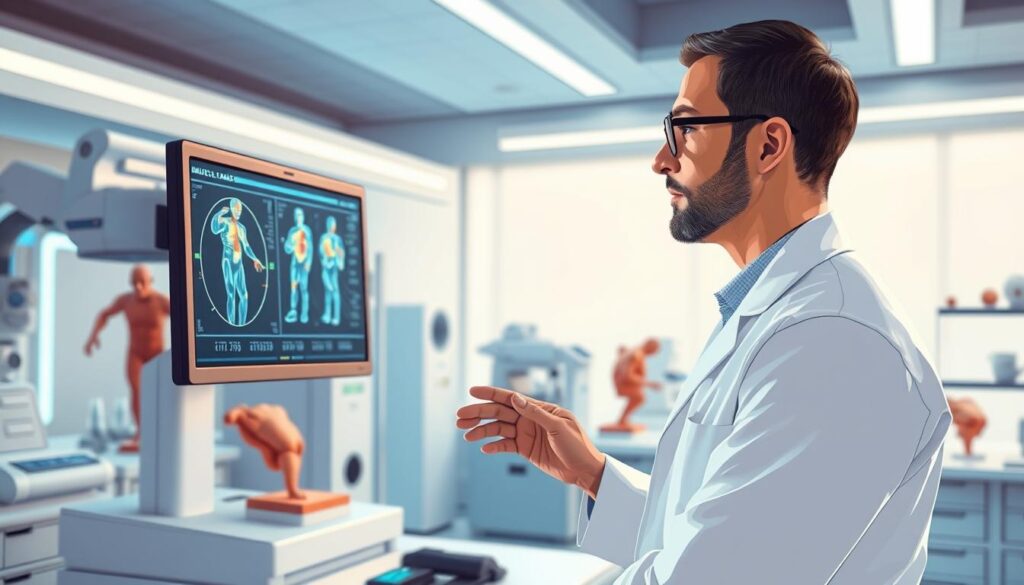
Modern medicine is changing quietly. Advanced software now looks at medical images to find hidden health risks early. This helps doctors spot problems like bone loss or tissue decline that are hard to see during regular check-ups.
Early intervention is key to staying healthy for a long time. By using smart algorithms to check medical records, doctors can see how you’re doing inside your body. You might ask, Can AI Detect Muscle Loss Before You Feel It? Yes, it can, giving you a chance to make changes or get treatment early. These new technologies are changing how we care for patients in the U.S., helping to prevent big health problems later on.
The Silent Progression of Muscle Loss
Many people think losing muscle mass is just part of getting older. These changes happen slowly, so you might not notice until it really affects your life. It’s important to catch it early to keep your independence as you age.
Understanding Sarcopenia and Its Impact
The term for muscle loss with age is sarcopenia. It does more than just make you weaker. It changes how your body is built.
As muscles shrink, bones can become weak and break easily. This makes even small falls or simple movements risky.
Why Early Detection Remains a Challenge
Finding this problem early is hard because symptoms seem like just being tired. You might think you’re just busy, not that your body is changing.
Doctors often miss these small changes in your body. By the time they find a problem, it’s harder to fix.
So, it’s key to watch your body closely. This way, you can tackle the causes of sarcopenia before it’s too late.
Can AI Detect Muscle Loss Before You Feel It?
Medical scans hold secrets about your future health. For years, doctors waited for symptoms to act. Now, preventative healthcare tools are changing how we stay healthy.
The Shift from Reactive to Proactive Healthcare
Opportunistic imaging is at the heart of this change. It lets doctors check for more than what they were looking for. They can find muscle loss or bone issues without extra tests.

This approach means you get help sooner. Instead of waiting for a big problem, your team can act early. Early detection helps you stay independent as you get older.
How Algorithms Identify Subtle Patterns
Modern medical AI finds patterns humans miss. It scans images fast, spotting small changes in muscles or bones. For example, it found a collapsed vertebra, showing early signs of osteoporosis.
These tools look at more than just your scan’s main purpose. They check your whole body. This detailed look is something old clinics couldn’t do.
How Machine Learning Analyzes Medical Imaging
Medical scans now reveal hidden health insights. Machine learning software scans complex data to find patterns humans might miss. This turns diagnostic tools into powerful early health detectors.
Automated Analysis of MRI and CT Scans
Modern algorithms analyze thousands of scans to spot early disease signs. They segment tissue types in images. This gives a comprehensive view of your health without extra tests.
Identifying Changes in Muscle Density
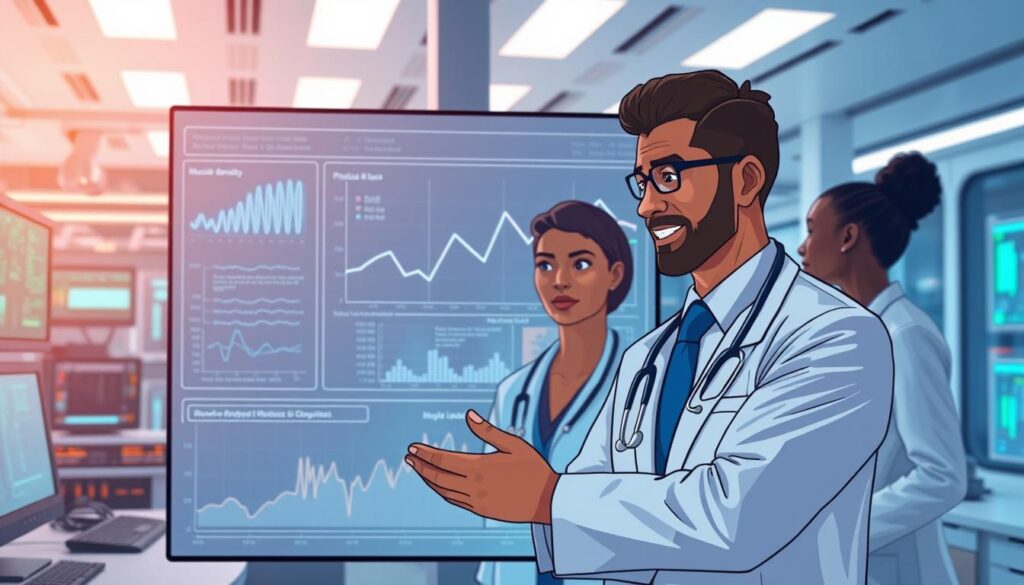
This tech tracks muscle density changes over time. It spots subtle muscle loss that radiologists might miss. AI alerts you to muscle atrophy before you feel weak.
Quantifying Fat Infiltration in Muscle Tissue
These models also measure fat buildup in muscles. This is key for metabolic health. They precisely calculate fat levels, showing muscle quality, not just size.
Improving Diagnostic Accuracy Over Human Review
This tech’s real strength is its consistent diagnostic accuracy. It’s not tired or biased, so every scan is reviewed the same. This opportunistic imaging makes every test valuable. It helps manage your health over the long term.
Wearable Technology and Predictive Analytics
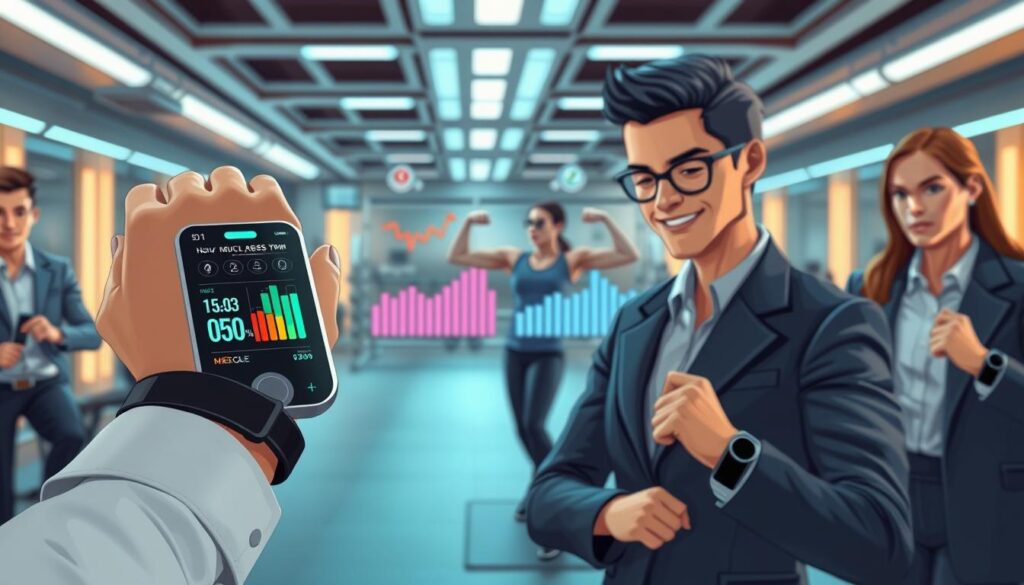
Modern wearable technology is changing how we monitor muscle health from home. These devices give us a constant stream of data. This lets us see our physical performance without a doctor’s visit.
This data helps spot issues early, before they become serious health problems.

Tracking Movement Patterns and Gait Speed
Your movement patterns, like your gait speed, are key indicators of your health. Changes in your stride can signal muscle atrophy early on. By tracking these over time, you get a better view of your mobility.
Integrating Sensor Data for Real-Time Monitoring
By combining sensor data, we get a full view of our musculoskeletal health. These systems give us real-time insights into our daily activity. This keeps us informed about our body’s needs all day.
The Role of Accelerometers in Daily Activity Tracking
Accelerometers are key in modern devices. They measure how active you are. They track how you sit, stand, and move, giving a detailed look at your habits. This continuous monitoring catches even small changes in your activity.
Interpreting Subtle Declines in Physical Performance
External factors can affect your muscle health. For example, some medications can make muscle injuries worse. This can lead to higher creatine kinase levels in your blood.
By using wearable technology to link these changes with your activity, you can manage your health better. Spotting these small declines early is vital. It helps prevent muscle atrophy and keeps you independent.
The Role of Digital Biomarkers in Early Detection
Did you know your daily habits can show your muscle health? Researchers use digital biomarkers to turn simple movements into detailed health insights. This method helps you take care of your body before problems start.
Defining Digital Biomarkers for Musculoskeletal Health
Digital biomarkers are data from digital devices that show how your body works. They track your health over time, not just in one visit. This gives you a continuous stream of data about your muscles.
These metrics link your daily life to your body’s inner workings. They spot small changes in movement that you might miss. This precision is key to keeping your strength up as you get older.
Connecting Lifestyle Data to Physiological Changes
Your lifestyle, like how much you walk, affects your muscle mass. By linking this data, you get a tool for early detection of health decline. Doctors can see how your habits affect your health over time.
Healthcare providers can then give you advice to stay active. This transformative tech acts as an early warning for your muscles. It helps you stay ahead of health issues and keep your independence for years.
Limitations and Ethical Considerations in AI Diagnostics
The idea of catching health issues early is exciting. But, it comes with big responsibilities for those making and using these tools. It’s key to know the challenges that come with new tech in healthcare. The main goal is to keep patients safe while moving forward with technology.
Data Privacy and Security Concerns
Keeping your health info safe is a big deal when using digital tools. These tools need strong encryption and strict rules for who can access them. Make sure any platform you use follows strict privacy rules to protect your data.
The Importance of Clinical Validation
Any tool that claims to spot muscle loss must be tested thoroughly. This clinical validation checks if the tool works well in real-life situations. Without this check, the tool might give wrong info about your health.
Avoiding Algorithmic Bias in Diverse Populations
One big problem is algorithmic bias. It’s critical that AI tools are trained on data from many different people. If the data doesn’t include a wide range of people, the tool might not work right for everyone.
The Necessity of Physician Oversight
Technology should help doctors, not replace them. Your doctor adds the human touch needed to understand complex reports. Having a doctor review the results ensures your safety and well-being in the long run.
Conclusion
Artificial intelligence is changing how we look at long-term health. It helps spot muscle loss early, moving from treating symptoms to preventing them.
Now, you can track your body’s health more accurately than ever. Companies like Siemens Healthineers and GE Healthcare are making imaging software better. This lets doctors make timely changes to your care plan.
Using digital biomarkers in your daily life gives you a clearer view of your health. This data helps doctors create care plans just for you. It helps you stay strong and independent as you get older.
The future needs a mix of new tech and careful testing. Keeping your health info private is key as these tools become more common. You’re important in this change by learning about these tools.
By embracing these new technologies, we’re moving towards a future of prevention. Your proactive health efforts lead to a better life. Talk to your doctor about how these tools can help you today.