AI is most useful in everyday pet care when it helps people stay organized. It can turn your own notes into a readable handover for a sitter, arrange questions for a veterinary appointment, or create a checklist for supplies. It should not decide what your pet needs medically.
If two family members share care, the practical problem may be as simple as knowing who has already fed the dog. A clear shared record can be more valuable than another device claiming to understand your pet.
Build one accurate care sheet
Begin with information you already know and instructions your veterinary team has supplied. Separate the document into daily routine, contacts, equipment instructions and items that require professional advice. Keep the original instructions available alongside any summary.
Useful entries include the location of food and supplies, the established feeding instructions, usual walking arrangements, your regular veterinary practice and the agreed emergency contact. If a pet has prescribed medication, preserve its instructions exactly. Do not ask AI to convert doses, replace medicines or infer what to do after a missed dose.
Turn these nonmedical pet-care notes into a one-page handover. Use headings for daily tasks, supplies and questions still needing an answer. Preserve quantities and times exactly as provided. Do not add feeding amounts, medication advice or assumptions. Mark missing information “owner to confirm.”
Check every line against the source notes before giving the sheet to anyone. Then ask the person who will use it to explain the routine back to you. That reveals unclear wording more reliably than asking the chatbot whether its own work is correct.
Use a record that shows completed care
A reminder says what was planned. A completion log says what a person actually did. Keep those separate so an automatic notification is not mistaken for a finished task.
For a shared household, a simple record could contain the date, task, person responsible and completion time. If an entry is uncertain, mark it uncertain and contact the responsible person. Do not let AI fill a blank with what “usually” happens. With medication in particular, guessing about an incomplete record can be harmful; use the veterinary team’s instructions for uncertainty.
Agree on one source of truth. Duplicating care information across a chatbot, paper sheet, messaging thread and several apps can create conflicting versions. Put a revision date on the handover and tell carers which copy is current.
Test connected equipment with someone present
An automatic feeder may dispense food on a timer without using AI at all. A camera may add motion recognition, and a more complex service may estimate behaviour from images. Identify the actual feature rather than assuming the “smart” label makes all three equivalent.
Before relying on a feeder, follow its setup instructions and test it while you are there. Confirm which pet can access it, whether the programmed amount matches the established feeding instructions, and how jams, an empty hopper or a loss of power are shown. A dispensing notification does not prove that the intended animal ate.
Write down a practical fallback for lost internet, a flat battery or failed access. Someone still needs to check water, equipment and the animal directly. A remote camera or app does not replace an appropriate human care arrangement when you are away.
Prepare better veterinary questions
AI can organize your observations into a timeline: what you noticed, when it started and what information is missing. Ask for a neutral summary, not a diagnosis. Read the output carefully so “seemed quieter” does not become “has depression” or an incomplete food record become “refused all meals.”
The AAHA/AVMA telehealth guidance recommends discussing with the veterinary team whether, how and when wearable or remote-monitoring data should be shared. Buying a connected product does not mean your practice receives or monitors its alerts.
For a worrying change in health or behaviour, contact the veterinary team directly rather than waiting for a chatbot interpretation. If your vet has requested monitoring, follow the specific plan and escalation instructions they provide.
Protect the people behind the pet data
A pet-care account may reveal your address, daily absences, camera views and contact details. Enter only what the task needs. Keep door codes and account passwords out of a general chatbot, use separate authorized access for carers when available, and review their access after the arrangement ends.
Check the vendor’s export, deletion and subscription terms before making its app your only record. Keep essential instructions available when a phone or service is unavailable.
For interpreting movement measurements, see our separate article on pet activity trackers. For everyday organization, the test is simpler: can the right person find accurate instructions and tell what has actually been done?
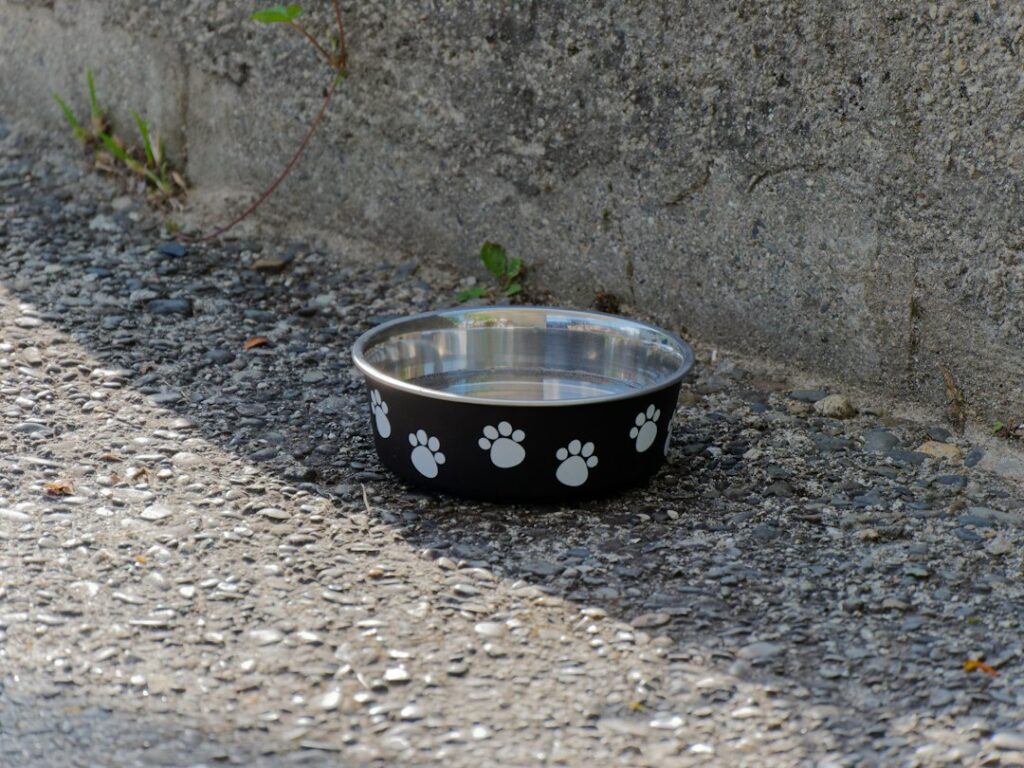
Photo: Koa’link on Unsplash. An ordinary pet bowl illustrates daily care; it is not an AI feeder or medical device.
Updated September 25, 2026. Prepared with AI assistance and checked against the sources linked in this article. This is educational information, not personal medical, veterinary or other professional advice, and not a hands-on product test. See our disclaimer.


