

You are on the cusp of a revolution in healthcare, driven by the integration of AI in preventive care. This new approach is changing how healthcare providers manage patient care. It makes care more proactive and tailored to each patient.
With healthcare automation, patients get timely screenings, labs, and follow-ups. This improves patient outcomes a lot. Automated preventive care systems use AI to keep track of these important steps. They make clinical workflows smoother and lower the chance of missed or delayed diagnoses.
This approach not only boosts care quality but also makes healthcare more efficient. It uses resources better, making healthcare more effective.
The Growing Challenge of Preventive Care Management
Preventive care is key but often overlooked. It’s vital for better patient care and lower healthcare costs. Yet, the complexity of today’s healthcare makes it hard to manage.
Why Patients Fall Through the Cracks
Patients might miss out on care due to tracking mistakes, lack of patient involvement, and slow workflows. Tracking errors can cause missed screenings. Lack of patient engagement means patients might not follow care plans. Slow workflows make care disjointed.
The Cost of Missed Preventive Care Opportunities
Missing preventive care can cost a lot in money and health. It’s key for healthcare groups to see the worth of good preventive care.
Financial Impact on Healthcare Organizations
Healthcare groups lose a lot when preventive care is missed. Delayed diagnoses mean more expensive treatments later. Groups might also face penalties for not meeting quality standards, hurting their finances.
Patient Health Consequences
Patients who miss preventive care face serious health issues. Delayed diagnoses can harm their health, quality of life, and even life expectancy. Good preventive care management is essential to protect patients and ensure they get the care they need.
What AI-Powered Preventive Care Tracking Means for Your Practice
AI-powered preventive care tracking does more than send reminders. It brings intelligence to your practice, learning from your patients. This tech aims to improve care by making it more personal and advanced.
Beyond Simple Calendar Reminders
Old-fashioned reminders have their limits. They don’t consider each patient’s unique needs or medical history. AI-powered preventive care tracking goes beyond simple reminders by looking at patient data to find what each needs.
This system sends reminders for screenings and check-ups. It also personalizes messages based on each patient’s health needs. This makes patients more likely to follow their care plans, leading to better health.
Intelligence That Learns Your Patient Population
The AI in this system learns from your patients. It looks at health records to spot patterns and trends. This intelligence helps sort patients by risk, so you can focus on those who need it most.
Understanding your patients’ needs, AI-powered tracking lets you tailor care. This data-driven care makes sure you use resources well, boosting your preventive care’s impact.
Proactive Instead of Reactive Care
AI-powered tracking is great for proactive care. It spots health issues early, so you can act fast. This prevents big problems and improves health outcomes.
This approach also cuts down on staff work. AI handles routine tasks and gives insights. This lets your team focus on quality patient care.
How AI Tracks Screenings, Labs, and Follow-Ups
AI helps healthcare groups track and manage preventive care better. It works with electronic health records (EHRs) to keep an eye on screenings, labs, and follow-ups.
Automated Data Integration from Electronic Health Records
AI solutions pull important data from EHRs automatically. This cuts down on manual entry and mistakes. It lets healthcare providers see all patient info in real-time.
Real-Time Monitoring of Due Dates
AI lets healthcare providers keep an eye on due dates for screenings, labs, and follow-ups. This makes sure patients get reminders on time and helps manage preventive care better.
Gap Identification Across Patient Panels
AI finds gaps in care for patients. It looks at EHR data to find who needs screenings or labs. This way, no patient is left behind.

Risk Stratification and Patient Prioritization
AI helps sort patients by risk level. This means high-risk patients get help first. It also makes resource use more efficient.
Predictive Analytics for No-Show Risk
AI predicts which patients might not show up. This lets providers act early. They can reach out to patients likely to miss appointments.
Clinical Priority Scoring
AI scores patients based on their health history and current status. This helps providers focus on those who need it most. It improves patient care overall.
Multi-Channel Patient Outreach Automation
AI makes it easy to reach out to patients through email, text, and phone. It automates routine messages. This boosts patient engagement and eases administrative work.
In short, AI is changing how healthcare tracks and manages care. It uses data, risk scoring, and outreach to better patient care, cut costs, and improve quality.
Key Benefits of Automating Preventive Care with AI
Using AI for preventive care offers many benefits. It improves patient care and makes operations smoother. AI helps in giving better care and cuts down on work for your staff.
Improved Patient Outcomes and Compliance Rates
AI makes patient care better and boosts compliance. It spots high-risk patients early and helps them get the right care on time.
Higher Screening Completion Rates
AI boosts screening rates. It sends reminders and notifications to patients, making them more likely to get screened.
Better Chronic Disease Control
AI helps manage chronic diseases better. It finds at-risk patients and makes sure they get regular check-ups. This way, your team can act fast and prevent problems.
Reduced Administrative Burden on Your Staff
AI makes staff work easier. It takes over routine tasks, letting staff focus on more important work.
Eliminating Manual Tracking Spreadsheets
AI ends the need for manual spreadsheets. It keeps patient data accurate and up-to-date, reducing errors.
Freeing Up Staff for Patient-Facing Activities
AI frees staff to help patients directly. They can give more education and support. This makes patients happier and leads to better health.
Enhanced Revenue Capture and Quality Metrics
AI helps your organization earn more and improve quality. It ensures patients get timely care, boosting revenue and reducing missed chances.
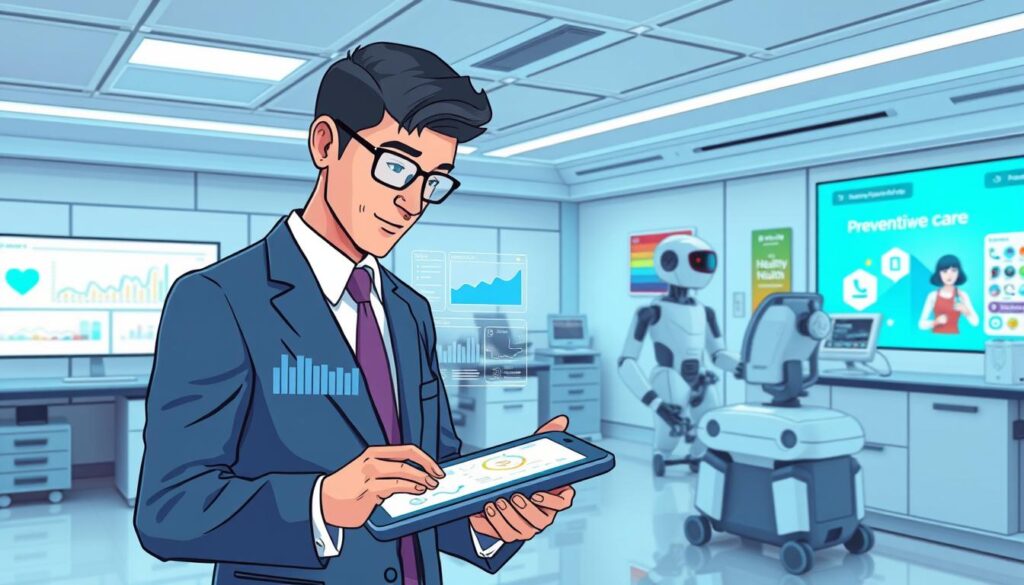
AI gives you insights into your patients. It helps you see where to improve. This makes your care better and boosts quality scores.
Implementing AI Preventive Care Solutions in Your Organization
Adopting AI preventive care solutions requires a detailed look at your current workflows. It’s key to understand the steps for a smooth integration of AI into your preventive care management.
Assessing Your Current Workflow Gaps
First, pinpoint the gaps in your workflow. Analyze your preventive care processes, like screenings and follow-ups, to find inefficiencies. Conducting a thorough workflow assessment will show where AI can make a big difference.
Selecting the Right AI Platform for Your Needs
Choosing the right AI platform is essential. Look at these factors when evaluating AI platforms:
Integration Capabilities with Existing Systems
Make sure the AI platform works well with your EHRs and other systems. Seamless integration is key to avoiding disruptions and getting the most from AI.
Customization and Scalability Features
Choose an AI platform that can be customized for your needs. Also, consider its ability to grow with your practice and changing healthcare needs.
Training Your Team for Successful Adoption
After picking an AI platform, training your staff is critical. Offer detailed training so your team knows how to use the AI solution well. They should also be ready to answer patient questions.
By following these steps and planning carefully, you can unlock AI’s full benefits. This will improve patient care and make your practice more efficient.
Real-World Applications and Use Cases
Using AI in preventive care is a smart move. It helps improve patient care and makes clinical work easier. AI’s role in healthcare is growing, changing how doctors and nurses work.
Chronic Disease Management Programs
AI shines in managing chronic diseases. It’s all about watching patients closely and acting fast. Chronic disease management programs with AI can really help patients.
Diabetes Care Coordination
AI is great for diabetes care. It looks at patient data, finds patterns, and offers custom plans. This helps control blood sugar and lowers diabetes risks.
Hypertension Monitoring
AI also helps with blood pressure tracking. It spots unusual readings and alerts doctors. This early action helps manage high blood pressure and lowers heart disease risks.
Annual Wellness Visit Coordination
AI makes annual wellness visits easier. It handles scheduling, reminders, and follow-ups. This means patients get the care they need on time, boosting their health.
Cancer Screening Protocol Automation
AI is changing cancer screening too. It automates the process, making sure patients get screened when they should. This leads to better detection and treatment of cancer.
Mammography Tracking
AI helps with mammograms. It finds women who need tests, sends reminders, and checks results. This helps catch breast cancer early.
Colorectal Cancer Screening
AI also helps with colon cancer screening. It finds patients who need tests, tracks their progress, and makes sure they get follow-ups. This approach boosts screening rates and cuts down on colon cancer cases.
Conclusion
AI is changing preventive care in big ways. It helps improve patient health, gets patients more involved, and makes healthcare work smoother. AI can track care needs automatically, helping doctors focus on prevention instead of just treating problems.
The good news about AI in preventive care is clear. It helps doctors use patient data better, find who needs care most, and reach out to patients in many ways. This leads to happier patients, less work for doctors, and more money for healthcare.
In short, AI is making healthcare better and more efficient. As more healthcare places use AI, they’ll see better patient results, more patient involvement, and lower costs. This is a big step towards better, more focused care for everyone.