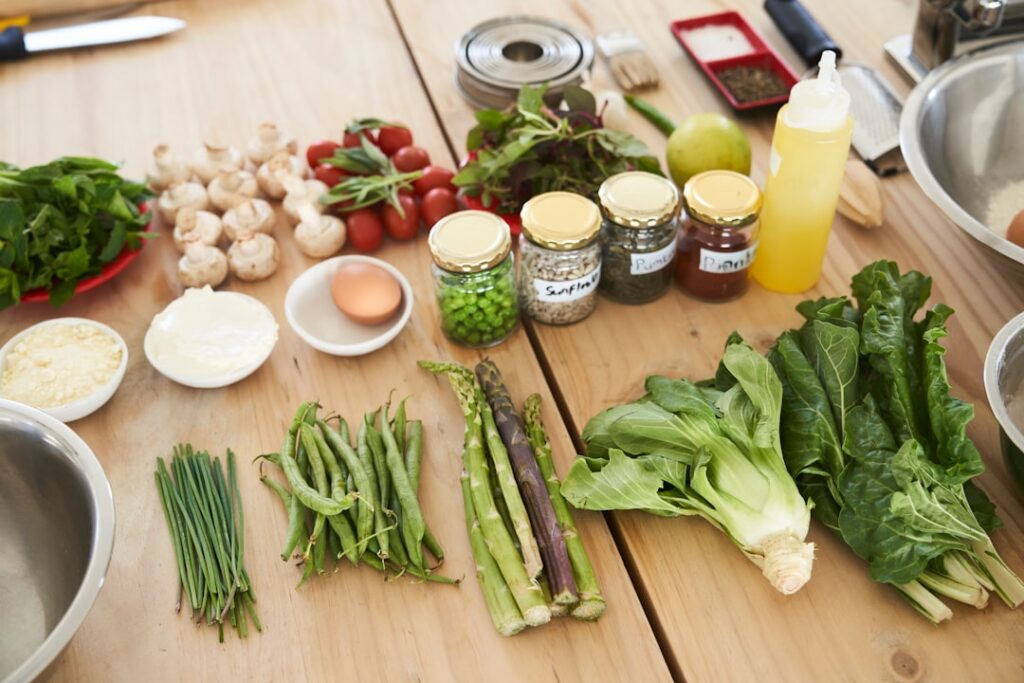
AI can help answer “What are we going to eat this week?” by organizing meals around your schedule and the food you already have. The useful result is a plan you can cook and check, with room for ordinary changes.
Start with dinners for a few days. You do not need to share medical records, buy a special app, or ask AI to design your entire diet.
GUIDED PRACTICE · BEGINNER
Fit familiar meals into a real schedule
You will finish with: A three-dinner plan with serving counts, leftovers and preparation times checked.
- Time
- 10 minutes
- Device
- Phone, tablet or computer
- AI tool or plan
- No account needed for the on-page example
Before you start: No earlier lesson or cooking is required for this exercise. Use the supplied fictional meals and serving counts.
Cost and access: the on-page example and checks are free. No upload or paid feature is required. Trying the prompt in another AI chat is optional; that service’s access limits and prices apply.
Practice updated October 9, 2026. Example answers are illustrative. Work at your own pace.
Write down the week you actually have
List how many people will eat each meal, which evenings are busy, and when you can shop. Add the equipment you use, foods you enjoy, and ingredients you would prefer to avoid.
Separate preferences from requirements. Disliking an ingredient and needing to avoid an allergen are different situations. AI can miss a restriction even when it appears in your prompt.
Check your cupboards, refrigerator and freezer yourself. Record useful quantities and which foods need attention soon. A photograph cannot reliably establish freshness, storage history or everything inside a package.
Build the plan from familiar meals
Give AI a short list of recipes you already use, including their servings and realistic preparation times. Ask it to fit those recipes into your schedule before suggesting unfamiliar dishes.
Plan three fictional dinners for two adults. Monday allows 40 minutes; Tuesday 20 minutes; Wednesday 30 minutes. Familiar meal A takes 35 minutes and makes exactly two servings. Meal B takes 15 minutes and makes two servings. Meal C takes 25 minutes and makes two servings.
Assign one meal to each evening. Preserve the preparation times and servings. Do not invent leftovers, ingredients, prices, nutritional values, or storage advice. List missing information to check before turning this exercise into a real meal plan.
Illustrative checked schedule: this teaching example uses only the fictional details above.
| Evening | Meal | Time available | Preparation time | Servings |
|---|---|---|---|---|
| Monday | A | 40 minutes | 35 minutes | 2 |
| Tuesday | B | 20 minutes | 15 minutes | 2 |
| Wednesday | C | 30 minutes | 25 minutes | 2 |
Three checks:
- Time: 35 ≤ 40, 15 ≤ 20 and 25 ≤ 30; each meal fits with 5 minutes remaining.
- Portions: two adults use the two servings each evening, leaving no leftovers. Explain why Tuesday cannot rely on Monday’s meal.
- Missing information: real recipes, ingredients, equipment and applicable preparation and storage guidance still need checking before this becomes a real meal plan.
Once the small example works, expand using recipes you already know. A leftover meal requires an actual planned surplus and appropriate storage; the schedule alone cannot establish either.
If a recipe makes only two servings and both are eaten at dinner, it will not also cover the next day for two people. Plan a verified larger quantity or choose another meal.
Check the plan against your kitchen
Read each day’s row. Do you have the time, equipment and ingredients it requires? Has the plan counted the same bag of vegetables twice? Does a “quick” meal rely on something that takes an hour to prepare first?
Keep one easy alternative for a changed schedule. Repeating a meal you enjoy is fine; a plan does not need seven new recipes to be useful.
Plan storage as well as cooking
Do not assume Sunday’s cooking can remain refrigerated until the following weekend. FoodSafety.gov lists three to four days for soups, stews and cooked meat or poultry leftovers in a refrigerator at 40°F (4°C) or below, with proper handling. Check its food-specific storage chart and plan appropriate freezing or later cooking for meals beyond that window.
Keep the recipe’s preparation, cooling and reheating instructions available. AI should not invent a longer storage period to make the calendar work.
Separate meal organization from nutrition advice
A general chatbot cannot confirm that a menu meets your medical or nutritional needs. If you have a prescribed diet, significant food allergies, or questions about a child’s nutrition, work with the appropriate clinician or registered dietitian. AI can organize instructions you have already agreed with them.
For allergies, check the actual ingredients and preparation arrangements. The FDA’s label guidance explains why you should read labels each time you buy a product.
Finish by checking the grocery list against actual package sizes and prices. After the week, note which meals worked and what went unused; use those observations to improve the next plan.
Are there really leftovers for Tuesday?
The AI changes the plan to “Meal A on Monday and its leftovers on Tuesday.” Two adults each eat one serving on Monday. How many servings are left from the supplied recipe?
Reveal the portions check
None. Meal A makes exactly two servings, and both are used on Monday.
Use meal B on Tuesday as originally planned, or verify a larger recipe quantity and its preparation and storage requirements before relying on leftovers.
An attractive weekly table does not create extra portions. Check both the time available and the amount the recipe actually makes.
Help if you get stuck
It assigns a long recipe to my busy evening
Repeat the available time and ask it to use only a supplied meal that fits. Include preparation steps and prerequisites when you adapt the exercise to real recipes.
It invents ingredients or nutrition figures
Ask it to remove unsupplied figures and list the missing recipe information. Use the actual recipe and appropriate professional guidance for dietary needs.
You have finished when: every dinner fits the supplied time and the servings are sufficient without imaginary leftovers.
Finish this practice
You have finished when: the three dinners fit the stated preparation times and every planned portion or leftover is supported by the supplied counts.
Recommended next lesson
Featured photograph by Gareth Hubbard on Unsplash.
Reviewed October 3, 2026.