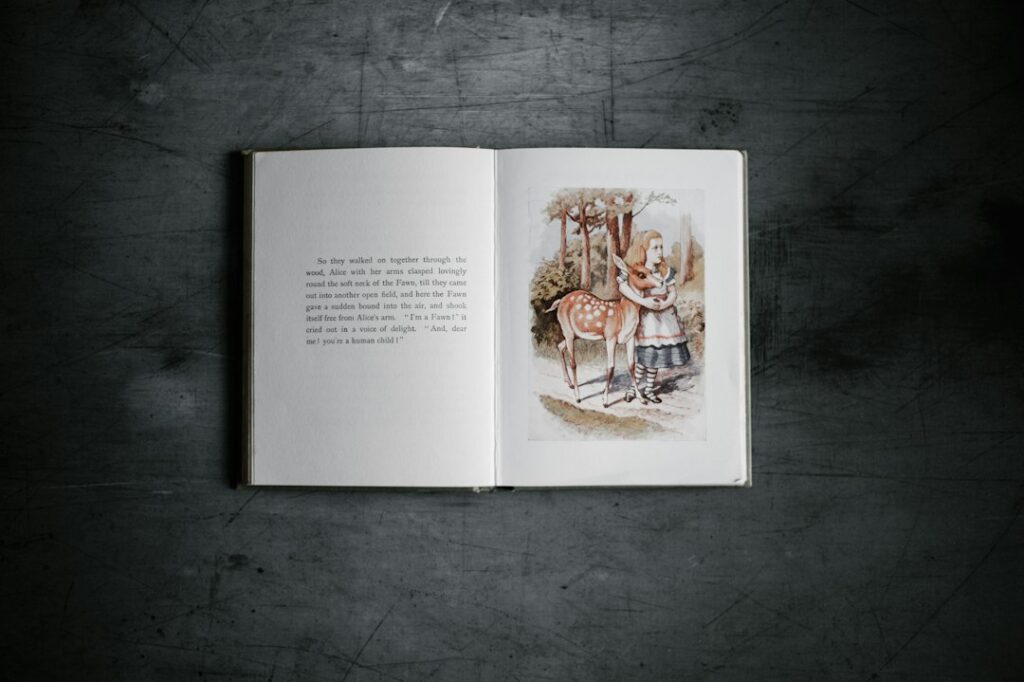
A short storybook can be a thoughtful family project: a grandparent’s imaginary adventure, a favorite animal finding a friend or a bedtime story built around a child’s interests. AI can help draft the words and explore illustrations. The adult creating the book still needs to shape the story and check every page.
Begin with a small keepsake you can read together. There is no need to promise improved reading scores, order many copies or turn the first attempt into a publishing business.
15 MINUTES · GUIDED PRACTICE
Review a short fictional fox story for a coherent ending and a consistent plan for its illustrations.
Choose a simple idea with little personal data
Pick one main character, one small problem and a satisfying ending. An invented fox who returns a lost library book can feel personal because the child likes foxes and libraries. It does not need the child’s full name, birthday, school, address or photograph.
Use a fictional name or nickname where appropriate. Get a parent or guardian’s agreement before including another person’s child or sharing identifying material. The FTC’s advice on children’s privacy online explains why details such as names, photographs and location deserve care. Do not assume every AI service is designed for children or covered by the same protections.
An adult should operate the tool, review its current age requirements and privacy information, and decide what is appropriate to share. For a story based on family events, our article on organizing family memories can help separate real details from invented additions.
Draft the story before the pictures
Your first practice output: Use the story prompt below, then check the eight page descriptions before making any pictures. For this exercise, choose an orange fox with a blue scarf and a green library-book cover. These are invented character details, not information about a child.
Outline six to eight short scenes. Introduce the character, show the small problem, let the character try something, and resolve it in a way that suits the intended reader. Keep the number of characters and locations manageable.
Draft an eight-page read-aloud story for an adult to share with a young child. The main character is a curious fox who finds a misplaced library book. Use simple sentences, gentle humor and a reassuring ending based on asking for help. Give each page a short text and a separate illustration description. Avoid real names, frightening threats and claims that this story teaches a proven learning outcome.
Read the draft aloud yourself. Replace awkward phrases, unexplained words and repetitive passages. Check that the solution follows from the story rather than appearing suddenly because the AI needs an ending.
Consider the particular child rather than relying entirely on a generated age label. Look for unhelpful stereotypes, confusing behavior or messages that conflict with how the family discusses safety and kindness. AI is providing a draft, not an educational or therapeutic assessment.
Check your result
Page 3 shows a blue scarf and a green book. Page 6 describes a red scarf and a yellow book, with no story reason. What needs revision?
Reveal the check: fix the plan before generating pictures
Keep the selected blue scarf and green book consistent unless the story explicitly and coherently explains a change.
Check that the ending follows from asking for help, as requested. Do not accept a sudden unexplained solution merely because the page count is complete.
What if a generated picture still disagrees?
Inspect the actual image and the intended crop. A promise that the picture was corrected does not establish that it now matches the plan.
Simplify the scene or reject the image if important details remain wrong. Keep page text separate so you can correct it clearly.
You have finished this exercise when: You have eight readable page descriptions, a coherent ending, and a small continuity sheet to check each future picture.
Get help with a stuck step · Choose another practice lesson
Fictional practice example added October 10, 2026. Your wording can differ; check the facts and limits above.
Create a small continuity sheet
Before making pictures, write down the features that must stay consistent: the fox’s color, a blue scarf, the book’s cover and the setting. Specify the same broad visual approach across pages, such as soft watercolor textures or simple paper-cut shapes.
Keep the illustration description separate from the page text. Adding readable text in a page-layout tool gives you direct control over spelling, size and position; words generated inside an image are harder to correct and may be distorted.
Generate one sample illustration first and decide whether its detail and mood fit the story. Then work through the remaining scenes. Treat each new picture as something that needs inspection, even if the previous image looked good.
Check bodies, objects and story continuity
Inspect the entire image at a useful size. Look for missing heads, extra limbs, strange hands, disconnected objects, distorted faces and background figures that do not belong. Check that the fox has the intended features and that the scarf, book and setting remain recognizable.
Compare the picture with the page text. If the story says the book is on a bench, an illustration of it floating in the air creates a different story. Check where characters are looking and whether expressions suit the scene.
Do not rely on the image generator saying that it corrected a problem. Look at the revised picture yourself. Reject an image that remains confusing, and simplify the scene if repeated attempts introduce new errors.
Proof the actual pages
Place the approved text and pictures into a simple layout with generous space around important details. Check page order, spelling, readable type, contrast and the space needed for binding. Make sure cropping does not remove a face, a head or an object needed to understand the scene.
Review at the intended reading size. If printing, order or print a single proof before making more copies. Read it from beginning to end, preferably with another trusted adult, and check that the physical book works as well as the screen version.
Before public sharing or selling, check the rights and current terms for all source material and tools you used. If publishing through Amazon KDP, its content guidelines require disclosure of AI-generated text, images or translations, including generated content that was substantially edited. Review the current rules for your chosen platform.
A family copy does not need to be elaborate. A coherent story, carefully checked pictures and the time spent reading it together can make a small project worth keeping.
Finish this practice
You have finished when: the scarf and book stay consistent and the ending follows from the character asking for help. This finishes the story plan; inspect actual illustrations separately.
Recommended next lesson
Featured photograph: Annie Spratt on Unsplash. Stock photograph for illustration, not a product test or customer example.


