AI can help you understand energy use, and some smart controls can adjust heating and cooling automatically. Neither guarantees a lower bill. Your starting point matters: a home with an unused heating schedule presents a different opportunity from one already managed carefully.
Before buying anything, identify the problem you want to solve. Is the heating running in an empty house? Are electricity prices rising? Is one room uncomfortable? Those questions lead to different decisions.
Separate advice from automatic control
A general AI chatbot can help organize information you provide or explain terms on a bill. It cannot inspect your insulation, confirm the wiring behind your thermostat, or change your heating unless it has an appropriate connection and permission.
A smart thermostat is a physical control. Some models learn preferences or use occupancy information; others mainly offer schedules and remote adjustment. A timer can also solve a predictable scheduling problem without AI. Ask what the advertised intelligence actually does, and whether you need that function.
ENERGY STAR explains that its certified smart thermostats demonstrate energy savings using actual field data. Certification is useful evidence when comparing products. It is not a promise that every household will save the same amount.
Check your heating system before choosing a device
Compatibility comes before app features. Record the exact heating and cooling equipment model, then check the thermostat manufacturer’s compatibility information. ENERGY STAR also notes that some high-efficiency systems may work best with controls from the same manufacturer.
If compatibility or installation is unclear, ask a qualified heating and cooling professional. A chatbot’s interpretation of a photograph is not enough to establish that equipment can be connected safely. Keep the existing controls working until the replacement has been properly installed and checked.
Also ask what happens without internet access, which functions need a subscription, whether everyone at home can adjust the temperature, and how long the manufacturer expects to provide software support. Those answers matter more than an impressive AI label.
Read the usage figures as well as the price
A lower bill does not, by itself, establish energy savings. For a useful comparison, record the billing dates, number of days, energy consumed, rates, and any unusual circumstances. Compare electricity in kilowatt-hours and gas in the units your supplier reports, keeping the fuels separate.
Weather and household routines can change substantially between bills. Fewer people at home, a milder winter, or a new rate can affect the comparison. A simple before-and-after check is a starting point, not proof that one device caused a change.
If you want help interpreting the numbers, type a small anonymous table instead of uploading the complete bill. Leave out your name, address, account number, meter identifier, payment details, and account barcodes.
Using only this table, calculate energy use per billing day. Keep electricity and gas separate. Show the arithmetic and list the information missing for a fair comparison. Do not attribute a change to the thermostat or invent weather data.
Recheck the calculations against the original figures. This is an analysis prompt, not permission for an AI service to access your utility account or operate equipment.
Do a modest break-even calculation
Here is a fictional example, not a savings forecast. Suppose equipment and installation cost $240 after a confirmed rebate. If the eventual net saving were $40 each year, simple payback would be six years: $240 divided by $40. At $20 a year, it would be twelve years. With no saving, there would be no financial payback.
Include required subscriptions and ongoing costs in your estimate. Confirm any utility rebate with the program itself, including the exact eligible model, deadlines, and conditions, before counting it. A sales claim of savings “up to” a percentage is not a household budget.
A control cannot fix every energy problem
The U.S. Department of Energy’s home energy assessment overview describes how an assessment can identify priorities such as air leaks, insulation, and equipment issues. Collecting recent bills and a list of uncomfortable rooms can help prepare for that conversation.
If a room stays cold despite sensible settings, investigate the cause before buying more connected devices. For a first automation project, our article on starting with one useful smart home routine explains how to keep the task manageable.
A worthwhile purchase should solve a specific problem, work with your equipment, and have costs you understand. Energy savings are something to evaluate with evidence, not assume from the word AI.
Updated September 23, 2026. Prepared with AI assistance and checked against the sources linked above. General information, not an assessment of your home’s equipment. See our disclaimer.
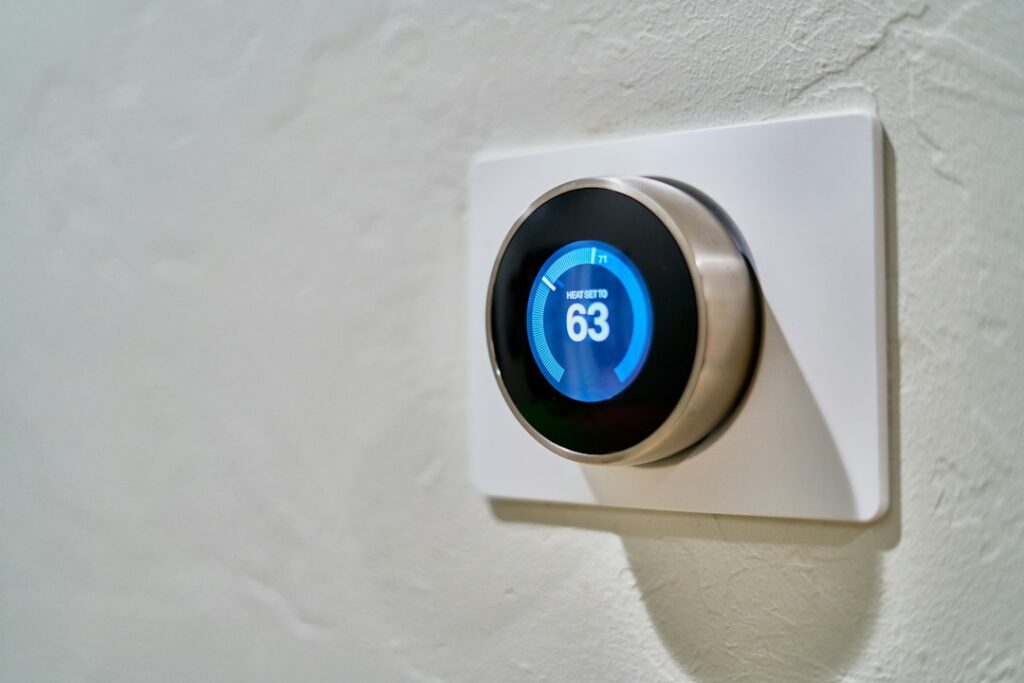
Featured image: Dan LeFebvre / Unsplash. The thermostat is shown for illustration, not as a product endorsement or a recommended temperature setting.