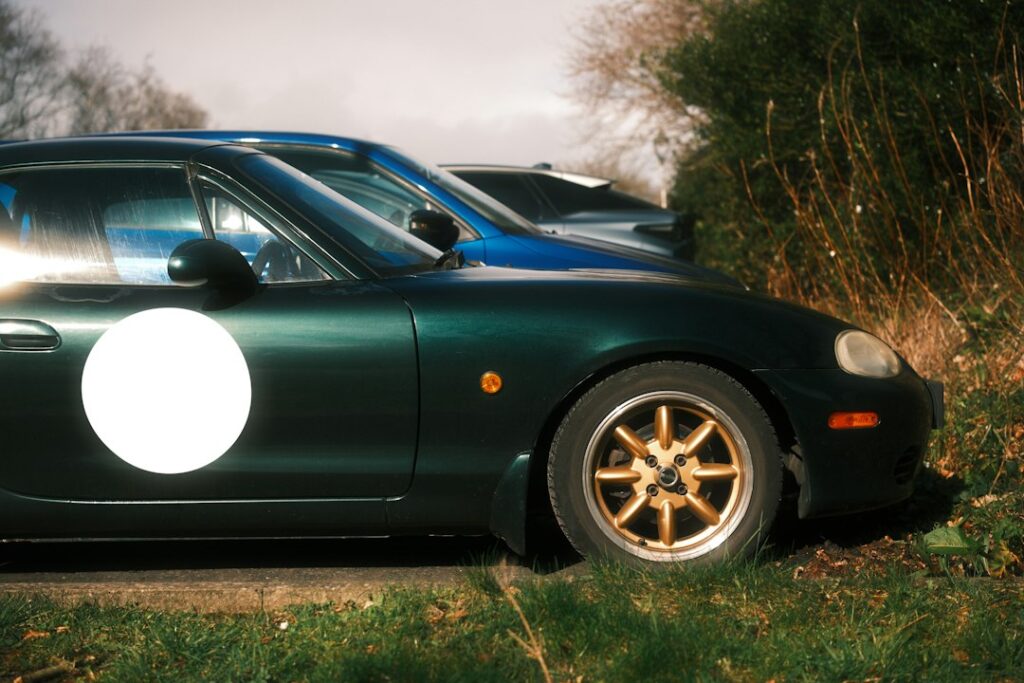
AI can help you compare a car’s appearance before you spend money: a different paint color, a simpler graphic, or a more understated finish. It can also turn a scattered wish list into questions for a specialist. Those are useful planning jobs. An attractive generated image, however, does not show that a modification fits your vehicle or is safe to install.
The sensible outcome of an AI session is a clearer brief, not a shopping cart filled with unverified parts. Keep the creative experiment separate from decisions that affect a real car, its occupants, and other road users.
Choose the problem before choosing a modification
Write down what you want to change and why. Perhaps you dislike the exterior color, need better organization for work equipment, or want information about an accessibility adaptation. These are different projects, with different people qualified to advise you.
Give AI the make, model, model year, and trim if you know them, but label anything uncertain. Ask it to organize your requirements into appearance, everyday use, budget, and questions requiring professional confirmation. Do not let it fill missing vehicle specifications with guesses.
A useful output is a short document you could hand to an installer. Include what you want to preserve, such as luggage space or the original appearance, and your total spending limit. Ask for reasons to leave the vehicle unchanged as well as possible options.
Use generated images as concept sketches
For an illustrative exercise, ask an image tool for three color treatments of the same parked car. Request the same viewpoint and body shape in every version, and label the results as concepts. This makes preferences easier to compare without treating the drawings as engineering plans.
Inspect each result against the original photograph. Has the tool changed the headlights, wheel size, door shape, number of mirrors, or ground clearance? A seemingly minor visual change can make a design impossible to reproduce as shown. Keep the original beside the concept when discussing it with a professional.
Before uploading a photograph, remove readable number plates, faces, addresses, and documents that are not needed for the task. Check the service’s data controls and use photographs you have permission to share. A neutral background usually provides enough context for a styling discussion.
Know where the AI’s role ends
Driver assistance, vehicle software, and AI image editing are separate subjects. NHTSA explains the difference between assistance that warns a driver and assistance that intervenes, and recommends consulting the owner’s manual. Level 2 assistance still requires an attentive driver responsible for the vehicle; a feature described as intelligent does not make the car autonomous.
Do not use a chatbot to approve changes to braking, steering, suspension, restraints, lighting, vehicle wiring, or driver-assistance equipment. Ask the manufacturer or a suitably qualified installer what applies to your exact vehicle, including any inspection, calibration, or compatibility requirements. An AI answer is not evidence that those checks have happened.
For disability-related adaptations, the process should begin with individual needs. NHTSA’s adapted-vehicle guidance recommends consulting a driver rehabilitation specialist before buying equipment. This is more specific than asking a general chatbot to choose a device from a photograph.
Take better questions to the installer
Ask AI to make a comparison sheet, leaving the answers blank for real suppliers. Useful questions include:
- Which exact product and vehicle variant does the quote cover?
- What confirms compatibility, and who checks the completed work?
- Does the proposed change affect any sensors, safety systems, maintenance, or warranty terms?
- Which local road-use requirements or insurer notifications need checking?
- What are the complete installed cost, exclusions, ongoing costs, and options for reversing the change?
Confirm legal and insurance questions with the relevant authority and insurer. Ask for written answers where they affect your decision. A confident AI summary of someone else’s policy is not a substitute for the policy itself.
For a business, sell a clear concept service
If you hope to offer AI-assisted styling concepts to customers, define exactly what you deliver: perhaps a set of labeled visual alternatives and a discussion brief. Explain that the work does not include fitment verification, engineering approval, installation, or a guarantee of resale value.
Price the real work, including revisions and customer communication. Obtain permission to use customer photographs, agree how files will be stored, and avoid implying a relationship with a vehicle manufacturer. The useful service is helping someone express a preference clearly before a qualified professional assesses what can actually be done.
Related reading: exploring a product idea before building it.
Featured photograph: Barnaby Woodrow via Unsplash. Illustrative parked car; the photograph does not demonstrate an AI modification or certify any equipment.
Updated September 26, 2026. This AI-assisted article draws on the linked sources. Hypothetical examples are labeled as illustrative. It is for general information; see our disclaimer.