AI can propose variations, organize requirements, and help explain a product concept. It cannot establish that customers want the product, that it can be manufactured safely, or that selling it will be profitable. Those questions need evidence outside the chat window.
For someone exploring a first physical product, the most useful approach is a sequence of small decisions. Use AI to prepare the next question, then check the answer with potential users, actual suppliers, or an appropriate professional before committing more money.
Start with a problem someone actually has
The Design Council’s Double Diamond framework begins with understanding a problem, then defining it, developing alternatives, and testing solutions. It emphasizes learning from people affected by the problem rather than assuming what they need.
Applied to a small project, that means asking potential users how they manage the task today. What repeatedly goes wrong? What have they already tried? Ask for a description of a recent experience instead of asking whether they like your proposed invention.
AI can help draft neutral interview questions or organize notes you have permission to use. Label summaries as interpretations and check them against the notes. A chatbot pretending to be a customer can suggest questions, but its invented preferences are not customer research.
Write a brief with constraints
Consider a fictional example: a small desk organizer for someone who switches between handwritten notes and video calls. The initial problem is finding a pen and a notepad quickly, not designing the most elaborate accessory possible.
A useful brief lists the objects it needs to hold, the available desk space, the surfaces it will touch, how it should be cleaned, and a target price to investigate. Mark dimensions that have been measured and leave unknown costs blank. Do not invent a market-size figure to make the idea sound promising.
An illustrative prompt could be: “Suggest three simple organizer concepts for this brief. Explain how each addresses the stated problem, list the assumptions, and give me questions to ask a maker. Do not claim safety, durability, or customer demand has been tested.”
Compare alternatives against the same criteria
Ask for meaningfully different options, such as one tray, separate holders, or a folding arrangement. Then compare them using the brief: space required, ease of access, likely cleaning difficulties, number of parts, and unanswered production questions.
Keep concept drawings clearly labeled. An appealing image can conceal a missing joint, impossible thickness, or an object that changes size between views. Request consistent views, inspect them closely, and let a qualified designer or maker decide whether the idea can become a buildable specification.
A useful response from AI may be a reason to simplify the design. Adding electronics or moving parts creates more questions to resolve. Features should earn their place by solving a real problem, not because the tool can generate an impressive description.
Use prototypes to answer specific questions
For the fictional organizer, a paper or cardboard layout could help someone judge its footprint and arrangement. That is a limited test of layout, not evidence about the strength, stability, or safety of a finished product. State the question before making the prototype and record what remains unknown afterward.
Ask users to perform the intended task and describe what is awkward. Keep observations separate from compliments. If people cannot identify where an item belongs without instructions, another attractive rendering will not solve that usability issue.
Products involving children, food contact, electricity, structural loads, or other hazards require appropriate expertise and testing. In the United States, CPSC’s business education resources provide a starting point for identifying product safety requirements. A general AI answer does not establish compliance or replace the obligations of the business placing a product on the market.
Check the business assumptions before ordering stock
Get supplier information for the actual specification. Include materials, production, packaging, shipping, likely returns, and your own time. Separate a prototype quote from a production quote, and ask what changes when the order size changes.
Compare the complete cost with a price customers have a reason to pay. Interest in a concept is not the same as an order. Plan a limited, honestly described way to learn about demand before committing to inventory, and avoid taking payment for a delivery promise you cannot support.
Also check the rights attached to artwork and other materials you use. AI does not prove that an idea is original or free of someone else’s rights; obtain appropriate advice when that affects a launch. Keep dated design decisions and supplier confirmations together.
The goal of an early AI session is a better brief and fewer unexamined assumptions. Continue only when the next real-world check supports the idea. Pausing or rejecting a weak concept is a useful result of the process, too.
Related reading: building useful data visualization templates.
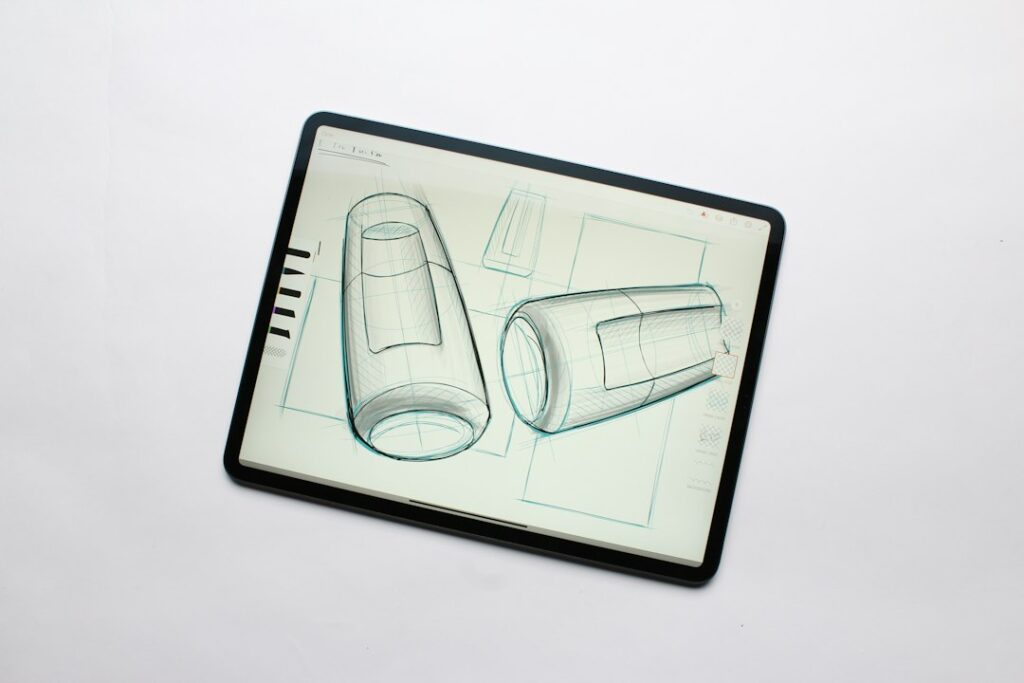
Featured photograph: Kevin Shek via Unsplash. Illustrative product sketches on a tablet, not an AI-generated or certified production design.
Updated September 26, 2026. This AI-assisted article draws on the linked sources. Hypothetical examples are labeled as illustrative. It is for general information; see our disclaimer.


