The Good Life, With AI
A conversation abroad, a hobby that finally clicks, a family project you are proud of. The next wave of AI could put more of these experiences within reach.

Imagine a future holiday. Over breakfast, you use your phone to ask a café owner about the town you are visiting. Later, you photograph a beautiful street and ask a voice assistant to explain the camera setting that would improve the shot. Back at your hotel, you start turning the day’s pictures and stories into a small book for your family.
That imagined day brings together abilities that already exist—live translation, conversations about what a camera sees and help creating something personal. The exciting possibility is that they become easier to use together, letting you try more things and get more from the experiences you choose.
You can begin enjoying parts of that future now. The next advances could make help feel more natural, especially when you are learning, making something or trying to connect with another person.
Make the thing you have been meaning to make
Think of a project you would enjoy finishing but keep putting off because you cannot quite picture the result. A birthday story for a grandchild. A small book about a memorable family trip. An invitation that looks as good as the occasion deserves.
AI can help you explore a few approaches before you commit. You can ask for three ways to tell the story, choose the one you like, change the tone and work on the opening together. Design services such as Canva also let users generate and edit text, images and layouts through written requests. Access varies by feature and plan. Canva says its free plan includes limited use of some AI features, while other capabilities require a paid plan. Read Canva’s current feature and plan guidance.
Imagine, for example, making a booklet of six family recipes. You supply the recipes and the memories. AI suggests an order, helps you shorten a rambling introduction and offers a cover idea. You ask your relatives to check the stories and amounts. The finished booklet can still sound like your family, including the jokes and peculiar expressions that make it worth keeping.
Research gives some support to that creative boost. In a 2024 experiment involving 293 writers, people who could request AI story ideas produced short stories that other readers rated more creative and enjoyable. The resulting stories were also more similar to one another. That combination is a reason to bring your own experience into the work. The research tested short fiction, so it cannot promise that every creative project will improve. Read Anil Doshi and Oliver Hauser’s original study.
Your most valuable contribution may be the detail a stranger could never supply—the meal everyone remembers, the place you got lost or what your father actually said. Keep original photographs and confirmed facts alongside any creative additions. Our guide to improving family photographs explains how to preserve those distinctions when editing pictures.
Get a patient explanation whenever you need one
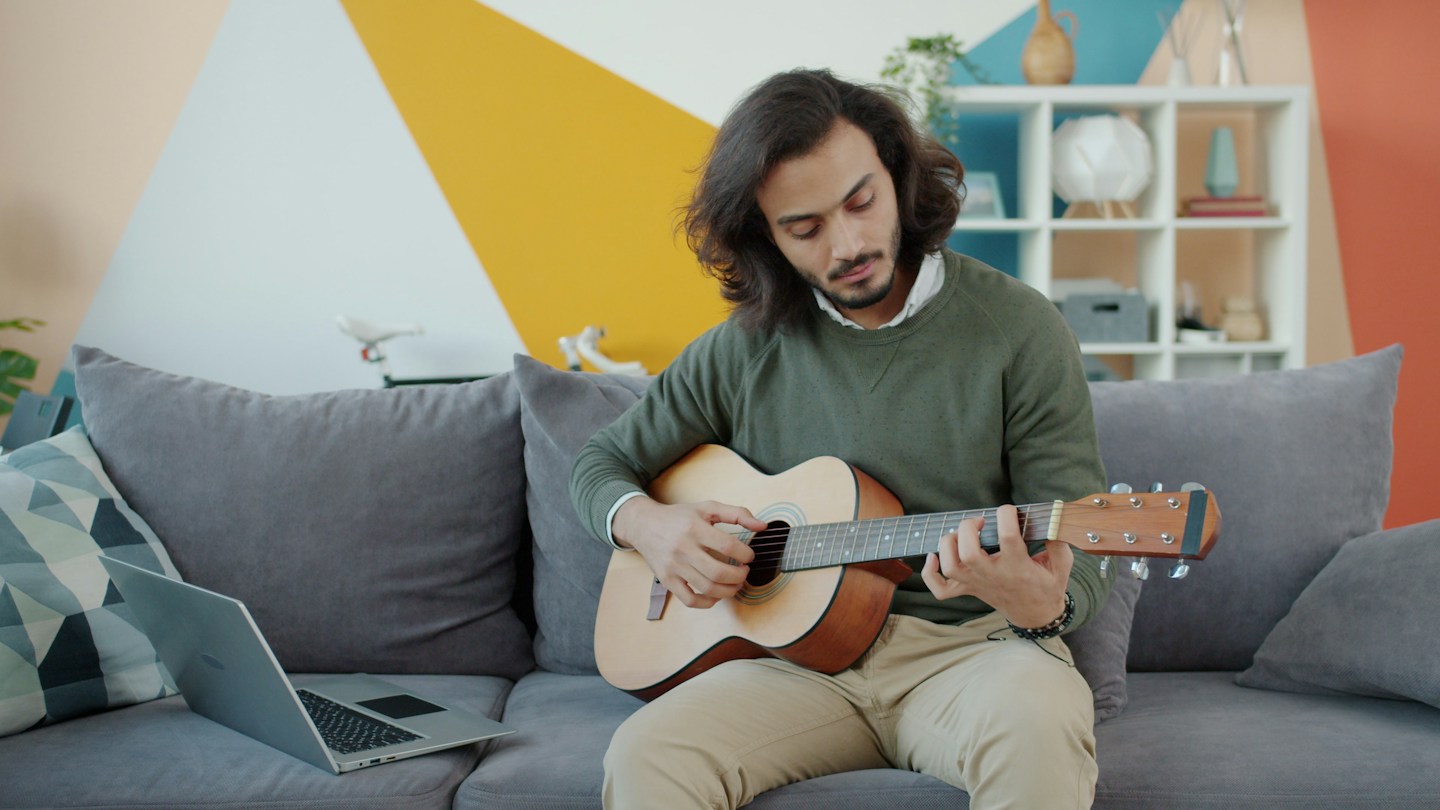
Perhaps you own a camera but always leave it on automatic. Perhaps you started learning guitar, reached a confusing explanation and stopped. With an AI conversation, you can ask for a smaller step, another example or a different explanation as often as you need.
You can also talk through the problem. Gemini Live, for example, supports back-and-forth voice conversation and camera sharing, so a user can show something and ask about it. Features depend on the app and account, and Google says updates arrive gradually. For a camera question, you could show the controls and then check any suggested setting against the camera’s manual. See Google’s guide to talking and sharing your camera with Gemini Live.
Research suggests that this kind of help can work, although the way it is designed matters. A study published in 2025 found larger immediate learning gains with a carefully built AI tutor across two lessons in a Harvard physics course with 194 students. An October 2026 working paper on a broader university rollout found lower final grades among sections of the same course given tutor access. The first result points to the promise of structured, responsive teaching. The second shows that access alone is insufficient. Read the Harvard study and the later university trial.
For a hobby, the appealing future is help that follows your progress. You could return to yesterday’s stumbling block, see a new explanation and try again at your own pace. A camera lesson could continue while you take pictures. A guitar explanation could lead into a short practice session, with a human teacher helping you develop technique and musical judgment.
Pieces of that experience are available now. A dependable tutor that consistently understands your progress across an entire hobby remains an ambition to evaluate as products improve. But even a helpful answer at the moment you are about to give up can make the next attempt more inviting.
Have more of the conversation when you travel
There is a particular pleasure in going beyond the phrasebook. You ask a shopkeeper where a piece of pottery was made, and the answer becomes a story. You meet relatives abroad and want to hear more than the few sentences everyone can manage in a shared language.
Live translation can make those exchanges easier to attempt. Google Translate now offers modes for listening to translated speech, taking turns in a conversation and reading the translated text. Supported languages are listed in its help pages. A face-to-face view can give each speaker their own side of the phone screen. See the current live translation options and language list.
The experience is becoming more convenient, too. In September 2026, Google announced that iPhone users could listen through the phone’s earpiece, while Android users could keep translation running in the background. Those are modest changes with an appealing purpose—less time managing the screen during an exchange. Read Google’s September translation update.
Let the other person know you are using a translator, speak in manageable turns and confirm a phrase if the reply seems odd. Trying a conversation at home before a trip will show you what your own phone and language pair can do. Our guide to translating menus and signs covers another useful travel question—what to prepare before you lose your connection.
Make visual information easier to reach
Some of AI’s most meaningful gains come from making an ordinary experience more accessible. A picture someone sends, a printed menu or a product’s appearance can hold information that is difficult to access for someone who is blind or has low vision.
Be My AI, within the free Be My Eyes app, generates descriptions of images for that community. Users can ask follow-up questions and choose to call a volunteer for further help. The service requires an internet connection. Its current instructions cover iOS, Android and Windows. Explore Be My AI and read its usage guidance.
The promise is the ability to ask for the particular detail that matters to you. For a family photograph, that could be what someone is wearing or what is on the table. A follow-up question can make a description more useful than a fixed caption.
The company sets clear boundaries because descriptions can be wrong. Its terms rule out using the service as a mobility aid or for critical decisions such as identifying medication, checking allergens or crossing a street. The appropriate opportunities here are everyday access to visual information and the option to seek human help. Read Be My Eyes’ safety and service terms.
The next step is help that feels easier to reach
Think about how much effort goes into explaining a question to a computer. You find the right app, work out what to type and describe the thing in front of you. Voice and camera interaction can shorten that process. You can point, ask a question, interrupt the answer and add the detail you forgot.
That changes what a useful assistant could feel like. While working on a family booklet, you might talk through changes as you look at the page. While learning camera controls, you might show the assistant the button you mean and continue from there. Conversational design and camera sharing already provide parts of these experiences. Easier movement between them is a reasonable direction for future products, with timing and reliability still uncertain.
There is also room for more continuity. A future assistant could remember that you understand shutter speed but still find aperture confusing, then shape the next lesson around that gap. It could keep the style you chose for a creative project as you add another page. That fuller picture is a forecast. Its value will depend on accurate memory, useful teaching, clear privacy controls and a price people can afford.
Access will matter as much as the demonstration. An appealing feature has to work with your device, language and account. Some useful abilities are already free, including Be My AI for its intended community and limited creative features in services such as Canva. More elaborate tools can bring subscription costs or usage limits. The meaningful improvement is a service you can comfortably use often enough to enjoy what it makes possible.
Return to that imagined holiday. The best part is the conversation with the café owner, the photograph you are proud of and the book your family enjoys afterward. If AI helps more people reach those moments—with less hesitation and more confidence—it will have earned a place in a very good life.
Sources and further reading
- Doshi and Hauser’s 2024 experiment on AI ideas and creative writing
- The Harvard physics tutoring study published in 2025
- The October 2026 working paper on course-integrated AI tutoring
- Google Translate’s live speech translation guide
- Be My AI’s current usage guidance
Sources checked November 18, 2026. AI assisted research and drafting. The personal projects and scenarios are illustrative. This article draws on product documentation and published research. Read how AI Over 40 reviews its guidance.
Listing photograph by Kampus Production / Pexels.