

Corporate structures in the United States are changing a lot. You might be worried if new software tools will affect your job. The debate about AI in management is making many people unsure about their careers.
Some say automation makes human oversight unnecessary. Others think these technologies help people grow professionally. It’s important to understand this shift for your success in the future of work.
As organizational structures change, you need to adapt. This shift brings challenges for leaders who manage daily tasks. By using new digital tools, you can stay relevant in a changing economy.
This analysis shows why these changes are important for your future. We look at how companies use data to simplify complex tasks. Get ready to move forward in your career with confidence.
The Current State of Middle Management in the AI Era
Today, businesses are going through a big change as they add new tech to their work. With over 21 million people in management, the need to work better is huge. This change makes leaders think about their role in the company.
The Traditional Burden of Administrative Tasks
For a long time, your job as a manager was all about paperwork. You spent a lot of time on things like scheduling and data entry. This took away from the important work you wanted to do.
Now, AI is helping with these tasks. It lets you focus on talking to people and making big decisions. This change is key for staying important in a tech world.
Shifting Expectations in Modern Corporate Structures
Companies are changing how they work, becoming flatter and more flexible. AI is helping them have smaller teams, leading to fewer jobs in tech. For example, Block cut 4,000 jobs, or 40% of its staff, in February 2025.
These big cuts can be hard on the people left. You might feel burned out because you have to do more with less. It’s important to adjust to these changes and keep your team happy.
Will AI Kill Middle Management—or Upgrade It?
Are you worried that AI might replace your job? The fast growth of AI in management is changing how companies are structured. Instead of being replaced, some see AI as a way to make management more efficient.
The Case for Automation and Workforce Reduction
Today’s software can create a detailed “world model” of a company. It tracks project timelines and internal talks in real-time. This means insights come faster than any human manager.
This automation is leading to fewer jobs in the middle of companies. As they try to make their structures flatter, some roles seem unnecessary. Managers now have to show they’re more than just messengers.
Why Human Oversight Remains Irreplaceable
Even with AI’s efficiency, human-centric management is key to a company’s health. Machines can process data but can’t feel emotions or make moral choices. True leadership needs a human touch that technology can’t offer.
The Nuance of Emotional Intelligence in Leadership
Emotional intelligence in business is about understanding your team’s unspoken needs. When things get tough, a manager must offer support and clarity. Your ability to connect with people in stressful times is something no software can do.
Navigating Complex Organizational Politics
Companies are about more than just data; they’re about people and relationships. Handling these complex social dynamics needs intuition and the skill to bring people together. Strategic human oversight keeps company culture strong while achieving goals, showing humans are vital for success.
How Artificial Intelligence Enhances Managerial Capabilities
Modern managers see AI as a way to boost their work. McKinsey says managers lose nearly one in five hours on tasks that AI can do. By using managerial automation, you can free up time for important goals.

Data-Driven Decision Making and Predictive Analytics
With AI-driven leadership, you can make decisions based on facts, not just guesses. Predictive analytics in management lets you see trends before they happen. This means your choices are always informed by the latest data.
Streamlining Workflow Management with Generative AI
The growth of generative AI in business changes how teams work. AI-powered workflows make tasks like scheduling and data entry easier. This frees up your team to focus on solving problems creatively.
Improving Team Communication and Feedback Loops
Technology is key to better human connections at work. Tools for workplace communication help you give feedback that matters. By automating routine updates, you make room for deeper mentorship and empathy-led management. This keeps your team productive and supported.
Essential Skills for the Future-Proof Manager
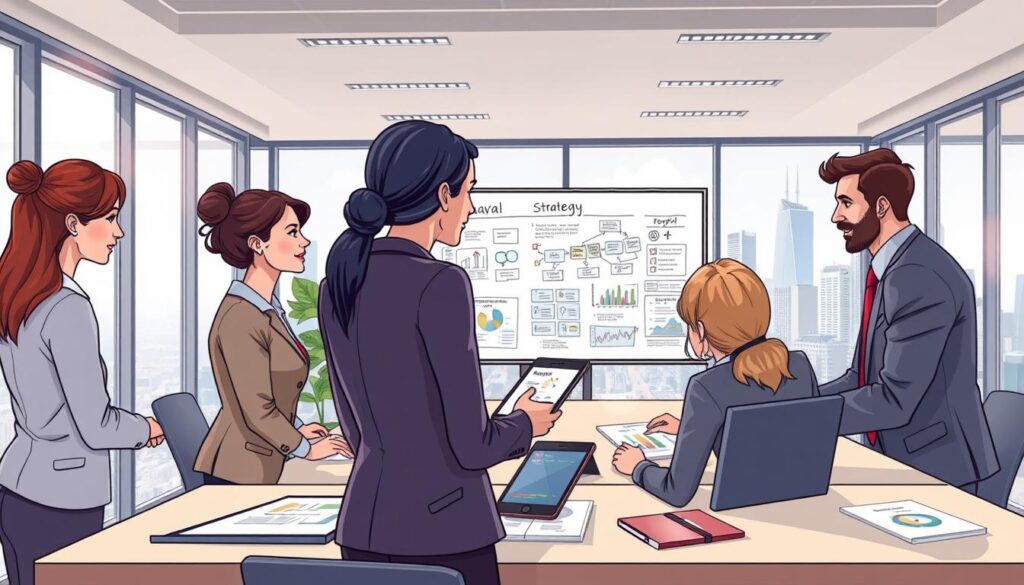
To stay ahead, you need to mix human touch with machine smarts. As middle management evolves, being adaptable is key. You must update your managerial skills to stay relevant in a world where machines do more.
Developing AI Literacy and Technical Fluency
You don’t have to code to lead today. Focus on AI literacy for managers to grasp how AI affects your team. Learning the basics of AI can help your team work better.
Technical fluency helps you know what tasks AI can handle. This lets you focus on tasks that need human touch. It makes your work more meaningful.
Focusing on Soft Skills and Empathy-Led Management
AI can’t replace human connection. Human-centric management is your edge in a tech world. While AI handles data, you handle people.
Studies reveal 44% of managers stress over giving negative feedback. Empathy turns tough talks into growth chances. Leadership development now means valuing emotional smarts to avoid burnout and build a supportive team.
Cultivating Strategic Thinking Over Tactical Execution
Top leaders focus on strategy, not daily tasks. Prioritize strategic management to align your team with big goals. AI takes care of the details, freeing you to dream big.
AI-driven leadership means setting direction, not just watching the clock. By letting go of the small stuff, you add real value. This shift is vital for success in the future of work.
Conclusion
Middle management is not fading away because of automation. Instead, it’s evolving. You’re now focusing more on connecting with people and less on routine tasks.
Tools like Microsoft Copilot or Salesforce Einstein are changing the game. They help you manage the mundane tasks. This lets you spend more time mentoring and coming up with new ideas.
Being successful means knowing how to use technology well and caring deeply about your team. This mix is what makes a great leader today. They balance technical skills with empathy.
Start by checking how you work now. See what tasks you can automate. This will give you more time for important conversations and planning.
Managers who see technology as a helper, not a problem, will thrive. Take charge of your career and lead your team into this new chapter with confidence.