
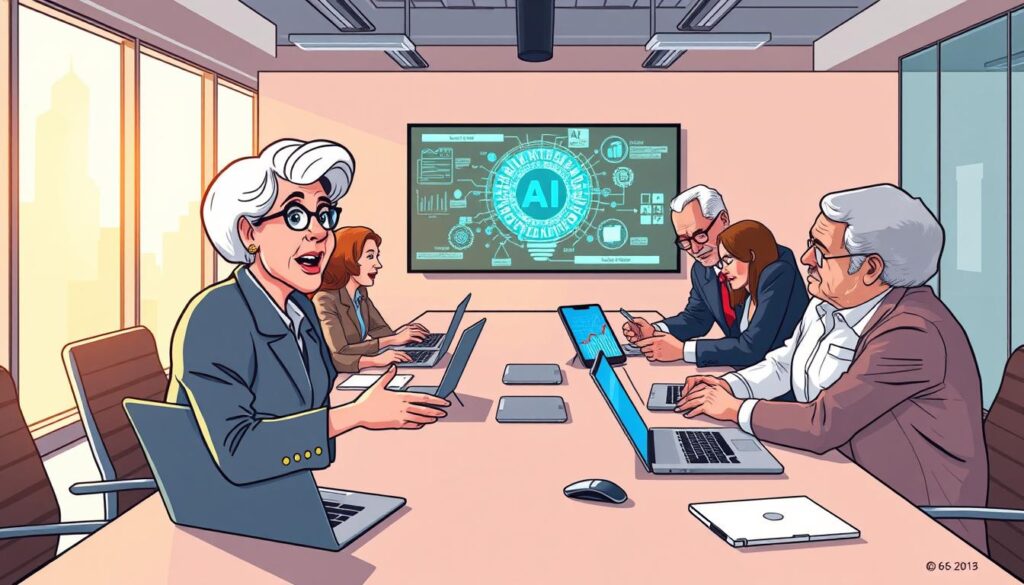
Many people think new tech is a threat to younger workers. But, AI and older workers have their own challenges and chances. If you want to keep working, learning about these tools is key to staying ahead.
Studies show that workers over 55 in tech jobs are leaving in higher numbers. This change is a big reason to adapt fast. You need to figure out if AI will push you out or help you grow.
The key to a long career with AI is mixing your experience with machine smarts. By automating simple tasks, you have more time for big ideas and solving tough problems. This way, your years of experience become a valuable asset in today’s workplace. This is why AI can help you work longer and stay productive.
Why AI Could Extend Your Career Past 65
Emerging technology is changing how we view retirement. The old idea of retiring at 65 is fading. Now, many people are choosing to work past 65 thanks to new digital tools.
These tools help keep professionals productive and engaged. They avoid the exhaustion that used to come with older age.
How AI Can Reduce Repetitive Work and Preserve Your Energy
Dealing with repetitive tasks is a big challenge in long careers. AI productivity at work can take over tasks like data entry and scheduling. This frees up your mental energy for more important tasks.
By removing administrative tasks, you can focus on creative problem-solving. This helps you stay productive without getting tired. Your work quality becomes more important than how much you do.
Why Experience Becomes More Valuable When Combined With AI
Your years of experience give you a unique perspective that AI can’t match. AI can process data fast, but it lacks the nuanced judgment you’ve developed. When you use AI, you become a more powerful asset.
Your experience helps you understand AI insights better. You can spot mistakes and risks that AI might miss. This ensures the output is accurate and ethical.
How Longer Careers Can Benefit You, Employers, and Customers
Choosing to work longer with AI benefits everyone. You get to keep earning and stay relevant. Employers get your knowledge and mentorship, helping train new talent.
Customers also win with seasoned professionals using modern tools. They get reliable service and efficiency. This makes age a competitive advantage in the workplace.
How AI Is Changing the Value of Experience at Work
Your career longevity now depends on how you bridge the gap between machine efficiency and human wisdom. As AI-exposed jobs evolve, the market values those who oversee technology more than just compete with it. The true value of experience today is in providing context that software can’t replicate.

Using Professional Judgment to Evaluate AI-Generated Results
AI tools are great at quick drafts and data summaries but lack a moral compass. You must use professional judgment and AI outputs to ensure accuracy and ethics. Acting as a final filter, you prevent errors that automated systems might miss.
Applying Industry Knowledge to Solve Problems AI Cannot Fully Understand
Algorithms rely on historical data and struggle with new market shifts or unique client needs. Your deep industry knowledge helps you understand nuances invisible to machines. This skill is a critical advantage that keeps your role essential in any organization.
Turning Institutional Knowledge Into a Career Advantage
Your long-term understanding of company culture and history is a massive asset. Using institutional knowledge at work helps guide teams through complex challenges. When you combine this history with modern tools, you become a vital bridge between the past and future.
Mentoring Younger Colleagues While Learning New Digital Tools
You can solidify your position by pairing your wisdom with the technical agility of younger staff. While teaching them the nuances of the business, they can help you master new software. This reciprocal relationship keeps your expertise relevant and up-to-date.
Documenting Processes Without Losing Human Context
Automation often removes the “why” from workflows, leaving only the “how.” By documenting processes, you preserve institutional knowledge at work alongside technical instructions. This approach makes you a vital resource for training and quality control, increasing the value of experience in your organization.
Skills You Need to Stay Relevant in an AI-Enabled Workplace
Practical AI literacy is key to your success in the future. You don’t need to code or build software to stay ahead. Instead, AI literacy for older workers is about knowing what AI can do and where it fails.
Building Practical AI Literacy Without Becoming a Programmer
Think of AI as a smart but sometimes too sure assistant. You need to know which tasks AI can handle and which need your touch. By focusing on functional knowledge, you keep control over your work.

Strengthening Communication, Critical Thinking, and Decision-Making
Machines can process data, but they can’t replace human connection. Studies show that AI skills for the workplace work best with soft skills. Your leadership, negotiation, and empathy are your biggest strengths.
Critical thinking helps you ask the right questions for AI. Combining your knowledge with these tools leads to quicker, better decisions. Leadership and emotional intelligence are what AI can’t replace.
Learning to Write Effective Prompts and Review AI Outputs
Mastering prompt writing skills means giving clear instructions. A well-written prompt gives AI the context and goals it needs. Better input leads to more useful results.
Checking AI Responses for Accuracy, Bias, and Missing Context
Reviewing AI outputs is a key part of your job. Treat every response as a draft that needs your check. Always look for bias or missing info that could affect your decisions.
Protecting Confidential Company and Customer Information
Using technology responsibly means keeping data safe. Never share sensitive info on public AI platforms. Protecting your organization’s intellectual property is essential to stay trusted and reliable.
Practical Ways to Use AI in Your Current Role
You don’t need to change everything to use technology. Start by finding small, repetitive tasks that waste your time. This way, you can work smarter and keep your unique skills.
Automating Routine Research, Scheduling, and Administrative Tasks
Many people spend too much time on tasks like data entry or planning. AI task automation can take care of these tasks. This lets you focus on important decisions.
For example, tools like Microsoft Copilot can quickly summarize emails or plan your meetings.
Using AI to Draft Reports, Presentations, and Professional Correspondence
Starting a project can be hard. AI workplace tools can help by creating outlines for reports or presentations. They help you organize your ideas and improve your writing before you add your personal touch.
Analyzing Data and Spotting Trends More Efficiently
Looking through complex data can be time-consuming. AI data analysis helps you find important patterns quickly. This lets you share deeper insights with your team and make better decisions.
Creating a Personal AI Workflow That Supports Your Strengths
Build a personal AI workflow that fits your skills. Choose tasks you like and let AI handle the rest. This way, technology helps you achieve your goals, not the other way around.
Starting With Low-Risk Tasks and Measuring the Results
Start with simple tasks to test AI tools. See how much time you save and if your work gets better. This experimental approach helps you learn and grow without stress.
Keeping Human Approval in Every High-Stakes Decision
Technology is great, but your judgment is key. Always check important decisions yourself. Your experience is the final say, ensuring quality and meeting your company’s standards.
How to Adapt Without Losing Your Professional Identity
Staying relevant in today’s AI world is not about being the fastest. It’s about keeping your unique value. You don’t have to become a tech expert overnight to stay ahead. Focus on steady, intentional growth that builds on your years of experience.
Choosing Continuous Learning Over Trying to Master Every New Tool
Keeping up with every new software update can be overwhelming. Focus on continuous learning at work by choosing tools that solve your specific role’s problems. This way, you avoid burnout and focus on skills that really matter.
Think of your career growth as a carefully chosen path, not a race. Mastering a few key applications makes you more efficient. This keeps your skills sharp and lets you add new tech at a pace you can handle.
Finding Training Resources That Match Your Goals and Schedule
You don’t need long degree programs to stay current. Look for industry-specific webinars, short video tutorials, or workshops that meet your needs. These resources fit into a busy schedule and offer practical knowledge.
Using these targeted resources helps you learn without overwhelming your day. Consistency is more important than intensity for long-term success. Small, regular learning sessions build a strong foundation for your career.
Balancing Automation With the Human Skills People Trust
AI can handle data and routine tasks, but it can’t replace your professional judgment or emotional intelligence. Your ability to understand complex situations and offer nuanced advice is invaluable. Employers and clients value the human touch that only you can provide.
Use automation to free up time for more important tasks. Combining technical skills with your unique insights creates a powerful hybrid skill set. This makes you essential in today’s workplace.
Managing Anxiety, Age Bias, and Resistance to Workplace Change
It’s normal to feel uneasy when your industry changes fast. To overcome age bias and workplace change, show your adaptability. Highlight how your experience makes you a better user of new tech.
Don’t let fear control your career path. Stay open to new methods while keeping your professional identity strong. Your experience is not a weakness; it’s what gives AI results real-world value.
How to Position Yourself as an Experienced AI-Ready Professional
Turning into an AI-ready professional means changing how you show your work. Instead of just listing tools, show how you used them wisely. This shows you can mix old skills with new tech.
Updating Your Resume and LinkedIn Profile With AI-Related Achievements
When you list AI achievements on resume, talk about how you changed your work. Explain how you used tools to solve big problems. This shows you see tech as a tool, not a distraction.
On LinkedIn, share short stories of your successes. Talk about how you used automation to make things better. This shows you’re always learning and staying current.
Showing Employers Measurable Results From Technology Adoption
Employers like to see real results. Share how you saved time, sped up reports, or got better at data. These numbers show your worth.
Keep track of your wins over time. Share how you cut down on wait times or made teams work better. Quantifiable success proves you’re up to date.
Using Mentorship and Collaboration to Increase Your Visibility
Working with others across ages can really help. By teaching the young and learning from the old, you show you’re adaptable. This makes you a key link between old and new.
This approach makes you more visible in your company. It shows you’re ready for change and can lead in a new way. Mentorship proves your experience is valuable, even with AI around.
Evaluating Whether to Reskill, Change Roles, or Continue as a Specialist
Deciding what to do next needs honest thinking. You might want to learn new skills or stick with what you know. Think about what’s in demand and what you’re good at.
If you’re looking to switch, find roles that value your mix of human insight and tech savvy. Aim to stay essential by bringing a unique view that AI can’t match. Strategic career planning helps you keep growing.
Conclusion
Your career path after 65 depends on mixing human wisdom with digital tools. You can shape your professional legacy by using new tech and keeping your unique judgment. This is what makes you valuable.
AI and retirement planning need a proactive approach. See these tools as partners that boost your experience, not replace your skills. Focus on practical skills and results to stay ahead.
Policymakers are studying how these changes affect work and retirement timing. You can shape your own path by staying informed and adaptable. Your choices today decide if you’ll keep contributing to your field for years.
Take charge of your career story now. Use your knowledge to lead the adoption of new systems. Aim to make your next career step reflect your goals, not just technology changes.