
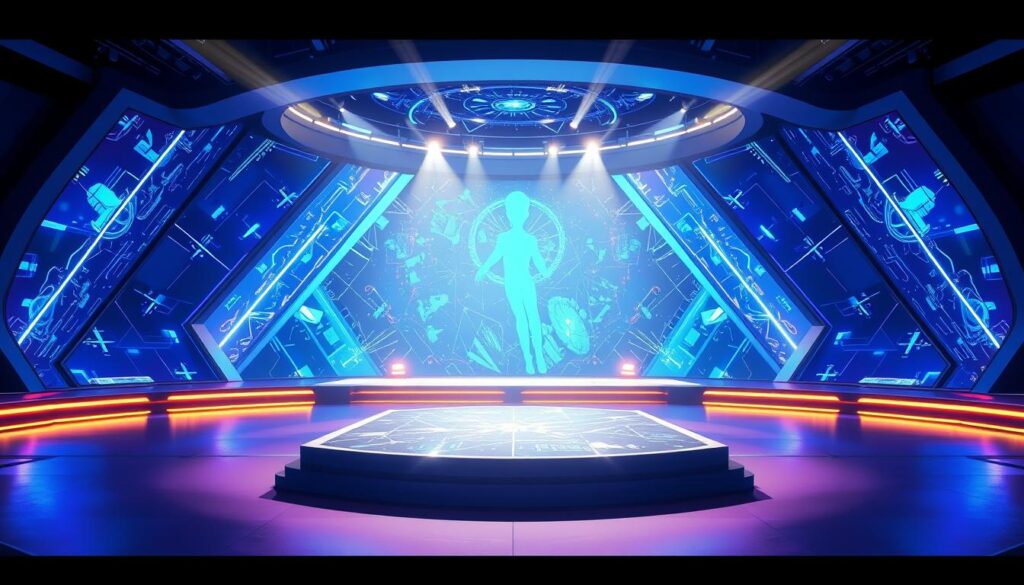
You’ve probably seen AI in design before. It’s used in things like interior design tools and real estate photo editing. Now, it’s changing the entertainment world.
Picture a virtual stage director that makes custom lighting and sets for your show. It makes designing easier and looks better. This is thanks to AI stage design, which creates more detailed and personal spaces.
Now, you can rent lighting and sets that fit your show perfectly. This tech makes bringing your ideas to life cheaper. It’s changing how we plan and make shows.
The Evolution of Stage Design in the Digital Era
The digital era has changed stage design a lot. New tech is making productions better and more exciting. Old ways of designing stages are now mixed with new digital tools.
Traditional Stage Design Challenges
Old stage design methods can be slow and expensive. They often don’t allow for easy changes and can harm the environment. This shows we need better, greener, and quicker design methods.
The Digital Transformation of Production Design
The digital world has changed production design a lot. Now, you can make complex designs easily and accurately. Digital tools help teams work together better and make the design process faster and cheaper.
Emergence of AI in Creative Production Processes
AI is now a big part of making productions. It helps with ideas for sets and lighting. AI is making productions even more creative. As AI gets better, it will likely change stage design even more.
Understanding Virtual Stage Director: AI Designs Lighting & Sets for Rent
Ever wondered about the Virtual Stage Director and its role in shows? It’s a game-changer, using AI to craft lighting and sets for all sorts of productions. It’s a must-have for the entertainment world.
What is a Virtual Stage Director?
The Virtual Stage Director is a top-notch tech that uses AI for lighting and set designs. It makes production smoother, helping to achieve stunning visuals.
Core AI Technologies Powering Virtual Stage Direction
This tool relies on advanced AI, like machine learning and computer vision. These work together for a smooth production process.
Machine Learning Models for Creative Design
Machine learning lets the Virtual Stage Director come up with creative designs. It uses inputs like script analysis or design preferences. For example, Huddly Crew shows how AI can handle complex visuals.
Computer Vision Applications in Set Analysis
Computer vision helps the Virtual Stage Director understand and tweak set designs. It makes sure the visuals are perfect.
Rental Options and Accessibility for Productions
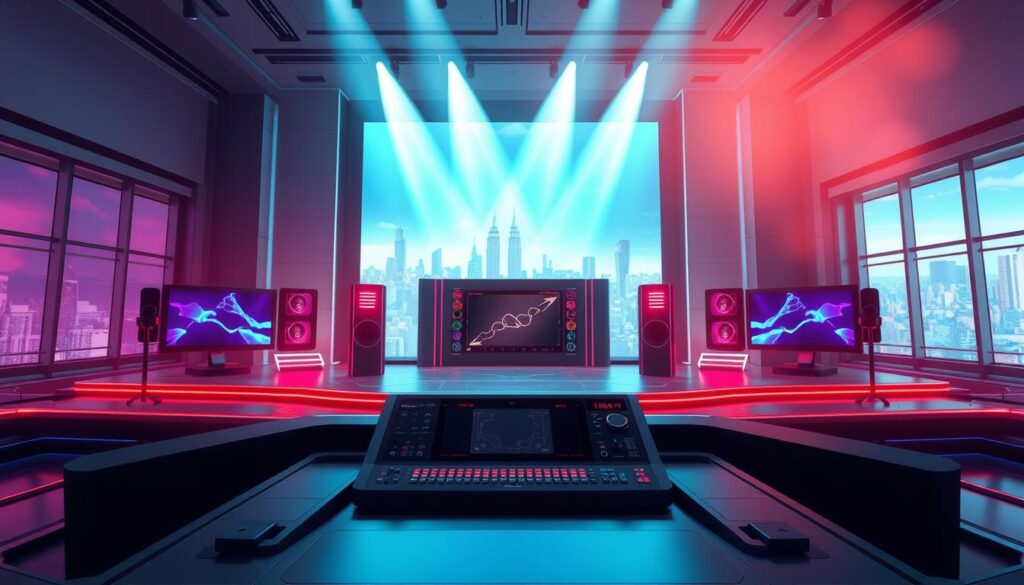
The Virtual Stage Director is available for rent. This makes it easy for productions of all sizes to use AI tech. You don’t need to spend a lot upfront.
How AI Analyzes and Creates Optimal Lighting Designs
AI can now analyze and adjust lighting in real-time. This has improved the quality of live shows and broadcasts. You can use advanced AI algorithms to make complex lighting designs that were once impossible.
Light Modeling and Simulation Capabilities
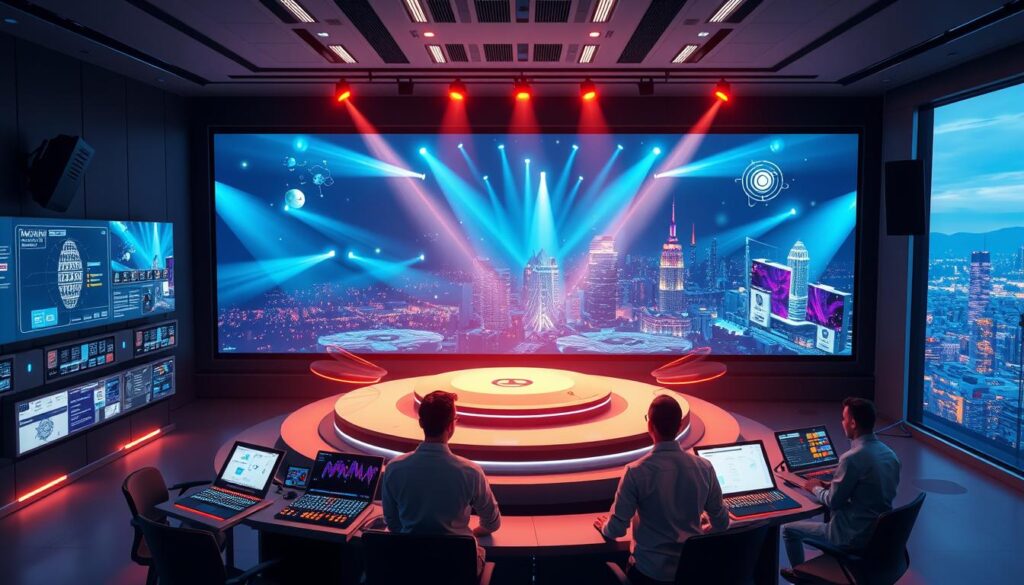
AI-driven lighting tools offer advanced light modeling and simulation. They let you try out different lighting setups without physical changes. This saves time and money.
Mood and Atmosphere Generation Through AI
AI can create specific moods and atmospheres through lighting. It analyzes scripts and the director’s vision. This ensures the lighting fits the story, making the show more engaging for viewers.
Real-time Lighting Adjustments and Optimization
AI’s biggest benefit in lighting design is its real-time adjustments. During live shows, AI can tweak the lighting to match the performance. This is great for changing stage setups or actor positions.
Dynamic Lighting for Live Productions
Dynamic lighting is key for live shows. AI systems adjust lighting in real-time to match the performance’s mood. This makes the show more engaging and immersive for the audience.
Automated Color Grading and Correction
AI helps with automated color grading and correction. It ensures the lighting’s colors match the production’s look. This is vital for film and TV, where color consistency is essential.
Virtual Set Design: From Concept to Execution
AI tools now let you create amazing virtual sets. The journey starts with AI-generated set concepts based on script analysis. This makes set design faster and more creative.
AI-Generated Set Concepts Based on Script Analysis
AI looks at the script to come up with set ideas. These ideas match the story and the director’s vision. It saves time and adds precision to the design.
AI understands the production’s needs. It suggests set designs that are new and useful.
Customization Options for Virtual Sets
AI-generated sets can be tailored to fit your needs. You can change colors, lighting, and textures. This makes sure the virtual sets look great with your production’s look.
Integration with Existing Production Workflows
It’s important for AI set design tools to work with your current workflow. They are made to be easy to use with different software and hardware. This makes the process from start to finish smooth.
Compatible Software and Hardware Requirements
Most AI design tools work with common production software. They also run well on standard hardware. This means you don’t need to spend a lot on upgrades.
Export and Sharing Capabilities
When your virtual set design is done, you can share it easily. This helps your team work together better. It makes the production process smoother.
Using AI in virtual set design boosts creativity and efficiency. It makes your production better and more flexible.
Practical Applications of AI Stage Direction
AI in stage direction has many uses. It makes production more creative and efficient. You can use AI to change how you make films, theater, and live events.
Virtual Productions and Remote Filming
AI is great for virtual productions and remote filming. It helps create detailed virtual scenes and makes changes on the fly. This makes remote work cheaper and easier.
You can make virtual sets with AI. This means you don’t always need a real place for filming.
Live Streaming and Broadcast Enhancement
AI can make live streams and broadcasts better. It adjusts lights and camera angles for the best view. This makes your show more exciting and professional.
Educational and Training Environments
AI is also good for learning. It makes lessons interactive and fun. Students can grasp hard ideas better with AI.
You can use AI for training. It makes learning faster and more effective.
Theater and Performance Art Applications
In theater, AI can change the stage in real time. It adjusts lights and sets for a better show. This tech can make theater more exciting and new.
Using AI in entertainment lets you be creative and improve your work. It’s a way to stay ahead in the industry.
Cost-Benefit Analysis: Traditional vs. AI-Powered Stage Design
AI-powered stage design is changing the entertainment world. It makes productions more efficient and green. When planning your next show, it’s key to weigh the costs and benefits of traditional versus AI-powered designs.
Budget Considerations for Different Production Scales
AI stage design saves money, mainly for big shows. It cuts down on the need for sets and lights, which lowers costs. Even for smaller shows, AI can help save money by using resources better.
Time Efficiency and Production Timelines
AI stage design also speeds up production. It handles lighting and set design, freeing up your team. This means your show can meet deadlines, which is great for tight schedules.
Environmental Impact and Sustainability Benefits
AI stage design is also good for the planet. It uses less physical stuff and cuts down on waste. If you care about the environment, AI stage design is a smart choice.
Conclusion: The Future of AI in Production Design
AI is changing the game in creative fields fast. Virtual Stage Director is leading the way in lighting and set design. It makes production more efficient, flexible, and green.
AI is set to keep pushing the boundaries in production design. You’ll see better light modeling and AI-created set ideas. This future looks bright, with productions becoming more adaptable and eco-friendly.
The tech is getting better, and so will production design. AI and human creativity will keep bringing new ideas. It’s an exciting time to be part of this industry.