

The job market changes fast, making many professionals worried about their jobs. You might think your years of experience are outdated with new tech coming out. But, you don’t have to throw away your hard-earned experience to stay relevant.
Think of it as an AI career transition instead. This way, you can use what you already know and add new tools. By doing this, you can make a smooth career pivot that respects your past and secures your future.
This guide will show you how to change your career path. We focus on improving what you already know, not starting over. You’ll learn how to keep up with the fast pace of digital changes and succeed in today’s world.
Assessing Your Existing Professional Capital
To start your next professional chapter, you need to understand your professional capital. Before making a career pivot, audit the assets you’ve built over your career.
This isn’t just about listing your past jobs. It’s about seeing your unique skills, networks, and experiences. These define your current value in the job market.
Mapping Your Career History
Begin by making a detailed timeline of your career. Don’t just copy your resume. Instead, write down the challenges you’ve overcome and the projects you’ve led.
This timeline helps you see your growth patterns and where you’ve excelled. It’s the base of your career resilience. It shows how you’ve handled past changes in the industry.
Identifying Core Competencies Beyond Your Job Title
Many struggle to see their worth outside their specific field. But career adaptability means growing and changing with your role.
Look for your core skills, like strategic thinking, leadership, or problem-solving. These skills are key during a career pivot. They stay valuable even when the job market changes.
By seeing yourself beyond a single job title, you become more adaptable. This is the first step to lasting career resilience and success.
How to Use AI to Build a Second Career, Not Start Over
The years from 2023 to 2030 are a great time for a career change. You’re in a big shift in the job market that needs a new way of working. Instead of seeing your past as over, use it as a base for your next step.
It’s key to understand the philosophy of career evolution to stay ahead. Don’t stick to old ways; see your skills as changeable. This lets you move forward without losing your hard-earned experience.
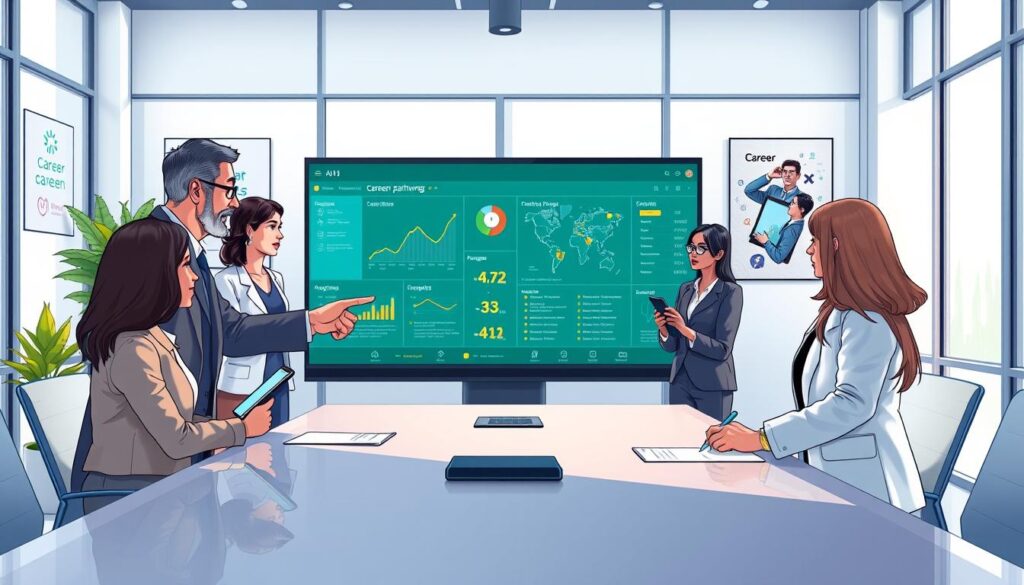
The Philosophy of Career Evolution
Career evolution means creating your path, not just following it. You can mix new tools with what you know. This makes you stay current, no matter what changes.
Building your future with purpose is the best way to predict it. By not starting over, but building on what you have, you open up new possibilities. This is key for a career that lasts in a fast-changing world.
Why AI is the Catalyst for Your Pivot
Artificial intelligence is key to changing your career. Using AI-native workflows lets you automate simple tasks. This frees you up to think big and do things you couldn’t before.
Working in an AI-first company or adding AI to your job is smart. These places value new ideas and reward those who use AI to solve big problems. To grow your career, you need to connect human insight with AI’s power.
Identifying Transferable Skills Through AI Analysis
Your past jobs are more valuable than you might think. Generative AI helps uncover your hidden strengths. This way, you can move forward without starting over.

Using Large Language Models to Audit Your Resume
Large language models offer a fresh view of your career. They spot patterns in your work history that you might miss. This is key for creating an AI-assisted resume that showcases your abilities.
With automation threatening 18 million entry-level jobs, your experience is priceless. Make sure your background shows you’re ready for today’s tech world. Refining your story helps you stand out in a competitive job market.
Translating Industry-Specific Jargon into Universal Skills
Every field has its own language, hiding your true skills. AI tools break down this jargon to reveal your transferable skills. This makes your profile appealing to recruiters across different industries.
Extracting Soft Skills from Hard Experience
While hard skills are specific, soft skills like leadership and adaptability are universal. AI can connect your technical skills to these broader abilities. Emphasizing these traits keeps your value relevant as job roles evolve.
By focusing on these lasting qualities, you build a strong base for your next career step. An AI-assisted resume links your past to your future. This strategy turns your experience into a versatile tool for success.
Bridging the Knowledge Gap with AI-Powered Learning
You can learn new skills by using AI tools you already use at home. People are 50% more likely to use AI at home than at work. This gives you a chance to use AI for professional growth.
Creating Personalized Curricula with ChatGPT and Claude
To succeed in a new field, you need more than generic courses. Use ChatGPT or Claude to create a customized roadmap for your career goals. Just tell them about your background and target role to get a study plan.
This way, you focus on what you need to learn, not what you already know. Personalized curricula make sure every study hour helps you move forward.
Simulating Real-World Scenarios for Skill Acquisition
Learning new skills means more than just reading. You need to practice. AI can act as a hiring manager or client to test your skills safely. This builds your confidence before real interviews.
Practicing with AI helps you solve problems under pressure. This active learning method connects theory to real-world skills.
Using AI Tutors to Master New Technical Tools
Learning complex software or programming? AI tutoring is like having an expert always ready. You can get explanations or code checks anytime. This fast feedback helps you learn faster.
With intelligent support, you avoid getting stuck on small issues. This lets you keep moving forward in your learning journey. You’ll master new technical tools more efficiently.
Leveraging Generative AI for Personal Branding and Networking
In today’s world, your personal branding is what sets you apart. With AI taking care of technical tasks, social skills are more important than ever. You need to be a leader who knows both the human side and the digital world.
Generative AI helps you tell a story that fits your new career path. By clearly showing your value, you grab the attention of recruiters and peers. This way, you can stand out in a busy job market.
Optimizing Your LinkedIn Presence for Your New Direction
Your LinkedIn profile is like a digital storefront. LinkedIn optimization is key to drawing in the right opportunities. AI tools can help you rewrite your headline and summary to showcase your skills.
Instead of just listing old jobs, focus on what makes you unique. Tailor your content to catch the eye of algorithms. Consistency in your messaging is vital for establishing authority in your new field.
Drafting Targeted Outreach Messages with AI Assistance
Effective networking with AI is more than sending out automated messages. Use AI to craft personalized messages that connect with industry leaders. This saves time and keeps your messages professional and authentic.
When you contact possible mentors or partners, make sure your message shows how you can help them. AI helps you manage your professional image, leading to meaningful connections. This forward-thinking approach helps you link your past to your future goals.
Managing the Transition Without Sacrificing Seniority
Many professionals worry about losing their seniority when they switch industries. But AI changes the game. About 29 million “mastery roles” will open up as technology lowers barriers. Your experience in managing complex projects is now more valuable than ever.
You don’t have to take an entry-level job to prove your worth. Instead, use your existing professional capital to start at a higher level. This way, you keep your career on track.
Positioning Yourself as a Senior Consultant Instead of a Junior Hire
When you start in a new field, your biggest asset is seeing the big picture. Market yourself as a senior consultant with a fresh view on old problems. Companies need someone to connect strategy with execution, and you’re that person.
Network with leadership teams that need someone to bridge the gap. Your value lies in your judgment, not just doing tasks. This way, you avoid being seen as a junior hire.
Using AI to Automate Routine Tasks in Your New Role
The key to keeping your status is to let AI handle the routine work. By automating routine tasks, you free up time for important decisions. This lets you achieve more than a junior hire could.
Embracing AI-native workflows keeps you competitive and agile. You focus on strategy while AI handles the details. This way, you stay at the top of your game while learning your new field.
Conclusion
Starting a second career in today’s world of artificial intelligence means always learning. You can change your career by learning new skills and thinking differently.
Being adaptable in your career lets you easily change when the job market shifts. This flexibility turns challenges into chances to grow. You stay ahead by using your past experience as a base for future success.
Building resilience in your career helps you deal with the ups and downs of change. You stay focused while learning new things or stepping into new fields. This strength keeps you productive even when things change a lot.
Preparing for the future in your career means always being ready to innovate. View your career as a project that grows with technology. Use tools like LinkedIn or OpenAI to keep up with trends.
Start shaping your future now. Use these tips to create a lasting and fulfilling career path. Your ability to mix human skills with AI will be key to your success in today’s job world.