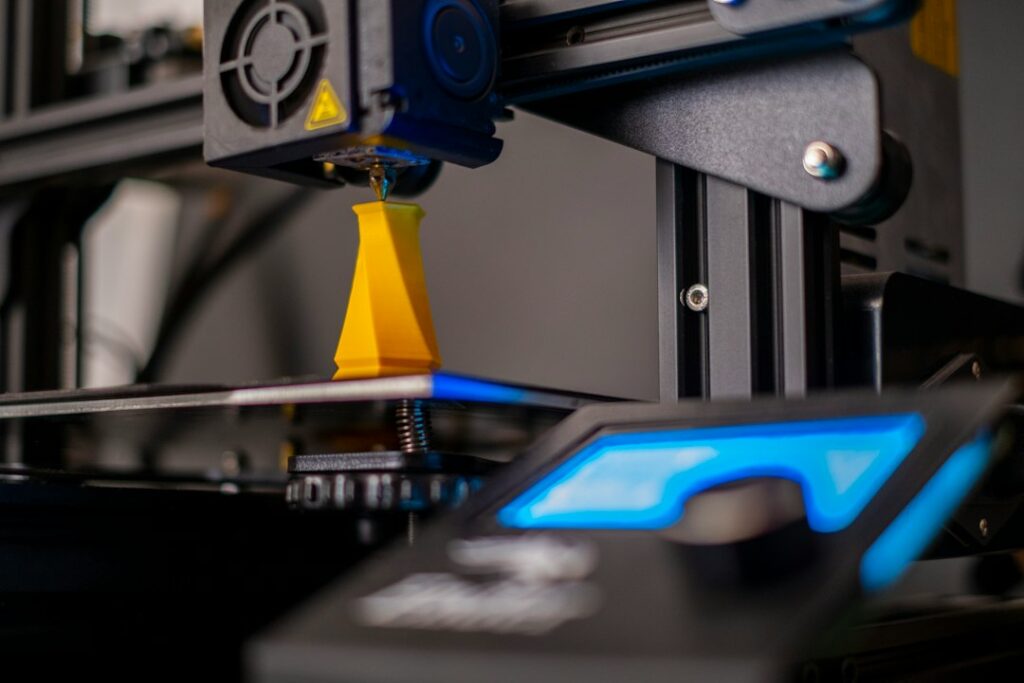
If you enjoy making things, a small 3D printing service may be an interesting project to investigate. AI can help turn a customer conversation into a clear brief, draft a quotation, or organize your costs. It cannot turn every attractive image into a printable, safe, profitable product.
Start with one uncomplicated decorative item and one prototype. The purpose of this first test is to learn whether you can deliver consistent work at a price that covers your effort.
Choose a narrow first offer
A customized desk nameplate is easier to define than “anything you can imagine.” Specify the intended use, approximate dimensions, lettering, color options, finish, quantity, and delivery expectation. Decide how many revisions you will include before quoting.
For a beginner’s trial, avoid products whose failure could injure someone, such as load-bearing parts, vehicle components, medical devices, or children’s safety equipment. Food-contact items and toys also require expertise beyond an attractive model. A filament description or AI assurance does not establish that a finished product is appropriate for those uses.
You do not have to buy a printer immediately. A local makerspace or print service may help you assess a prototype and the skills involved. Obtain an actual quote and understand their rules before promising a customer a price.
Use AI to clarify the brief
Help me prepare a brief for a decorative desk nameplate. Ask about dimensions, exact spelling, placement, colors, finish, quantity, deadline, and permitted revisions. Separate customer choices from manufacturing questions that a competent printer operator must check. Do not guarantee printability, material safety, strength, or a delivery date.
Ask the customer to approve the exact text in writing. If the nameplate includes a logo or other supplied artwork, establish permission to use it. Share only the information the AI needs, and remove customer contact details from your prompt.
Keep an approved brief with a version number. If the customer changes the wording after a prototype, record the change before producing the order. AI can compare two briefs, but you should verify that it has not overlooked a small change in dimensions or spelling.
A picture is not a manufacturing file
An AI-generated concept image is a visual suggestion. A printable 3D model needs suitable geometry, dimensions, and preparation in software that converts it into instructions for the printer. This preparation stage is commonly called slicing.
Prusa’s guidance on corrupted models notes that automated repairs do not solve every problem. A model opening successfully on screen is therefore not a complete quality check.
Have a competent operator review the file, inspect the slicer preview, and produce a prototype using the intended process. Check the real object against the brief: size, legibility, surface finish, stability for its intended decorative use, and any visible defects. Do not describe an AI mock-up as a photograph of a finished product.
Check the design’s permitted uses
Downloading a model does not automatically give you permission to sell prints of it. Read the specific license and keep a record of its terms and source. For example, the Creative Commons Attribution-NonCommercial license restricts commercial use. Other models may have different permissions or attribution requirements.
When the permission is unclear, choose a design you own or obtain clarification from the rights holder. AI can summarize supplied license text for your review; it cannot grant missing rights or determine every legal question. Do not assume that generating a logo or character makes it yours to sell.
Price your actual work
Use a worksheet for materials, machine time, preparation, finishing, customer communication, packaging, delivery, payment charges, and an allowance for failed prints or rework. Prusa’s printing-cost explanation offers a useful cost framework, but its example figures are historical. Use your own current costs and measured times.
For a fictional trial, suppose a prototype uses $3 of material and $2 of other direct costs. If preparing and finishing it takes 30 minutes, the job still includes half an hour of work. A $5 selling price would not compensate that time, overhead, or later reprints. This is a calculation example, not a market price.
Ask AI to identify missing cost categories and explain the spreadsheet. Check the arithmetic independently. Quote only after the prototype provides evidence for the time and material assumptions.
Plan the working environment
NIOSH describes emissions and other hazards associated with 3D printing, including particles, chemicals, hot surfaces, and moving parts. Follow the manufacturer’s instructions and appropriate controls for the printer, materials, and workspace. An improvised enclosure or an open window is not automatically an adequate solution.
If you cannot provide a suitable setup or assess the process competently, use a properly equipped service rather than treating a spare room as ready for production.
Decide after one measured trial
Record the approved design, prototype result, actual hours, materials used, failures, and customer feedback. Photograph the real sample and state its limits clearly. Keep a finished example that represents the quality you can repeat.
Continue only if the process is manageable and the price makes sense for both you and the customer. AI is most useful here as an organizer of evidence and communication. The physical prototype and your measured work determine whether the service is ready.
For the customer approvals and job tracking around your first order, see Run a One-Person Business With AI.
AI disclosure: This article was written and revised with AI assistance. Sources checked September 25, 2026. See our disclaimer.
Reviewed September 25, 2026. Photo by Osman Talha Dikyar on Unsplash.


