A low asking price on Craigslist or Facebook Marketplace is a reason to investigate, not proof of a profitable flip. The item may be damaged, incomplete, difficult to collect, or worth less than the seller suggests. AI can help organize those questions. It cannot inspect the item, authenticate a seller, or promise a later buyer.
Start with one familiar category and a small shortlist. The useful goal is a well-supported buying decision, including deciding that none of the available items is worth pursuing.
Set your buying limits before searching
Write down the type of item, acceptable condition, maximum total spending, collection distance, storage space, and time you can commit. If you are buying for resale, choose something you can assess and describe honestly. Avoid starting with safety-critical or high-value goods that require expertise you do not have.
Ask AI for alternative search phrases or a comparison checklist. Keep the search on the marketplace itself or use an authorized feature. Craigslist supports saved searches and email alerts for new matching postings. That is ordinary automation; it does not establish that a listing is a bargain.
Before connecting an outside monitoring service, check the marketplace’s current rules, the service’s permissions, fees, and how to disconnect it. A promise to scan continuously is not evidence of authorized access. Keep purchasing, payment, and messages under your control while you learn the process.
Extract facts without filling the gaps
Record the listing URL, date checked, model, dimensions, included parts, asking price, collection arrangements, and the seller’s exact condition claims. Read the original listing and inspect every photograph yourself.
Using only these listing notes, separate stated facts from unanswered questions. Do not infer authenticity, age, working condition, dimensions, or missing accessories. Suggest five questions I should answer before considering a purchase.
A photo-based identification is a lead to verify against a label or reliable manufacturer information. A similar-looking chair may have different materials; an electronic item that lights up may still fail its main function. AI cannot turn “untested” into “working.”
For a fictional example, a desk listed as “solid wood, good condition” still leaves important questions: exact dimensions, loose joints, water damage, whether it comes apart, and whether your vehicle can carry it. Request clear answers without sharing unnecessary personal information. Preserve uncertainty when a seller does not respond.
Compare evidence of actual sales
Separate current asking prices from completed sales. Look for the same model or a close match in similar condition, and note accessories, date, location, and delivery arrangements. A nationwide shipped sale may be a poor comparison for a bulky local collection item.
You can ask AI to organize a few comparisons you have checked. Do not ask it to invent market prices or treat an average across unrelated goods as a valuation. If the evidence is thin, label the resale price uncertain and consider passing on the purchase.
Our article on running a more orderly eBay shop explains using sales research and accurate listing records after you decide to sell. Auction bidding has different commitments; see checking an online auction before bidding for that situation.
Calculate the whole purchase
Include the item, collection travel, help or vehicle hire, cleaning, permitted repairs, storage, selling charges, packing, delivery, and an allowance for problems. Decide what your time and risk need to earn. Check the calculation independently rather than accepting an AI-generated margin.
Here is a fictional illustration: a possible $150 resale minus $25 selling and delivery costs, $20 collection cost, $15 preparation allowance, and $40 desired compensation leaves $50 for the item. The $40 is a planning target, not guaranteed profit. A lower sale price, unexpected repair, or unsold item can erase it.
Compare that maximum with your total spending limit as well. Even a promising item may tie up money or space you need for something else. Do not borrow or exceed your limit merely because a score calls it a rare opportunity.
Make collection and payment a separate check
Craigslist’s scam guidance advises local, face-to-face dealings, no payment before meeting, and a safe public meeting place. It warns against gift-card payments, financial-information requests, and verification-code requests. These checks reduce exposure; they do not guarantee safety.
For a bulky item that cannot be inspected in a public location, make a careful collection plan, take someone with you where practical, and walk away if the arrangement feels unsafe. Follow the marketplace’s current safety guidance. Check the item before agreeing to pay, and verify what protection, if any, applies to the actual transaction rather than assuming every payment is covered.
An AI assessment of profile photos or messages cannot verify someone’s honesty. Keep account credentials and verification codes private. Do not let urgency replace the inspection or spending limit.
Learn from the completed transaction
Record the actual purchase, time, expenses, sale price, and any problems. Keep unsold items in the record too; counting only successful flips gives a misleading picture. After a few modest transactions, compare outcomes with your estimates before increasing the budget. The best automation helps you maintain that evidence without making commitments you have not approved.
Reviewed September 28, 2026. This article was prepared with AI assistance and checked against the linked sources. It provides general information; see our disclaimer.
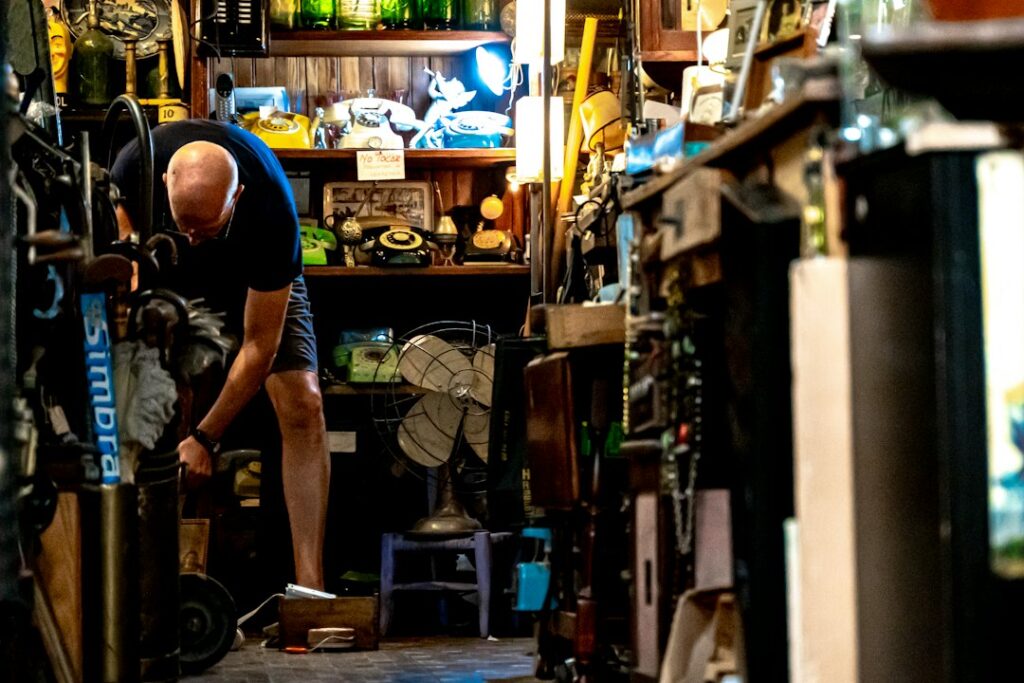
Photo: Lucia Sorrentino on Unsplash. The stock photograph illustrates the topic; it is not a demonstration of AI software.


