
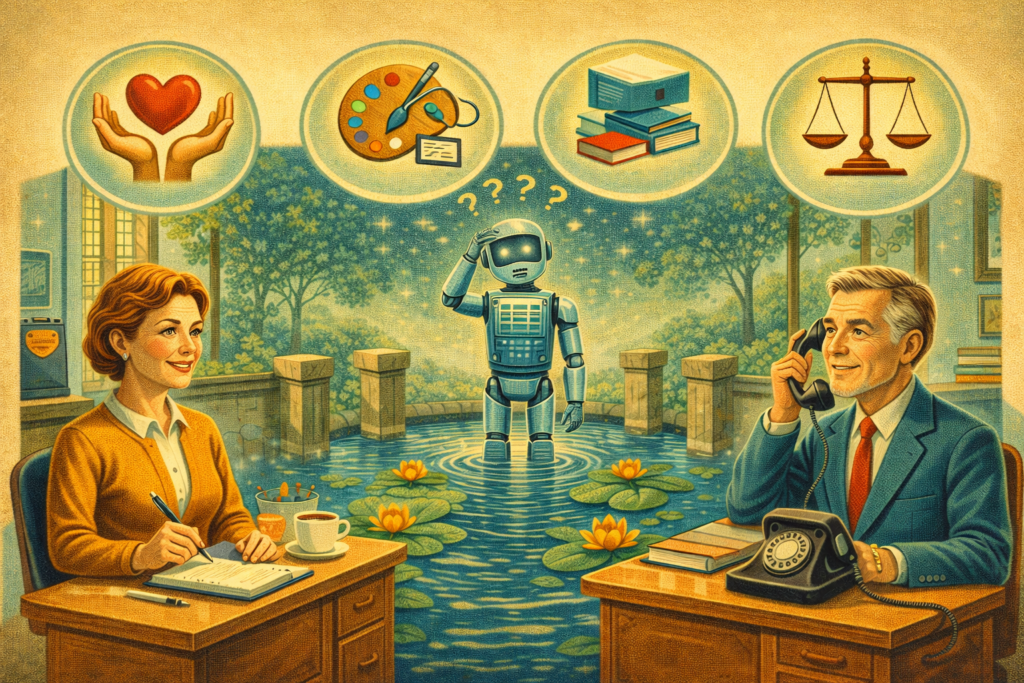
Have you noticed changes in your workplace? The idea of a midlife crisis is changing with technology. It’s not just about tech; it’s about how you adapt.
Jobs are changing fast, making your midlife career feel less secure. Modern workers face a tough, high-tech world. Old ways of growing in your career are fading because machines do simple tasks now.
You need to find strengths that AI can’t match. This is your personal shield. Building it means learning AI skills like emotional smarts and complex ethics.
Key Takeaways:
- Shift focus toward human-centric value.
- Build defense against automation via unique talents.
These human traits are unique. Adapting to change keeps you valuable. Your years of experience offer insights machines can’t.
Focus on these human strengths to stay ahead. Success needs proactive evolution and a desire to learn. Your future depends on today’s professional choices.
Why Your Midlife Experience Becomes More Valuable as AI Advances
With AI taking over routine tasks, your midlife experience is now key in the workplace.
As AI advancement speeds up, it’s clear that technology can’t replace human judgment and experience.
Your years of work have given you skills and intuition that AI can’t match. You can handle complex work situations and make decisions with incomplete information. You also bring creativity and innovation to solving problems, something AI can’t do yet.
The career value of your experience grows because you can connect with people and understand their needs. This empathetic leadership is highly valued in today’s work world. It’s even more important as AI handles more routine tasks.
As AI keeps getting better, the need for people who can work with AI grows. Your midlife experience makes you perfect for this role. You’re now a vital part of your team.
The Midlife Moat: Skills AI Can’t Fake and Why They Matter Now
In today’s world of artificial intelligence, some human skills are more valuable than ever. They create a moat around your midlife career. AI can do many things, but it can’t replace certain human abilities.
Your midlife moat is made up of skills and experiences that are uniquely yours. These include solving complex problems, being creative, and understanding social situations. These skills are not just useful; they’re key to career resilience in a fast-changing job market.
One skill AI can’t fake is understanding and managing human emotions. Emotional intelligence helps you connect with others, solve conflicts, and build strong relationships. These skills grow over years of experience and interaction.
Another important part of your midlife moat is making seasoned judgments. This means looking at complex situations, weighing options, and making decisions that consider both data and people. This skill comes from years of experience and dealing with different business scenarios.
Also, your professional network, or relationship capital, is a big asset. The connections you’ve built over time can offer support, new opportunities, and insights that AI can’t provide.
In summary, the skills that make up your midlife moat are vital for career resilience. By using these skills, you can stay relevant and succeed in an AI-driven world.
Emotional Intelligence: Your Human Edge in a Digital Workplace
Your emotional intelligence is a special asset in today’s digital work world. As AI and automation handle routine tasks, your ability to empathize and understand complex emotions becomes more valuable.
In this new world, emotional intelligence is key. It’s not just about working with machines. It’s about adding depth and connection to your interactions with others.
Reading Unspoken Cues and Subtext in Human Interactions
Emotional intelligence helps you understand what’s not said. You learn to pick up on non-verbal signals and grasp the true emotions behind words.
Effective communication in a digital space means more than just clear info. It’s about catching the emotional subtleties that can influence outcomes.
Navigating Complex Workplace Emotions and Conflicts
The digital workplace can sometimes make tensions worse. Emotional intelligence helps you handle these issues with care and understanding.
By getting the emotional vibe of your workplace, you can mitigate conflicts. This leads to a more peaceful and productive work space.
Building Genuine Empathy Through Shared Human Experience
Empathy is at the core of emotional intelligence. It lets you connect deeply with others. In a digital setting, empathy means really getting to know and feel what others are going through.
This is done by listening well, asking the right questions, and showing real interest in others’ lives. Such actions strengthen bonds and create a supportive work environment.
Contextual Wisdom: Connecting Dots Across Decades of Change
Your midlife experience is rich with contextual wisdom. This wisdom helps you apply past lessons to today’s challenges. It gives you a unique view that AI systems can’t match.
As you grow in your career, your skill in linking past and present becomes more valuable. You’ve seen many business cycles, tech advances, and changes in what people want. This gives you a wealth of experience to use.
Recognizing Patterns AI’s Training Data Cannot Capture
Contextual wisdom lets you spot patterns AI can’t see. AI can handle lots of data but is limited by its training scope. You, with your real-world experience, can see patterns that emerge over time.
These patterns might include shifts in what people want, the effects of economic downturns, or changes in industry trends. Spotting these patterns helps you make better decisions and share valuable insights with your team.
Understanding Organizational History and Cultural Memory
Your time in an organization has given you a deep grasp of its organizational history and culture. You know the company’s triumphs and setbacks, key figures, and major decisions. This knowledge is key to tackling today’s challenges and making smart choices.
This understanding helps you see why some strategies worked and others didn’t. It lets you make informed decisions based on what you’ve learned from the past.
Applying Lessons from Past Business Cycles and Trends
You’ve lived through many business cycles and trends. This experience lets you apply past lessons to today’s problems. You know how different factors interact during growth or recession, and how to adjust your plans.
This ability to use past knowledge in today’s situations is a key part of contextual wisdom. It helps you navigate complex business landscapes and make decisions based on what has proven successful before.
Relationship Capital: The Irreplaceable Network You’ve Built
Over time, you’ve built a valuable network of professional relationships. This network is more than contacts; it’s a growing asset. It becomes more valuable as you nurture and expand it.
Your relationship capital has several key pillars. Each one makes it stronger and more useful. Trust is a big part of it, built over years of delivering results.
Trust Accumulated Through Years of Delivered Results
Trust is the key to your professional network. It comes from keeping promises, showing your skills, and being reliable. This trust is not just about you; it’s about a network that believes in you and supports you. A history of success makes your network a powerful tool for new opportunities.
Cross-Industry Connections That Open Unexpected Doors
Having connections in different industries is a big plus. They give you a wider view, access to new knowledge, and chances you might not find elsewhere. These connections can lead to new collaborations and insights you wouldn’t find in a single network.
Mentorship Relationships That Amplify Your Influence
Mentorship is key to a strong network. Mentoring helps others grow and strengthens your skills. Having mentors gives you guidance, support, and access to their networks.
By investing in your relationship capital, you lay a strong foundation for success. This network is alive and needs care but offers great rewards. It opens doors to new opportunities, support, and growth.
Seasoned Judgment: Making High-Stakes Decisions Beyond Algorithms
Having seasoned judgment makes you stand out when dealing with tricky and risky decisions. As you grow in your career, being able to make high-stakes decisions that go beyond just data becomes more important.
In complex situations, data might not give a clear answer. That’s when your experience and gut feeling kick in. They help you feel confident when facing uncertainty.
Navigating Ambiguity When Data Provides No Clear Answer
When faced with unclear situations, your seasoned judgment helps you weigh different options. You consider various viewpoints, think about possible outcomes, and choose the best path.
Your skill in handling ambiguity is key in today’s fast business world. Decisions often need to be made fast, with little information.
Assessing Risk Through the Lens of Real Consequences
Risk assessment is where your seasoned judgment shines. By thinking about the real effects of your choices, you make better decisions. These balance risks and rewards.
This means looking at how your decisions affect people like employees, customers, and the company itself.
Knowing When to Trust Your Gut Over the Spreadsheet
Your seasoned judgment also tells you when to trust your instincts over data. It’s about knowing when your experience and gut feeling are more important than numbers. And being sure in your decisions, even if they’re not backed by data.
By listening to your gut and using your analytical skills together, you make decisions that lead to success in your organization.
Adaptive Resilience: Your Proof of Survival Through Disruption
Professionals who thrive through disruption show great adaptive resilience. It’s not just about bouncing back. It’s about growing and improving from each challenge. Your career shows you can handle many disruptions, making you very valuable in today’s fast business world.
Thriving Through Technology Shifts
You’ve seen many technology changes in your career, each with its own challenges and chances. Your skill in adapting to these changes is a big plus. It shows you can stay relevant and effective as technology changes.
For example, moving from old marketing ways to digital marketing was a big shift. Those who adapted quickly used new channels and tools. This made their work better and wider-reaching. Your experience in making these changes is very valuable.
The Meta-Skill of Learning New Systems
Learning new systems is a key part of being adaptable. It’s not just about knowing new things. It’s about knowing how to use them well. You’ve gotten better at this over time, and it helps you a lot.
By understanding the basics of new systems, you can learn them faster. This skill is very important in a world where things change all the time.
Crisis Management Muscles Built Through Actual Crises
Your experience in crisis management is very valuable. You’ve handled real crises and learned how to manage them well. It’s not just about having a plan. It’s about knowing how to use that plan when it counts.
Your ability to stay calm and make good decisions under stress comes from your past experiences. This skill is highly valued in today’s business world, where surprises can happen anytime.
Conclusion
AI is changing the job world, making your midlife career more important than ever. The skills you’ve gained, like emotional intelligence and relationship skills, are key in today’s AI world.
Use your strengths to stay relevant and strong in your career. Work on skills that go well with AI, like making good decisions and handling complex people situations.
Your midlife career is a big plus in the AI era. The skills and connections you’ve made are unique and valuable. They help you succeed in a fast-changing job market. By valuing your experience, you can move forward with confidence and keep your career strong.