Can AI Help You Declutter? What It Can—and Cannot—Decide for You
AI can help organize a decluttering plan and draft honest listings. Here’s what to check before selling, donating, recycling, or sharing information.

Sorting through a full closet, a packed basement, or years of paperwork can feel overwhelming. AI can help organize a manageable plan, draft honest descriptions for things you want to sell, and keep track of questions that still need answers. It cannot decide what a family keepsake means to you, know whether a charity will accept a lamp today, or guarantee an old item is safe to pass on.
The best use of AI is to reduce the planning burden while you keep control of the decisions. A short list of real next steps is usually more useful than a detailed plan for the whole house that nobody has time to carry out.
What AI can realistically do
An AI chat tool can work from a short list you type, or, if the service supports it and you choose, a photograph. It can group similar objects, suggest an order for working through a room, or turn facts you provide into a draft listing. Some apps offer additional image or organizing features, but availability, cost, and privacy settings depend on the service.
The tool works from limited information. A photograph may not reveal damage inside an appliance, a safety recall, an item’s history, or who owns it. AI can also produce a confident-sounding price, identification, or disposal instruction that is wrong. Treat those suggestions as starting points to check.
Start with decisions, not a perfect inventory
A single shelf or box can be enough for one session. An ordinary drawer of duplicate kitchen tools might be easier than a box of family letters. If an item belongs to someone else or is jointly owned, agree who gets to decide before taking action.
A practical list may have five groups: keep, consider selling, consider donating, recycle or dispose of appropriately, and undecided. “Undecided” is a useful status, not a failure. If you want to use AI, you might ask it to organize your choices and note unanswered questions. It should not move anything or make a choice on your behalf.
For example, imagine a fictional box containing a working desk lamp you are considering donating, a scarf belonging to another family member, and a packet of old postcards you have not decided about. A useful plan would say to check whether a chosen organization accepts the lamp, ask the scarf’s owner, and leave the postcards undecided. A plan that says the lamp pickup is booked or the postcards should be discarded has gone beyond the facts.
Write down what actually happened when it happens. “Considering donation,” “organization confirmed it accepts the item,” and “item dropped off” are three different stages.
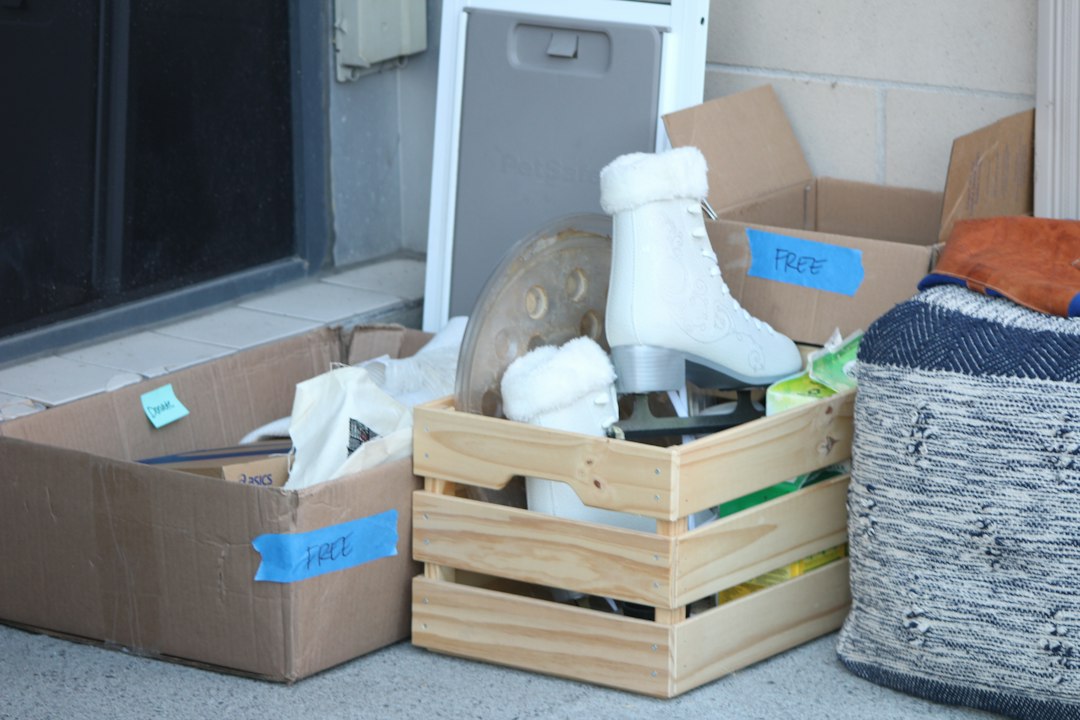
When selling, let facts lead the description
For something you decide to sell, start with details you can actually confirm: the brand and model, dimensions, condition, missing parts, visible marks, and accessories included. AI can make a description easier to read, but compare every claim with the item. Delete invented phrases such as “works perfectly,” “rare,” or “barely used.” Use photographs that show the real condition.
Price suggestions deserve the same skepticism. Look for completed sales of comparable items when that information is available, not just asking prices. Check differences in condition, location, fees and shipping. A professional appraisal may be sensible for an item that could have significant value, but neither a listing price nor an AI estimate guarantees a sale.
Be careful with buyers who send a payment notification you cannot verify in your own account, send a check for more than the price, or ask you to return a supposed overpayment. The Federal Trade Commission describes these common online-selling scams. Do not rely on a screenshot or email as proof that money has arrived.
Check donations and recalls directly
A suggested donation location may be useful, but its hours, pickup area, condition requirements and accepted items can change. Contact the organization or check its current instructions before loading the car. A generated schedule is not a confirmed appointment.
Before giving away or selling a product, look for recalls and follow the instructions for an affected item. The U.S. Consumer Product Safety Commission’s recall search is a place to start. Check the exact brand and model when possible; an AI identification from a picture is not enough to establish whether a recall applies.
Be especially cautious with child-related products, damaged electrical items, and anything missing safety parts. If you cannot establish that an item is appropriate to pass on, ask the organization or the relevant manufacturer rather than assuming someone else can figure it out.
Phones, batteries and sensitive papers need special care
Older devices may contain photos, passwords, messages or financial information. Before a phone leaves your possession, make sure you can access the information and accounts you need, remove your personal information, and follow the manufacturer’s current steps for that model. The FTC explains how to prepare a phone for sale, donation or recycling. An AI-generated checklist cannot confirm that your own backup is complete.
Check local disposal instructions instead of assuming an app’s answer applies to your town. The EPA says lithium-ion batteries and devices containing them should not go in household garbage or ordinary recycling bins; look for an appropriate electronics or battery collection option. If a battery is damaged or swollen, contact the manufacturer or local waste authority for guidance rather than attempting to remove it yourself.
Paper records can contain information you would not want in a listing photograph or an AI upload. Keep documents you still need and securely dispose of those you no longer need. The FTC offers examples of records to keep and recommends shredding papers containing personal or financial information.
Think before photographing or uploading your belongings
A background photograph can reveal mail, family photos, prescription labels, valuables, house numbers or other people’s belongings. Crop or move sensitive material out of the frame before sharing an image. Avoid uploading documents or photographs belonging to someone else without their permission.
Online AI services differ in what they store, who can access submitted information, and whether they use it to improve their systems. Review the current privacy settings and terms for the service and account you intend to use. If an item description is enough, there may be no need to share a picture of the surrounding room.
Make room for memories and practical limits
Some belongings hold value because of the people or events connected to them. A writing tool can help organize a short note about a family photograph, but it cannot tell you whether to keep the photograph or how another relative feels about it. Ask household members before disposing of shared belongings. A separate “ask the family” box can keep those questions from slowing every other decision.
It is also reasonable to consider your time and energy. A low-value object may take photographs, messages, fees and a pickup arrangement to sell. Donating it may be worthwhile if an organization actually accepts it; keeping it may be the right decision too. There is no prize for the largest number of bags or the fastest project.
AI is useful when it makes the next step clearer. The decisions about your home, family history and belongings remain yours.
Related articles
Sources
- FTC: Selling stuff online? Here’s how to avoid a scam
- Consumer Product Safety Commission: Recalls and product safety warnings
- FTC: Remove personal information before you get rid of your phone
- EPA: Electronics donation and recycling
- FTC: Which documents to keep and which to shred
Originally published February 2, 2026. Substantively rewritten November 11, 2026, with AI assistance and AI-assisted source checks. An earlier lesson was updated October 18, 2026; a note recorded “Reviewed October 3, 2026,” without separately documenting a source check. No independent human review or hands-on AI product test is documented for this rewrite. The example is fictional. Featured photograph: Dina Badamshina / Unsplash; for illustration. How we review our guidance.