
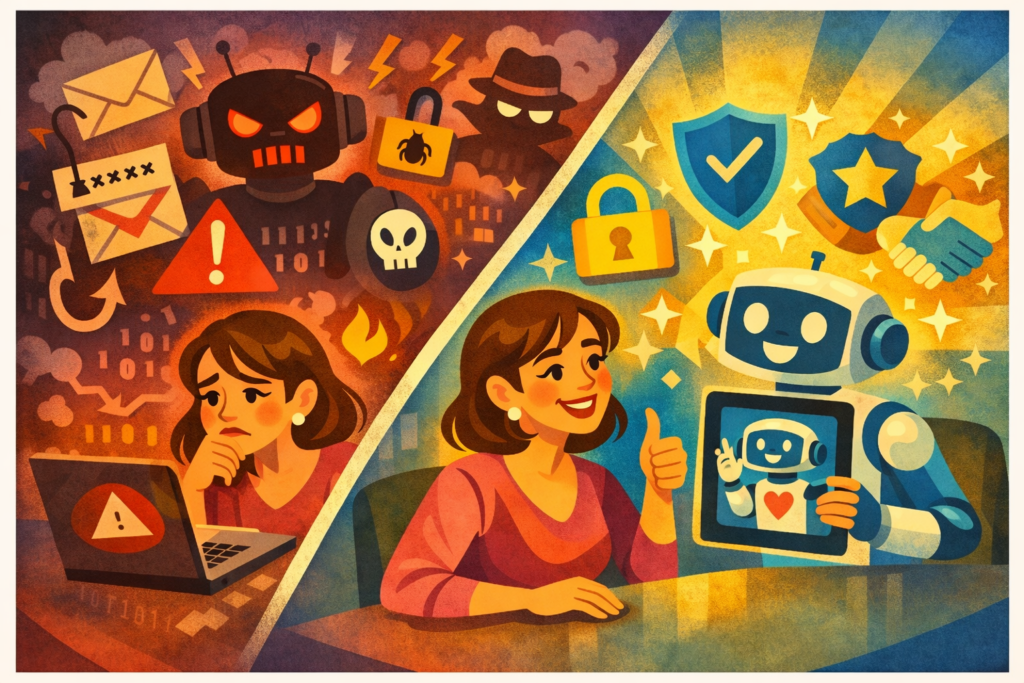
Smart technology is changing the workplace fast. It offers AI benefits that make tasks easier and faster. These tools help you manage your time and finish projects quicker than before.
- Understand that new technology offers both great value and real risks for your career.
- Learn to follow safety standards to ensure your digital tools remain fair and legal.
- Respect human rights and societal values when choosing automated software.
As companies use these systems, it’s key to balance benefits and risks. Making smart choices now will keep you ahead. It’s an exciting time to see how automation boosts your daily achievements.
Modern machine learning must respect human rights and follow laws. Global OECD principles say these systems should be transparent and value your community’s norms. Knowing how these tools work helps you control your digital life.
Putting AI safety first is key to using these tools wisely. This careful approach safeguards your interests as you explore new innovations. By staying informed, you ensure the tech you use benefits you.
Knowing common AI pitfalls helps protect your career and reputation. Trusting AI only when it meets high ethical standards is safe. Asking the right questions about new software can help you avoid mistakes.
This guide gives you the knowledge to handle complex software wisely. You deserve to feel secure using today’s latest tools. Your experience is valuable in choosing which programs are worth your time.
Understanding AI in Your Daily Life: Why Age Brings Wisdom and Caution
AI has a big impact on our daily lives, and age can offer a special view on it. It’s key to grasp its effects and how it can make our lives better.
Tools like ChatGPT can automate tasks, offer personalized services, and even seem like they’re talking to us. These changes open up new chances but also raise worries about privacy, inclusivity, and fairness. Good AI aims to be fair, clear, and answerable in its choices.
What AI Actually Means for Your Generation
For those over 40, AI changes how we do everyday things and process info. It’s more than just getting new tech; it’s about seeing how AI can make our lives better and more productive. AI can offer custom health tips, smart home control, and better ways to talk to others.
Why Your Skepticism Is Actually an Asset
Being careful about AI is normal, given its fast growth and possible dangers. Your doubt can be a plus, pushing you to think more deeply and wisely about AI. By asking tough questions about AI’s strengths and weaknesses, you can choose better for your life.
The Real Benefits AI Can Bring to Your Life
AI offers many pluses, like more work done, better health, and more convenience. Knowing what AI can really do helps you use it to better your life. For example, AI tools can organize your time, keep an eye on your health, and give you tailored advice.
Common AI Pitfalls That Can Catch You Off Guard
As you explore AI, knowing the risks is key. AI brings many benefits but also some dangers. It’s important to be careful.
Privacy Risks and Data Collection Concerns
AI can pose privacy risks and data collection issues. Tools like ChatGPT might gather personal info. This info could be used for identity theft or other bad things.
What Data AI Companies Actually Collect
AI companies collect a lot of data. This includes personal info, what you browse, and how you interact with AI. They use this data to improve AI and offer personalized services. But, it also raises big privacy and security concerns.
Types of data collected include:
- Personal identifiable information
- Browsing and search history
- Interaction data with AI tools
Hidden Permissions You Should Watch For
When using AI tools, you give them access to your data. It’s important to check these permissions. Know what data is being taken and how it’s used.
Be cautious of permissions that allow AI tools to:
- Access your location data
- Read your browsing history
- Collect your interaction data
Misinformation and AI-Generated Content
AI can create fake content that’s hard to tell from real news. This can lead to spreading false information. It’s hard to know what’s true and what’s not.
To avoid falling for fake news, check information from different sources. Be wary of anything that seems too good (or bad) to be true.
Financial Scams Leveraging AI Technology
AI is used in financial scams like phishing and investment scams. These scams can be very convincing. They might use AI to make fake content.
To stay safe, be careful of unsolicited investment offers. Never share personal or financial info without checking if it’s real.
Over-Reliance on AI Recommendations
AI can give good advice, but relying too much on it can be a problem. AI models can make mistakes or give biased advice.
Use AI advice as a starting point, but don’t rely only on it. Always check the facts and consider different views before making a decision.
Trusting AI Without Getting Burned After 40: Practical Strategies
Exploring AI can be tricky. It’s important to trust AI but also be careful. Knowing what to do and what not to do is key.
Start Small with Low-Risk Applications
Start with AI tools that are safe. Try using AI for simple tasks like sorting emails or setting reminders. Starting small helps you trust AI more without risking your privacy. Try using Siri or Google Assistant to get used to AI.
Verify Information from Multiple Sources
Always check if AI information is right. This is very important for big decisions that affect your life. AI can sometimes give wrong or old info, so it’s good to double-check.
The Three-Source Rule for Important Decisions
For big choices, use the three-source rule. Look at at least three sources to make sure AI info is correct. This could be news sites, official databases, or expert opinions. Doing this lowers the chance of making a wrong choice.
Spotting AI Hallucinations and Errors
AI hallucinations happen when AI makes up info. Be careful and check if the info seems real. If it seems too good or bad, or doesn’t match other sources, look into it more.
Set Clear Boundaries for Personal Information
Be careful with your personal info when using AI. Know how your data will be used and protected. Reading privacy policies and setting your data sharing can help keep your info safe.
Learn to Recognize AI Limitations
Knowing what AI can’t do is important. AI can’t replace human thinking, not even for simple things. Knowing its limits helps you make better choices and not rely too much on AI.
Safe AI Tools to Begin Your Journey
Starting your AI journey means finding tools that are safe and trustworthy. The right tools can make your life better, help you work more efficiently, and give you insights. All without risking your safety or privacy.
Voice Assistants for Everyday Tasks
Voice assistants like Alexa and Google Assistant are great for daily tasks. They can remind you, play music, control your home, and give news. It’s important to know how to use them safely and effectively.
Setting Up Privacy Controls on Alexa and Google Assistant
To keep your privacy, check and adjust your voice assistant settings. For Alexa, manage your recordings and delete them when needed. On Google Assistant, review your activity and control data storage. Regularly checking these settings helps maintain your privacy and security.
For example, you can delete Alexa recordings or set a routine to remove them. Google Assistant lets you review and delete recordings on the Google My Activity page. This keeps your data safe.
AI-Powered Health and Wellness Apps
AI health apps offer personalized fitness plans and health tracking. Choose apps that protect your data and are clear about how they use your health info.
Apps like MyFitnessPal and Headspace use AI for personalized advice. Always read the privacy policy before using any app.
Productivity Tools That Respect Your Privacy
AI productivity tools help you manage tasks and stay organized. Pick tools that focus on privacy and data protection. Tools like Todoist and Evernote use AI to help you work better while keeping your data safe.
Make sure to check their privacy settings and understand data storage and processing. Choosing tools with strong privacy policies is key for digital security.
Customer Service Chatbots You Can Trust
AI chatbots help with customer service. They offer quick support for common issues. To trust them, interact with official channels and be careful with sensitive info.
Companies like Amazon and Apple use chatbots for support. Always check the chatbot’s authenticity and the website to avoid scams.
Conclusion
As we move forward with artificial intelligence, finding a balance is key. We must use its power wisely and keep it safe. Knowing what AI can and can’t do helps us use it well and stay protected.
Being careful with AI means starting small. Try using voice assistants for simple tasks or check out AI health apps. Always check facts from different places and keep your personal info private to stay safe.
As AI gets better, keeping up with it is important. This way, you can enjoy its benefits without facing too many risks. We must all work together to make sure AI grows in a way that’s fair and safe for everyone.
By being smart and careful with AI, we can handle its ups and downs. This helps make the AI world a safer and more reliable place for everyone.