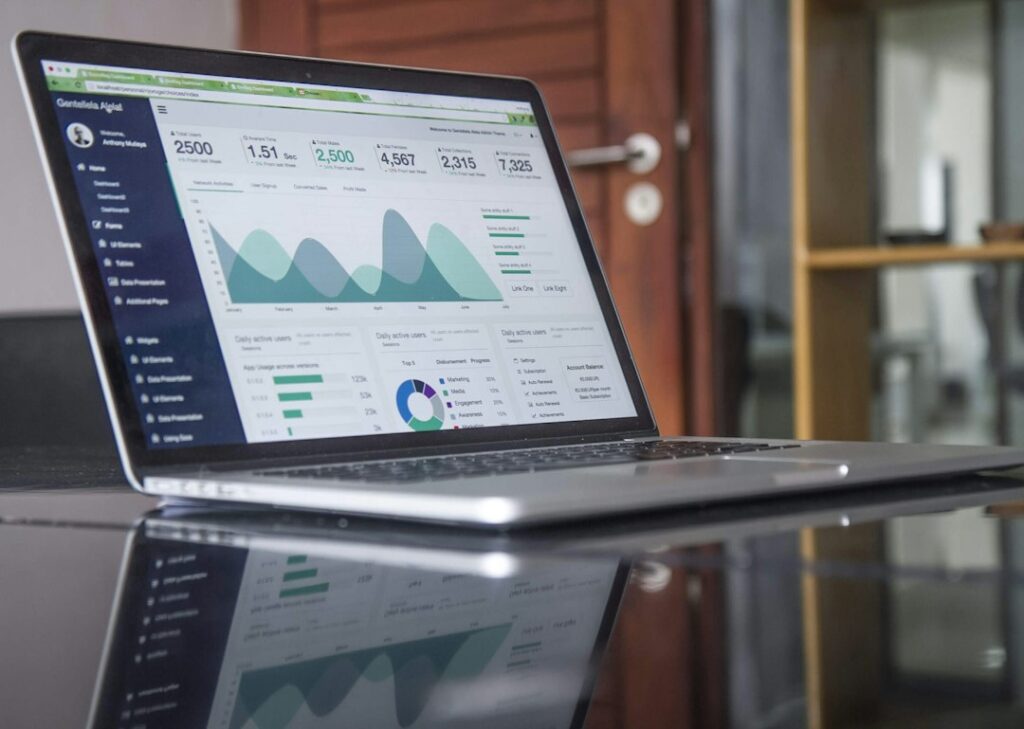
Your business may hold years of stock records, equipment readings, or information about how work gets done. AI can help explore patterns and draft explanations. That does not mean the information is yours to sell, that someone will buy it, or that generating a report creates a profitable business.
For an owner or experienced professional considering a new income stream, begin with one question: what useful decision could this information improve? The answer may be an internal improvement, such as ordering fewer unnecessary supplies. Selling a data product is only one possible outcome.
This is general educational information, not legal, privacy, tax, or financial advice. Get appropriate professional review before sharing or selling information subject to legal, contractual, or confidentiality obligations.
Define the product without using real records
Write a sentence identifying the intended customer, the decision they face, and the information you would provide. “A monthly report on publicly listed equipment specifications for repair shops” is more concrete than “monetize our data with AI.” It is still an idea to investigate, not a claim that customers want it.
Make a sample with clearly labeled fictional values. Use AI to suggest headings, explain terminology, or find questions the sample leaves unanswered. Do not upload company records simply to find out whether they might be valuable.
Establish permission before polishing the idea
For each proposed input, record who supplied it, how it was obtained, who controls it, and what uses are allowed. Publicly viewable information is not automatically available for unrestricted copying, resale, or model training. Employment duties, client contracts, database terms, licenses, and privacy requirements can matter.
Ask these questions before proceeding: Are we allowed to use this information for the proposed purpose? Can we provide the derived output to others? Does it expose customers, staff, suppliers, or confidential commercial activity? Who is authorized to approve the project? An AI-generated statement that something is “compliant” does not resolve any of them.
Do not confuse synthetic with anonymous
Synthetic data are artificially generated data intended to reproduce selected properties of real data. They can be useful for a demonstration, but generating them from sensitive records does not automatically make the result safe to release.
The UK’s Office for National Statistics synthetic data policy requires disclosure checks before wider sharing and notes that synthetic data do not preserve every feature of the original. That policy governs ONS work; it also illustrates why privacy and usefulness need separate assessment. Renaming people or removing a single column is not proof that the remaining data cannot identify someone.
Test one useful question
Imagine a fictional maintenance business exploring a report that compares publicly documented replacement-part dimensions. Its first sample should answer a narrow question: can a reader locate the correct specification and its source? It should not claim compatibility that the manufacturer has not confirmed.
Show the fictional sample to a prospective user without exposing real confidential information. Ask what they would use, what is missing, and what mistake would make the report unusable. Interest in an attractive chart is different from willingness to pay for a regularly maintained product.
Make the AI’s work traceable
Using this fictional sample, propose a report layout with a source field, collection date, units, and an uncertainty note for every entry. Identify inconsistent units, missing values, and claims that would require verification. Do not fill gaps with invented figures or claim the data represent real customers.
Decide how someone will verify the output. Keep source records and transformations traceable. Check totals with a spreadsheet or other deterministic calculation, not just another chatbot answer. An elegant narrative can hide a unit conversion error or an incomplete sample.
For a broader approach to testing a work task, see Test One AI Workflow at Work.
Count the work after the first report
List ongoing costs: obtaining permitted inputs, checking accuracy, updating sources, correcting errors, responding to customers, storage, software, and professional review. Identify who maintains the product when the original creator is unavailable. A one-time demonstration can be cheap while reliable monthly delivery is expensive.
Set a small decision point: proceed only when the rights are clear, the sample helps a real user, and the maintenance work is affordable. Otherwise, revise the idea or keep the analysis internal. If external help is needed, Before You Hire an AI Consultant can help structure a bounded project. The valuable asset is dependable information that someone can use, not the AI label on the report.
AI disclosure: This article was written and revised with AI assistance. Sources checked September 24, 2026. See our disclaimer.
Illustrative photograph by Carlos Muza on Unsplash.


