
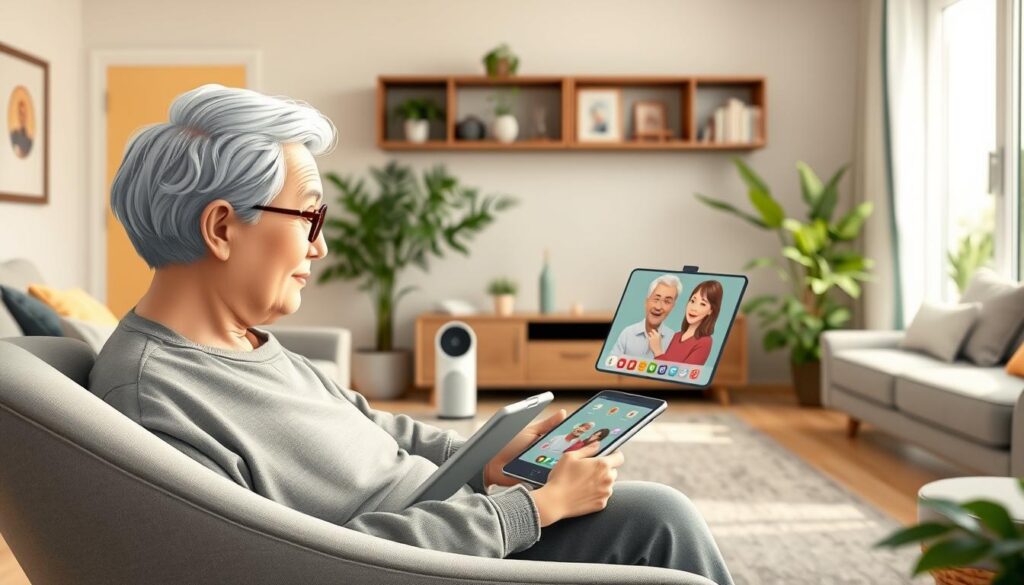
The number of people aged 65 and older is growing fast. Experts say this group will increase from 10 percent in 2022 to 16 percent by 2050.
This change brings new challenges for families. You might feel stressed balancing work and making sure your loved ones are safe and healthy.
But, elderly care innovation is making a big difference. New tools help bridge the distance between you and your loved ones.
With AI for Adult Children Caring From Afar, you can keep an eye on your parents’ health and daily life easily. These smart systems turn old, human-based services into modern, data-driven ones.
Using these new tools lets you keep your parents’ lives good. You can relax knowing they’re okay while you handle your work and personal life.
Understanding the Role of AI for Adult Children Caring From Afar
Helping your parents stay at home is getting easier with new digital care tools. The World Health Organization says healthy aging means keeping functional abilities. This way, your parents can live well, even if you’re far away.
The Shift Toward Remote Caregiving Technology
Today, families are moving to digital care instead of old ways. Remote caregiving technology lets you check on your parents’ daily life from afar. It helps them stay in their homes longer.
Using these systems, you can keep up with your parents’ health in real-time. No more just calling them to check in. You get peace of mind from data that shows any health issues early.
How Artificial Intelligence Bridges the Geographic Gap
Artificial intelligence connects your life with your parents’ needs. With remote caregiving technology, you can watch their movement, sleep, and eating habits. This info lets you support them confidently and accurately.
AI looks at lots of data to spot small changes in behavior that might mean health problems. When you get these alerts, you can work with local caregivers or family. This tech overcomes distance, making sure your parents get the attentive care they need.
Smart Home Monitoring Systems for Safety and Independence
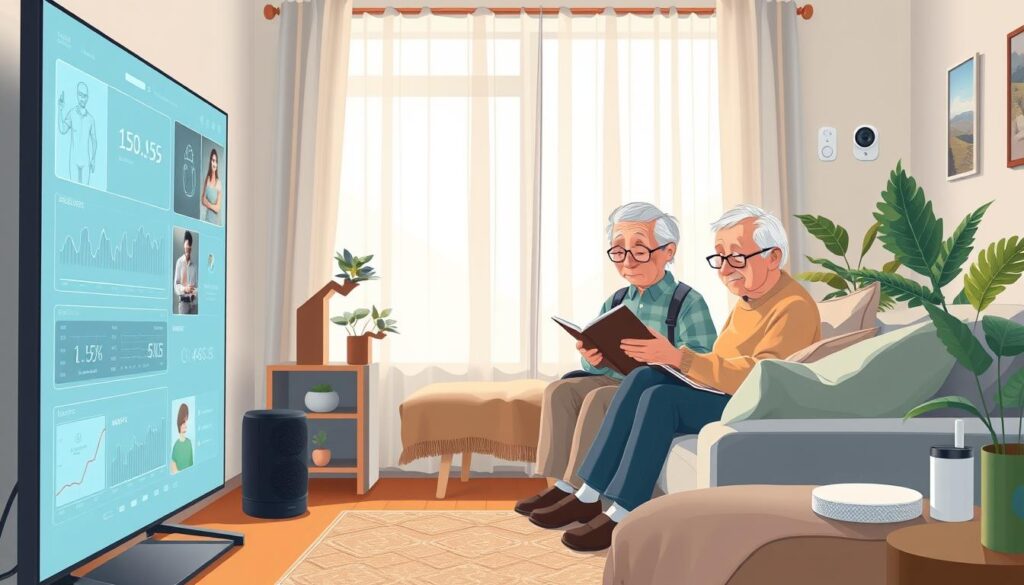
Now, you can keep your parents safe and independent with smart home monitoring systems. These systems let you know what’s happening with your loved ones, even when you’re not there. They help your parents stay in their own homes, feeling safe and respected.
Utilizing Motion Sensors and Fall Detection Technology
Modern sensors offer a silent safety net for your home. They track movement in key areas. This helps you see if your parents are active and following their usual routine.
Fall detection tech is key. It uses bed and chair sensors to alert you if there’s a fall or if someone hasn’t moved for too long. This quick alert system is vital for fast help in emergencies.
Integrating Smart Cameras for Non-Intrusive Wellness Checks
Smart cameras let you check on your parents without intruding. Place them in areas like the living room or kitchen. This way, you can see they’re doing well, even from far away.
These cameras also have two-way audio. You can talk to your parents or just say hello. This helps you spot small changes early, which can prevent big health issues. Regular checks keep you involved in their daily care.
Automated Medication Management Systems
Managing health plans can be stressful. Medication management systems make it easier by giving pills on time and alerting you if a dose is missed. These systems take away the worry of wrong doses.
These tools help your parents stick to their health plans. This is key for managing long-term conditions and avoiding hospital trips. They give your parents control over their health, with you watching over them from afar.
AI-Powered Health Tracking and Predictive Analytics
Advanced monitoring tools give you a peek into your parents’ health from afar. They use modern tech to keep you updated on their health without you being there. This way, you can help care for them while also respecting their independence.
Wearable Devices for Real-Time Vital Sign Monitoring
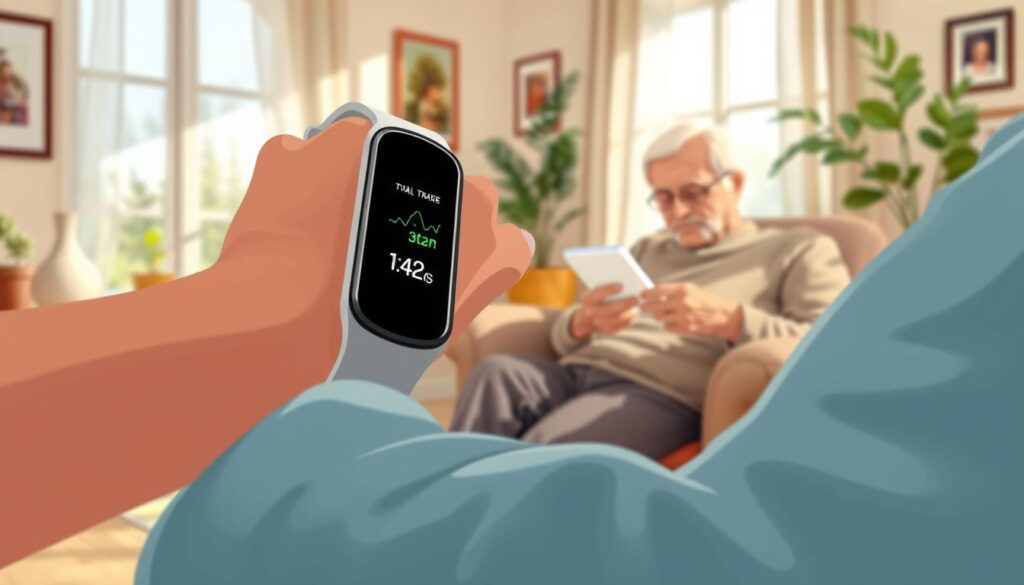
Today’s wearable health sensors change how we watch over older adults. They do more than count steps. They track heart rate, blood pressure, breathing, and sleep patterns live.
These devices also watch how your parent moves and where they are. Continuous monitoring helps catch small changes early. This way, you can see how their health is doing better.
Interpreting Health Trends to Prevent Medical Emergencies
Getting data is just the start to keeping your parents safe. Predictive health analytics help make sense of this data. They look for patterns that might mean a health problem is coming.
For instance, if your parent’s activity or sleep changes, it could mean something’s wrong. Early detection helps avoid hospital stays. It lets your family act fast when needed.
Sharing Data with Healthcare Providers Remotely
The real strength of these systems is how they connect home care with doctor’s advice. You can share data from wearable health sensors with doctors. This lets doctors make better decisions with up-to-date info.
Using predictive health analytics in their care plan makes a big difference. It means care is timely and tailored to their needs. This improves their life at home and gives you peace of mind.
Communication Tools and Virtual Companionship
Distance can make aging parents feel isolated. But virtual companionship can help bridge that gap. By using AI communication tools, you offer a steady presence that boosts their mood. These technologies make sure your loved ones feel supported, heard, and connected.
Voice-Activated Assistants for Daily Reminders
Voice-activated devices like Amazon Echo or Google Nest are like reliable companions at home. They keep things on track by reminding your parents about medication, appointments, and daily tasks. This consistent support helps ease worries caused by memory loss or confusion.
AI-Driven Platforms for Social Engagement and Cognitive Stimulation
These platforms do more than just remind. They offer interactive games and conversation practice to keep minds sharp. They provide meaningful social engagement, which is key to fighting loneliness. By encouraging your parents to use these tools, you help them stay mentally active and purposeful every day.
Managing Family Coordination Through Centralized Digital Hubs
Coordinating care among family members and professionals can be tough. Centralized digital hubs make it easier by keeping everyone informed about schedules and health updates. AI chatbots can even handle administrative tasks, saving time and making communication smoother. This way, you can focus on spending quality time with your parents without worrying about the logistics.
Addressing Privacy and Ethical Considerations
Keeping your loved one’s dignity is as important as their physical safety with remote monitoring tools. Digital solutions bring peace of mind but navigating ethics and personal boundaries is key. This ensures a positive experience for all.
Balancing Safety Monitoring with Personal Autonomy
The main goal of any monitoring system is to support independence, not restrict it. You must think about how aging parent autonomy is impacted by constant watch. It’s important to involve your parents in decisions to avoid privacy issues.
Transparency is the key to keeping trust. Use non-intrusive tools like motion sensors in private areas instead of cameras. This way, you respect their space while getting safety alerts. Always put their comfort first to make sure they feel empowered by technology.
Securing Sensitive Health Data in the Cloud
Using digital platforms to track wellness means handling personal info. Keeping health data privacy tight is critical to avoid security breaches. Choose only reputable providers that encrypt all data end-to-end.
Review the privacy policies of any app or device you add to your care plan. Strong password protection and two-factor authentication are simple but effective for safety. By managing these digital assets well, you keep your parent’s medical history private.
Discussing Technology Adoption with Aging Parents
Introducing new devices can be daunting for seniors. Be patient and empathetic, explaining how technology can improve their life. Highlight how it can help them stay at home longer.
Listen to their concerns without judgment and address privacy fears. When they feel heard and respected, they’re more likely to accept new tools. Your goal is to create a partnership where technology enhances care and family bonds.
Conclusion
Managing the health of aging parents from afar needs a modern approach. Digital health tools help you keep an eye on their safety and well-being from far away.
These tools act as a bridge between your home and theirs. You can relax knowing you get updates on their daily life in real-time. This way, you reduce your stress as a caregiver by not worrying about the unknown.
Platforms like Amazon Alexa or Apple Health help you stay connected to important information. You can work with doctors and keep your own life on track. This balance is key for your health and the care you offer.
By using these advancements, you help your loved ones stay independent and safe. You can make their lives better with smart technology choices. Start looking into these options today to create a caregiving plan that works for everyone.