

You work hard every day, checking off boxes and meeting deadlines. Yet, you might be falling into a hidden trap that threatens your professional future.
This is The New Career Risk: Mastering the Wrong Tasks. Being dependable is good, but focusing on duties that offer no long-term growth leaves you vulnerable to shifts in your industry.
If your daily output is easy to replace, your position remains fragile. You must identify which efforts truly build your value and which ones simply keep you busy.
This guide helps you evaluate your current responsibilities with clarity. Learn to redirect your energy toward high-impact goals without needing an impulsive or unnecessary job change.
Why Mastering the Wrong Tasks Has Become a Career Risk
The modern workplace is changing fast. Tasks that used to keep you safe are now risky. Feeling busy doesn’t always mean you’re valuable.
When you focus on tasks that can be done by machines, you miss out on developing unique skills. These skills are what truly add value to your career.
How Automation and AI Are Changing the Value of Routine Work
Automation and AI have changed the job world a lot. Tasks that follow set patterns or need manual data entry are now done by software. This means routine work is no longer a safe job base.
If you spend most of your time on repetitive tasks, you’re up against machines. Machines do these tasks faster and with fewer mistakes. This makes your role less important to the company. To stay important, you need to do tasks that need human thinking and creativity.
Why Being Good at a Task Does Not Always Make It Career-Advancing
Being good at something doesn’t always mean you’ll move up in your career. You might be the best at processing invoices or spreadsheets. But if these tasks don’t help the company grow, your skills won’t be seen by leaders.
Real growth comes from taking on big challenges. Doing only routine tasks keeps you from gaining the strategic influence needed for promotions. Think if your current tasks prepare you for the future or just keep you busy now.
The difference between productivity, visibility, and long-term career value
Being productive means doing a lot of work, but this isn’t always good. You can do a lot of work without being seen by those who decide your future. Without visibility, your hard work is ignored.
To have a lasting career, focus on tasks that add real value. This means working on projects that solve big problems or make money. By focusing on impact, you build a career based on skills that are hard to replace.
How to Identify Work That Builds Valuable Career Skills
Your career path is shaped by the tasks you focus on today. Many people just do their daily tasks. But, the best ones aim for work that grows their skills over time. This way, you spend your time on valuable skills that stay useful, no matter the industry changes.
Look for tasks that strengthen judgment, creativity, and problem-solving
To move up, look for tasks that need more than just following a guide. Seek projects that need critical judgment or solving unclear problems. These tasks help you grow in ways that can’t be automated.
Creativity is key in business, not just for artists. Finding new ways to improve or solve problems shows you’re ahead of the game. This makes you stand out from those who just keep things the same.
Separate transferable skills from narrow process knowledge
It’s easy to think knowing a specific tool well is growth. But, this knowledge rarely moves to new jobs. Focus on transferable skills like managing projects, analyzing data, or communicating well.
These skills are valuable everywhere you go. Even if you switch industries, being able to lead or understand complex data is a big plus. Always think if your work is something another employer would value.
Evaluate whether a task increases your influence or decision-making authority
Good work often means working with others or making big decisions. If a task lets you shape strategy or influence results, it’s worth it. These roles can lead to leadership positions.
Questions to ask about the skills you are building
To see if a task is worth it, ask yourself these questions:
- Does this task require me to make a decision that affects business results?
- Will this experience be relevant if I apply for a role in a different company?
- Am I learning a new method or simply repeating a manual process?
- Does this work help me build a reputation for solving complex problems?
By regularly checking your work, you keep your valuable skills growing. This approach turns your current job into a stepping stone for your future.
Recognize the Warning Signs of Low-Value Work
Spotting the signs of low-value work is key to taking back your career. Many think doing lots of work means they’re making progress. But if your day feels like running on a treadmill, you might be doing wrong tasks that don’t help you grow.
Repeating tasks without learning, ownership, or increasing responsibility
Doing the same job for years without learning new skills stops your career growth. You might be great at it, but staying in a rut means you’re not growing. Real growth means taking on more responsibility over time.
Staying busy while producing little measurable business impact
Being busy doesn’t always mean you’re productive. If your work doesn’t help the company grow, you’re doing low-value work. Check if your work really helps the company.
Becoming the team’s default operator for work that can be automated
If you’re always doing manual tasks, you’re taking the place of software. Doing tasks that can be automated means you’re not solving big problems. By doing these wrong tasks, you show you’re not ready for bigger challenges.
Receiving praise for reliability without gaining new opportunities
Being reliable is good, but it shouldn’t hold you back. If you’re praised for being consistent but never get new challenges, you’re stuck. Reliability should lead to growth, not keep you in the same spot forever.
It’s important to know if you’re just stuck or if it’s a bad work situation. If you’re feeling trapped, write down what you’ve done or talk to a career coach to find better work.
Audit Your Current Tasks and Career Direction
To take control of your future, you need to know how you spend your time. Many people go through their workweeks without noticing their habits are leading them astray. A regular task audit can reveal the truth about your productivity.

Track how you spend your time during a typical workweek
Begin by logging your activities for five business days. Write down every major task and how long it takes. This data helps you see where your time really goes.
Classify tasks by business impact, skill growth, visibility, and replaceability
After logging your tasks, evaluate them based on four criteria. First, think about the business impact. Does it make money or solve a big problem? Then, consider if it teaches you something new or is just a routine task.
Also, think about how visible the task is to your bosses and if it can be automated. Doing many replaceable tasks slows your career growth. Spotting these patterns helps you focus on more important work.
Compare your daily responsibilities with the requirements of your target role
Compare your daily tasks to the job you want next. If they don’t match, you need to change your focus now.
Use a simple task audit to find gaps and patterns
A task audit shows the gap between your current job and your future goals. You might find you spend most of your time on tasks that don’t grow your career. Seeing this pattern is the first step to taking back your time and changing your career direction for success.
Prioritize Skills That Will Remain Valuable as Work Changes
Building a strong career means focusing on skills that last, not just temporary knowledge. In today’s fast-changing job market, learning and using transferable skills is key. This is more important than knowing a single company’s software. Studies show that most U.S. graduates end up in fields not related to their majors, showing the value of flexibility.
Develop domain expertise instead of memorizing one company’s process
It’s better to understand the basics of your industry than just your current job’s details. Having deep knowledge in your field lets you tackle big problems, no matter the tools. This way, your career skills stay valuable, even if you change jobs or fields.
Build communication skills that improve collaboration and leadership
Being good at your job isn’t enough for a lasting career. You need to work on your communication skills to connect with both tech teams and business leaders. Being able to explain complex ideas well is a timeless advantage. It helps you work better with others and can lead to leadership roles.
Learn to use AI and automation as leverage instead of competing with them
Don’t see automation and AI as threats. Instead, view them as tools to boost your work. By learning AI skills, you can manage and improve these systems. This makes you a leader in technology, not just a worker.
Strengthen strategic thinking, adaptability, and customer understanding
The best employees connect their daily tasks to the company’s big goals. By thinking strategically, you go beyond just doing your job. You look for ways to grow and improve. Adding a strong customer understanding and a flexible mindset makes you invaluable in any job market.
Redirect Your Effort Without Jeopardizing Your Current Role
Strategic career redirection means growing in your role without leaving too soon. You can focus on important tasks while keeping your professional image strong. The aim is to gradually phase out tasks that don’t help your future growth.
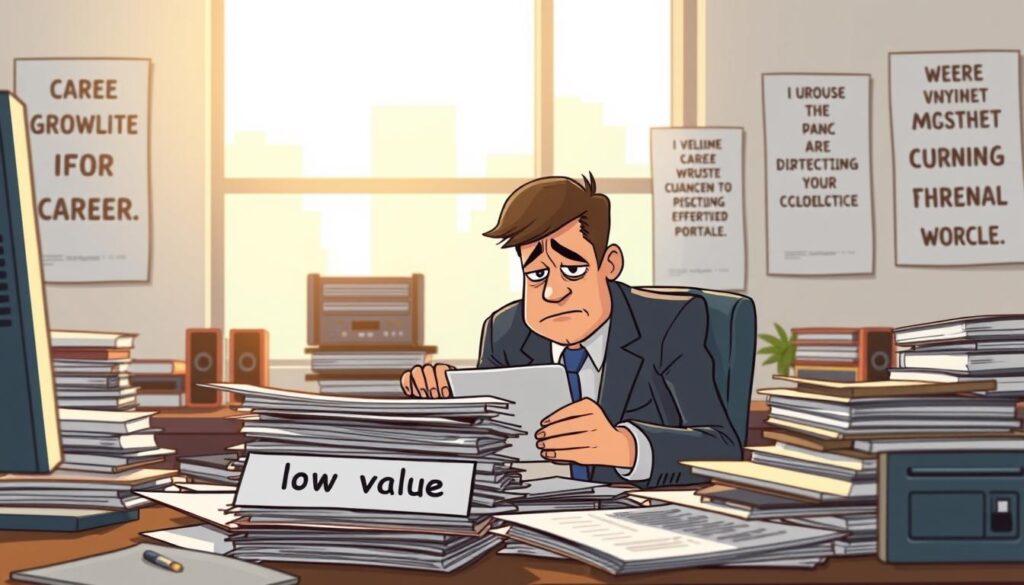
Replace low-value tasks gradually instead of abandoning responsibilities
Stopping your daily tasks suddenly can upset your team and bosses. Find low-value work that takes up too much time but doesn’t bring much back. By slowly handing these tasks over or making them automatic, you free up time for more important goals.
Propose process improvements that create time for higher-value work
Being efficient can really help your career. If you spot a slow spot, suggest a way to make things faster. This shows leadership and initiative, proving you can improve things, not just do them.
Volunteer for projects connected to revenue, customers, risk, or growth
Working on things that help the company’s bottom line gets you noticed fast. Look for projects that make customers happy or reduce big risks. Doing these tasks makes your work highly visible to those who make decisions.
How to frame a request for more valuable responsibilities
When asking for new challenges, talk about how it helps the business, not just you. Explain how you can now work on projects that make money or solve big problems. Ask for these tasks by showing you’re ready to take ownership of them and help the company reach its goals.
Prove That Your New Skills Create Measurable Results
Turning your professional growth into clear evidence is key to securing your future. Getting valuable skills is important, but showing their business impact is what matters most. You need to move from just doing tasks to showing the real value you add to your company.
Document outcomes instead of listing activities on your résumé
Many people list their daily tasks on their resumes. But, focus on measurable results that show your real contributions. Use numbers to prove how your work made things better, saved money, or boosted sales.
Showing your experience through outcomes boosts your significant professional visibility. It shows you get the big picture, not just follow rules.
Build a portfolio of projects that demonstrates judgment and initiative
Portfolios aren’t just for designers or developers. You can show your valuable skills by documenting projects where you made big decisions. Share the problem, your strategy, and the outcome.
This portfolio is a strong tool for reviews or new job searches. It proves you’re proactive and can tackle tough challenges on your own.
Use feedback, performance reviews, and professional conversations to course-correct
47% of career changers try to switch without help, leading to wrong career paths. Seek feedback from mentors and peers to make sure you’re on the right track. Regular conversations help you change direction before wasting too much time.
Use performance reviews to talk about your career advancement. Ask for feedback on how your recent work has helped the company.
Create a recurring career checkup before your skills become outdated
The job market changes fast, so check your career at least twice a year. See if your current job offers growth or if you’re stuck. This keeps your business impact high and your skills relevant.
Regularly reviewing your work keeps you professional visibility and in control of your future. Remember, strategic planning is key for long-term career advancement.
Conclusion
You now have the tools to see if you’re doing the wrong tasks. Hard work is good, but it’s even better when it aligns with your goals. Your daily work should build skills that last as industries change.
Check if your daily tasks help you reach your long-term goals. Making small changes in your daily work can lead to a better career. You can swap out boring tasks for ones that need creativity and problem-solving.
Keeping track of your achievements shows your value to leaders at big companies. Growing in your career is a journey, not a one-time event. By choosing tasks that make a real difference, you gain influence and lasting value.
Begin your next week by looking at one task that feels like a trap. Use that time for work that opens up more opportunities for you. Making these small changes will lead to a more rewarding career.