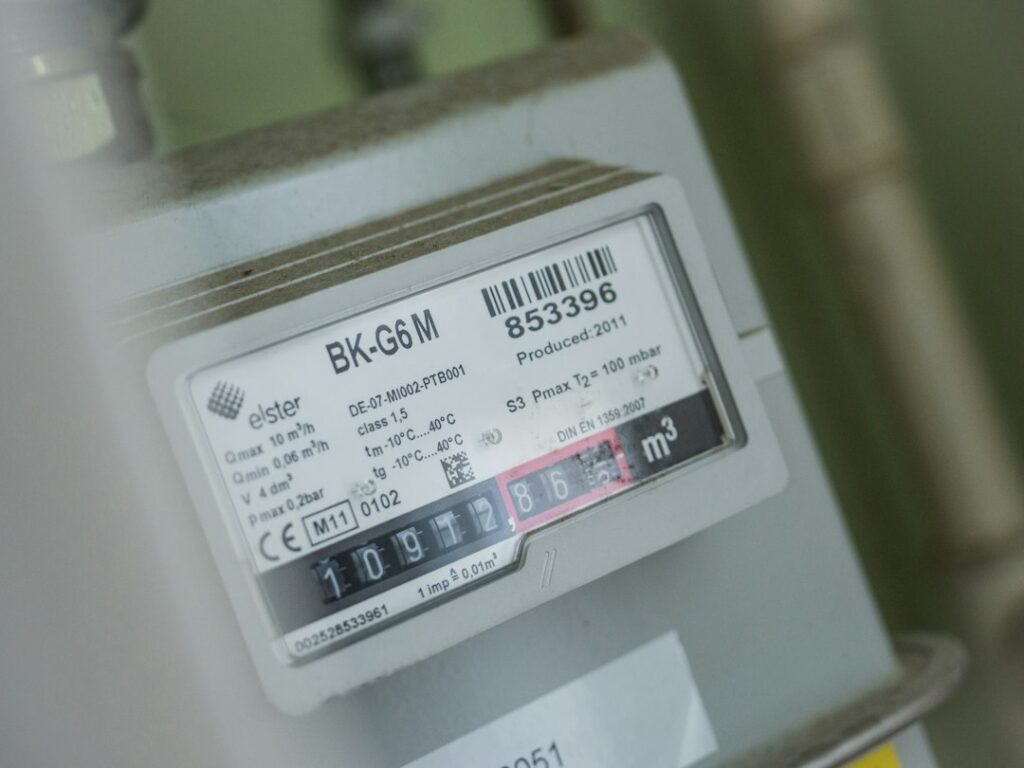
AI can help you make sense of household energy use and environmental claims. It cannot certify that a product is sustainable, inspect your home through a conversation, or turn incomplete information into an accurate carbon footprint. Its best role is to organize evidence and help you choose a manageable next step.
Start with something you can observe: electricity used, food discarded, unnecessary purchases, or trips that could be combined. You do not need a new collection of smart devices to begin.
Choose one thing to measure
A question such as “How can I live more sustainably?” often produces a long, generic list. A narrower question gives you something you can actually try: “Help me compare the electricity use of these two appliances using their published annual kWh figures.”
Record a simple baseline before making changes. For energy, use the units on the bill and the number of billing days. Keep electricity, gas, and other fuels separate. For food waste, a short note about what you discarded and why is enough. For purchases, track items bought but barely used.
Remove names, addresses, account numbers, meter identifiers, and payment details before sharing a bill with an AI tool. A typed list of dates and usage figures usually supplies the information needed.
Check an energy calculation yourself
For a device drawing constant power, electricity use in kilowatt-hours is watts multiplied by hours, divided by 1,000. A chatbot can explain this calculation, but a calculator can verify it.
Here is an illustrative example, not a measured household result. A 60-watt lamp used for four hours consumes 0.24 kWh. A 9-watt lamp used for the same time consumes 0.036 kWh. The difference is 0.204 kWh per day, or 6.12 kWh over 30 days. At an assumed rate of $0.25 per kWh, that difference costs about $1.53.
Those numbers do not include purchase costs or fixed charges on an electricity bill. They also do not mean the lamps provide identical brightness. Compare light output and suitability as well as watts.
Appliances that cycle on and off require a better estimate than multiplying their maximum rating by every hour they are plugged in. Use published annual consumption figures or appropriate measurements. If an answer mixes watts with kilowatt-hours, stop and correct it before comparing savings.
Ask what a green claim actually covers
A confident AI recommendation is not evidence that a product is environmentally preferable. Ask for the specific claim, the underlying source, and what remains unknown.
The FTC’s explanation of environmental marketing claims highlights useful distinctions: recycled content may refer to packaging rather than the product; a certification covers particular standards; and a recyclable label does not guarantee local collection accepts the item.
Compare like with like. A durable product you will use for years may answer a different need from a cheaper disposable version. Repairability, replacement parts, packaging, and whether you need to buy anything at all belong in the discussion. Do not let an AI-generated shopping list turn a waste-reduction project into extra consumption.
Reduce waste without guessing about safety
AI can organize a shopping list around ingredients you already have or suggest smaller recipe quantities. Give it an inventory that you have checked. Do not ask it to judge whether food is safe from a photo or invent storage deadlines.
For recycling, use your municipality or collection provider’s current instructions. Paste the relevant rules and ask AI to turn them into a short reminder. Include exceptions such as lids, bags, or food residue only when the local source actually addresses them.
For unused possessions, ask for a repair, reuse, donation, or disposal decision list. Check whether the proposed recipient accepts the item before making the trip. A suggested donation location can be outdated or entirely invented.
A useful prompt to try
I want to reduce one source of household waste this month. Here is my baseline: [non-sensitive observations]. Suggest three practical options, starting with options that require no purchase. For each, state the information needed, a way to measure the result, and a reason it might not work. Do not invent environmental certifications, local collection rules, or savings figures.
Choose one option and set a review date. Did waste or usage fall? Did the change create inconvenience that makes it unlikely to last? A smaller improvement you maintain can be more useful than an elaborate system you abandon.
For larger home-energy decisions, an assessment based on the actual building is more useful than chatbot guesses. The Department of Energy’s home assessment overview explains the role of professional measurements. Use AI to organize questions for that visit, then let the findings guide the project.
Updated September 24, 2026. Prepared with AI assistance. Examples are illustrative. This article is for information and education, not professional advice.
Featured image: Arthur Lambillotte on Unsplash. Illustrative photograph.


