
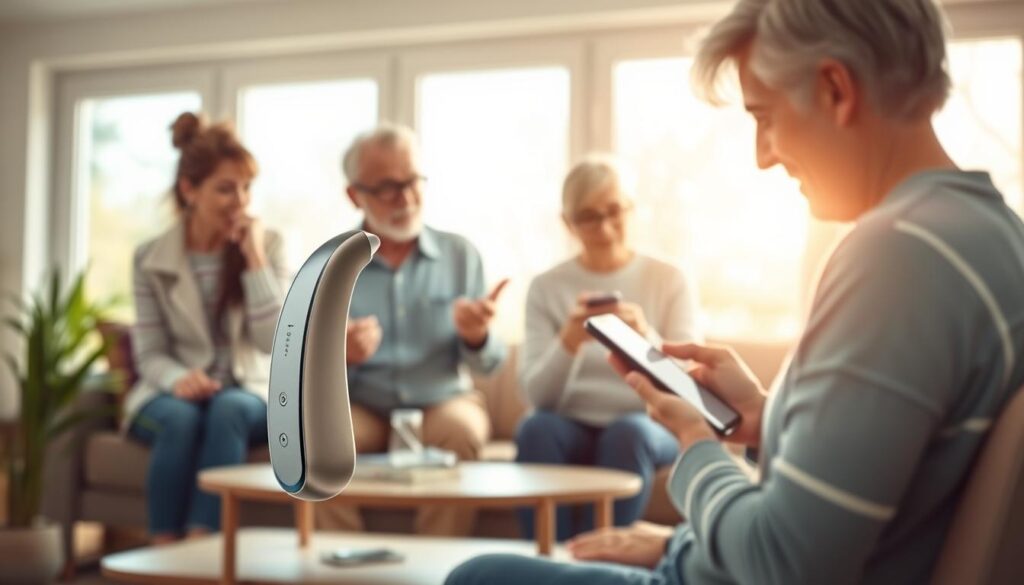
Remember when sound devices just turned up the volume? Those older models often made background noise hard to ignore. Modern technology now offers a smarter way to improve your hearing.
New breakthroughs bring advanced machine learning right into your ears. These tools analyze your surroundings in real-time. They help separate speech from background noise.
This means you can focus better during dinner or quiet walks. Embracing these innovations keeps you connected to loved ones and the world. By focusing on your long-term auditory health, you live a fuller, more vibrant life.
Understanding this technology shift helps you make the best choices for your future. It ensures comfort and clarity in your life.
The Evolution of Hearing Technology for the Aging Ear
Your ears change with age, affecting how you hear sounds. In your golden years, it might get hard to follow conversations in loud places. This can make your brain tired from trying to guess what’s being said.
Understanding Age-Related Hearing Loss
Age-related hearing loss, or presbycusis, happens as you get older. It starts with losing high-frequency sounds, like “s,” “f,” and “t.” This makes speech sound muffled, even if it’s loud.
This loss does more than just make things quieter. It affects how you connect with others and enjoy social events. Spotting these signs early can help you keep your life rich and your mind sharp.
From Analog Amplification to Digital Precision
Old hearing aids were simple and just made all sounds louder. This made background noise as loud as voices. They didn’t help much with understanding speech.
New digital hearing technology has changed everything. These devices use smart processors to improve speech clarity. They reduce background noise, making it easier to hear what’s important.
These advanced tools let your brain relax, as it no longer has to work hard to understand. By using these modern aids, you can talk with confidence and clarity. They work with your natural hearing, making listening more comfortable and natural.
How AI Is Changing Hearing Aids After 50
If you’re over 50, your sound experience is about to get better. How AI Is Changing Hearing Aids After 50 means moving from fixed settings to smart systems. These devices now act as personal assistants for your ears, constantly analyzing your surroundings.
The Shift Toward Proactive Hearing Health
Before, you might see an audiologist when your hearing really dropped. Now, the focus is on proactive wellness. Modern devices use data to help manage your hearing before problems get big.
This change means your device does more than just make sounds louder. It watches your listening environment to give you the clearest sound. You get a bespoke listening experience that grows with your needs.
Why Artificial Intelligence Matters for Seniors
Seniors often face challenges in noisy places like busy restaurants or windy areas. AI-powered hearing aids use Deep Neural Networks to process sound like a healthy brain. They can pick out speech from background noise fast.
This tech is key because it cuts down on the mental effort of hearing loss. When your device handles sound processing, you can enjoy talks without strain. Reliability and comfort are what these advanced systems promise.
In the end, AI-powered hearing aids offer precision that was once out of reach. They adapt to your preferences in real-time, keeping you connected to loved ones and activities.
Real-Time Sound Processing and Noise Reduction
Walking through a busy restaurant or a crowded street doesn’t have to stress you out anymore. Modern AI-powered hearing aids work like a personal sound engineer. They quietly filter out the world’s noise, letting you focus on what’s important.
Distinguishing Speech from Background Clutter
For many, the big challenge is hearing voices over background noise. Noise reduction technology analyzes sound waves thousands of times a second. It picks out speech patterns and amplifies them, while reducing background sounds like clattering dishes or traffic.
This means you can stay in the conversation without feeling overwhelmed. Even in big groups, you’ll hear speech clearly and naturally. This intelligent filtering is a big help for those who had trouble hearing in noisy places before.
Adapting to Dynamic Environments Instantly
Life is full of surprises, and your hearing devices should keep up. Real-time sound processing lets your hearing aids adjust automatically. You don’t need to mess with buttons or switch programs to get the right sound.
These systems quickly notice changes in your surroundings. They give you a 360-degree hearing experience, keeping you aware of your environment while focusing on the speaker. This makes moving through your day worry-free.
Personalization Through Machine Learning Algorithms
Imagine a device that learns how you like to hear the world. Modern hearing tech has advanced beyond simple amplification. It now offers a personalized hearing experience. This is thanks to machine learning algorithms that act like digital assistants, understanding your unique hearing needs.
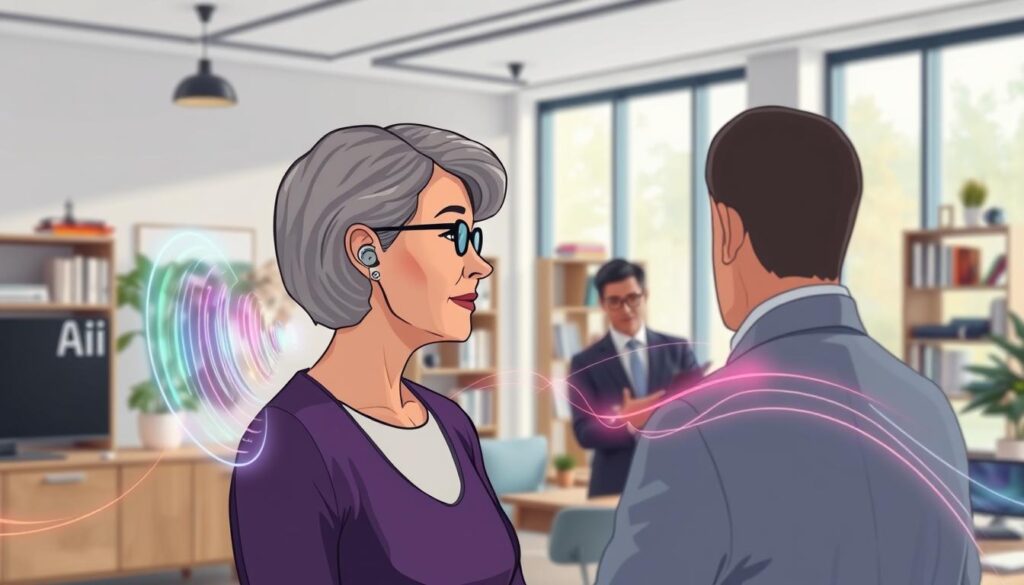
How Devices Learn Your Listening Preferences
These smart systems watch how you adjust settings throughout the day. When you change volume or tone in a certain place, it records these changes. This data is stored in the cloud for consistent performance when you return.
As time goes on, the system creates a profile of your life. You don’t have to keep adjusting settings or apps. Instead, the device anticipates your needs, making your hearing experience personalized and natural.
Automated Adjustments Based on Acoustic Data
The heart of this tech is its real-time processing of sound data. The machine learning algorithms analyze the sounds around you to spot patterns. Whether you’re in a quiet library or a busy restaurant, it adjusts settings to fit the environment.
This shift to “auto-pilot” hearing lets you focus on talking without worrying about your device. These devices offer a stress-free way to stay connected. You can trust that your hearing aid is always working to give you the best sound quality for your situation.
Connectivity and Smart Ecosystem Integration
Modern hearing aids are more than just amplifiers. They are now smart hubs for your digital life. With smart hearing aid connectivity, they connect your hearing needs to the world of technology.
Seamless Pairing with Smartphones and Televisions
You can stream high-quality audio from your phone, tablet, or TV directly to your ears. Thanks to Bluetooth LE Audio and Auracast, you get crystal-clear sound without bulky accessories.
This tech is great in public places. You can tap into local audio streams for a personal listening experience. Seamless integration keeps your devices connected to your favorite media. This gives you more control over your sound environment than ever.
Remote Adjustments via Tele-audiology
Managing your hearing health is now easier with tele-audiology services. You don’t have to visit a clinic for small changes to your device settings.
Your hearing care professional can make precise, remote adjustments through a secure cloud connection. This lets them fine-tune your hearing aids in real-time from your home. Using tele-audiology services helps you keep your devices in top shape without the hassle of travel.
Health Tracking and Fall Detection Capabilities
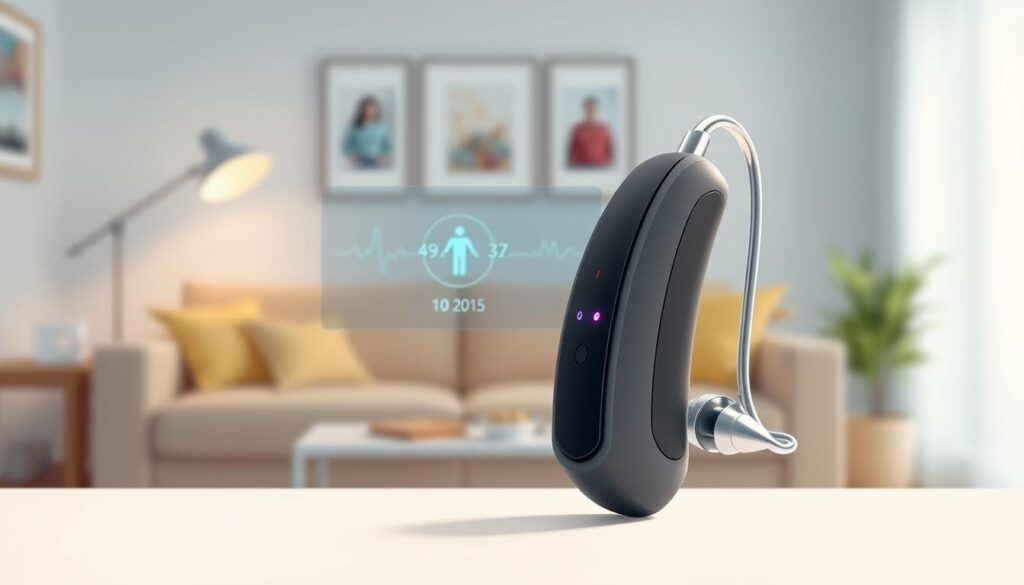
Modern hearing aids are becoming more than just sound amplifiers. They now offer a holistic view of your wellness. With advanced sensors, they’ve become health companions for an active lifestyle.
Monitoring Physical Activity and Cognitive Engagement
Hearing aid health tracking lets you monitor your daily activity. They count your steps and track your activity levels. This helps you stay motivated to stay active.
Some models also track your social and cognitive engagement. They analyze your conversation frequency and sound environment time. This gives insights into your mental well-being.
The Role of Sensors in Emergency Response
Safety is key for older adults living alone. Fall detection in hearing aids offers a vital safety feature. If you fall, the sensors alert your emergency contacts.
This feature gives you and your family peace of mind. You don’t have to worry about reaching a phone in an emergency. Fall detection in hearing aids adds a silent layer of protection. It ensures your device keeps you safe and connected.
Overcoming Barriers to Adoption for Older Adults
Many think hearing aids are too hard to use or too visible. But, the industry is changing this. People often wait a long time to get help because they worry about learning to use it or how it looks. Luckily, makers now focus on making them easy to use and stylish.
Simplifying User Interfaces for Better Accessibility
The hearing aid user interface has become very easy to use. You don’t have to deal with small buttons or hard menus anymore. Most devices connect easily with your phone, letting you change settings with just a tap.
These user-centered designs help you stay independent. They use big icons and clear menus, making it easy to use. Now, you can control your hearing experience with confidence.
Addressing Stigma Through Discreet Design
Many avoid hearing aids because they worry about looking older or feeling embarrassed. The move towards discreet hearing aid design has helped a lot. Today’s models are so small and sleek, they’re almost invisible in everyday talk.
Designers use aesthetically pleasing materials and colors that match your skin or hair. This focus on style makes you feel more at ease wearing it in public. When you’re happy with how it looks, you’re more likely to wear it and enjoy better hearing.
Conclusion
Artificial intelligence has changed hearing aids a lot. They are now more than just sound boosters. They help protect your brain and keep you connected with others.
Using these smart tools is key to better hearing health. Brands like Starkey, Phonak, and Oticon use advanced tech. This tech makes it easier to hear clearly, even in noisy places.
Start your journey to better hearing by talking to an audiologist. They can help you choose the right device for you. This way, you can stay in touch with important sounds and people.
Don’t wait to improve your hearing. The future of hearing health is exciting. It can make your life more vibrant and active. Book an appointment to see how these new technologies can help you.