An attractive AI-generated picture is not a working craft pattern. It may show stitches that cannot be made, shapes that do not join, or a finished object unrelated to the written instructions. Before selling a pattern, you need to establish that someone can use it to make the promised item.
Your existing craft experience matters here. AI can help organize notes, suggest variations, or improve a draft explanation, but it cannot replace making and checking the design. Start with a simple project in a craft you understand rather than a large collection of untested downloads.
Choose one product and name the deliverable
Decide whether you are selling a knitting or crochet pattern, an embroidery chart, a sewing template, or a decorative surface design. Each has different technical needs. Do not market a decorative image as a complete set of construction instructions.
A useful first project might be a straightforward adult accessory or small decorative item whose dimensions and assembly you can verify. Keep safety-critical products and complex sizing outside the experiment unless you have the relevant expertise and can meet their requirements.
Write the finished dimensions, materials, tools, techniques, and intended skill level before asking AI for help. If you cannot explain how the item will be made, generating more pages will not resolve the underlying design problem.
Use AI to organize your own work
Begin with your sketch, calculations, and prototype notes. Ask the tool to turn them into a structured draft with a materials list, abbreviations, numbered steps, and finishing instructions. Tell it to flag missing information rather than invent measurements or stitch counts.
Organize these original project notes into a draft pattern. Preserve every measurement and count. Identify contradictions, undefined abbreviations, and missing steps in a separate list. Do not claim the pattern has been tested or add a finished-product claim that my notes do not support.
Review the draft against your notes line by line. Keep terminology consistent and specify the convention you use, especially where the same abbreviation can mean different things. Use established reference material for definitions rather than accepting a chatbot’s improvised explanation.
Check the mathematics and the materials
For knitting and crochet, verify row or round totals, increases, decreases, repeats, and transitions. Count what the instructions actually produce. Check that a repeat fits the starting count and that every piece can connect to the next.
Gauge is part of the design, not a decorative note. The Craft Yarn Council recommends making a gauge swatch and comparing it with the pattern’s gauge. It also advises using millimeter tool sizes when letter or number systems differ.
For a simple illustration, a measured gauge of 20 stitches per 10 centimeters means that 40 stitches cover approximately 20 centimeters before accounting for borders or shaping. If the draft claims a different width, investigate the discrepancy. This arithmetic does not replace a real sample made with the specified materials.
For other crafts, apply the equivalent checks: printing scale and seam allowances for sewing, chart dimensions and thread information for embroidery, or repeat alignment for surface designs. Test exported templates at their intended size.
Make the item from the written instructions
Work from the draft as a customer would, recording every place you need to guess, reinterpret, or correct it. Measure the completed piece and record actual materials used. For washable items, evaluate the finished result under the care instructions you intend to provide.
Then ask another suitably skilled person to try the instructions without relying on your spoken explanation. Agree how their feedback and any photographs may be used. Correct the pattern and repeat the relevant checks after changes; an earlier prototype does not verify a newly altered version.
Only call a pattern tested when the described testing really happened. Show photographs of an actual finished sample, and distinguish those from concept illustrations. A beautiful generated preview cannot demonstrate that the pattern works.
Package and describe the download honestly
Open the final PDF on another device and check page order, type size, charts, links, and printing instructions. Make headings and steps easy to follow. Avoid relying on color alone when a symbol or label can also distinguish parts of a chart.
State clearly that the buyer receives a digital pattern rather than a finished item. List the included files, sizes, required techniques, and support route. Explain your usage terms and the role AI played without claiming the tool performed physical testing.
Etsy’s Creativity Standards require original seller designs for digital downloads and disclosure in the listing when an item is created using AI. A repackaged copy of someone else’s pattern does not become your original design because a chatbot rewrites it.
Include support in the business plan
Track design, materials, prototyping, testing, editing, file preparation, customer questions, and corrections. Those costs determine whether a small pattern business is worthwhile; generating instructions quickly does not make the income passive.
Keep a version number and a correction log. If a buyer reports a real error, investigate and provide an updated file through the marketplace’s supported process. A small catalog of usable, well-supported patterns is a better foundation than a large catalog whose instructions have never reached a maker’s hands.
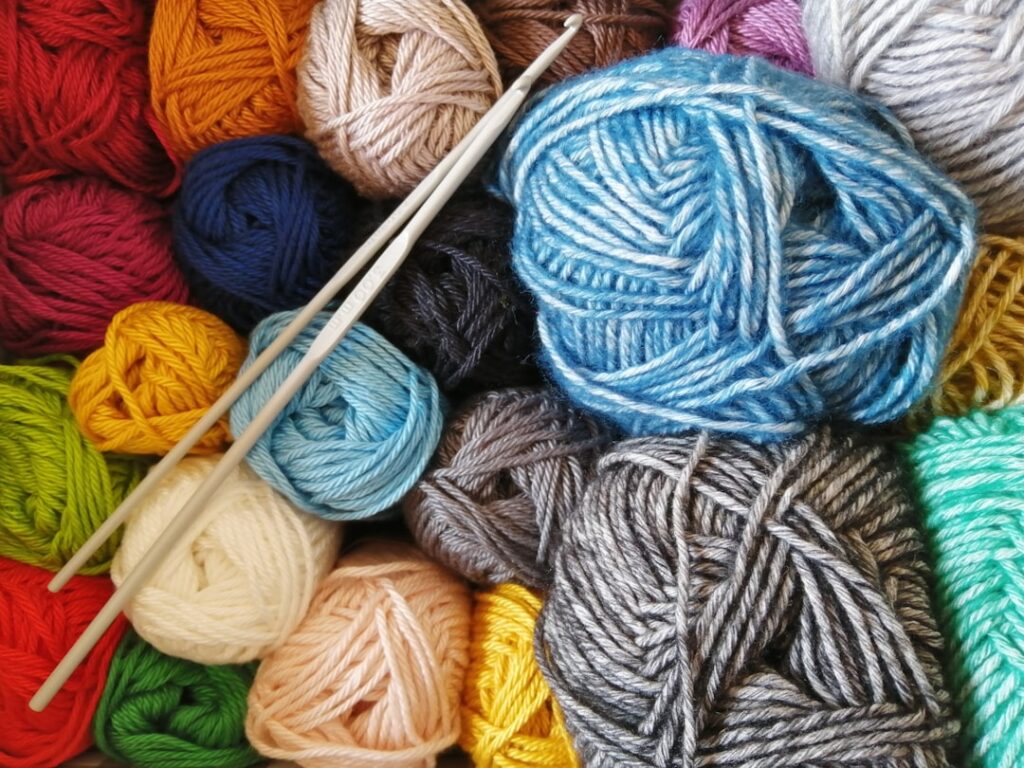
Featured image: Margarida Afonso on Unsplash. Illustrative photograph.
Updated September 25, 2026. Prepared with AI assistance. Examples are illustrative. This article is for information and education, not professional advice.


