A jingle is a short piece of music associated with a business or message. A tagline is a compact verbal promise or idea. AI can help explore either, but the client needs a result they can understand, approve and use in the intended setting.
If you are considering this as a small creative service, start with one bounded project. The useful work includes asking good questions, editing language, checking sound and explaining rights. Automatically producing many tunes does not establish that any of them fits a brand or is ready for commercial use.
Get the message right before generating music
Ask the client what the business does, who the message is for and what action the audience should take. Confirm the exact business name and its pronunciation. Request evidence for any claims about price, quality, performance or comparisons with competitors.
For a fictional exercise, a bicycle repair shop might need a brief musical ending for its own demonstration videos and three possible taglines. Specify the intended channel, approximate duration, whether there is singing and whether the shop already has words or music it owns.
Using this fictional repair-shop brief, propose three different tagline directions. Keep each clear when spoken aloud. Do not claim the shop is cheapest, fastest or best. Explain the promise in each option and identify any claim that would need evidence. Avoid existing slogans and named artists.
Choose the message before producing many audio versions. A catchy melody cannot repair an inaccurate promise or a business name listeners cannot understand.
Write a small, explicit service agreement
Define how many initial concepts, revisions and final versions the fee covers. Separate a tagline-writing task from composition, recording, translation and a full brand strategy. Agree whether AI tools are acceptable and whether confidential material may be uploaded to them.
Ask where the client plans to use the result: website videos, paid social advertisements, radio, an event or another channel. Record the intended duration, territories and any request for exclusivity. These details affect what permissions you need to investigate before accepting the job.
Do not promise a transfer of exclusive copyright just because you can download a generated file. Explain uncertainty early and obtain qualified advice when a significant campaign or a rights assignment is involved.
Check current music rights for the exact output
Licenses differ by provider, plan, feature and output. Read the current terms before making a client asset, and keep a dated record of the account, generation and authorized download involved.
For example, Suno’s terms effective September 3, 2026 tie permitted commercial use to an approved download within the applicable service-tier allocation. They restrict free-tier output to personal, noncommercial use and treat the defined Remix feature as noncommercial regardless of subscription tier. Do not assume paying for a plan makes every file eligible.
The paid-plan explanation also distinguishes commercial-use permission from guaranteed copyright protection. For older tracks or unclear client-use rights, ask the provider to clarify the exact situation in writing rather than relying on an older tutorial. Check the destination platform’s rules separately.
Do not upload another person’s recording, imitate a recognizable singer or use someone else’s melody without resolving the relevant permissions. Keep any client lyrics or recordings within the uses they actually authorized. For Suno’s Voice Model feature, the current terms permit modeling only your own voice; a client’s permission does not make someone else’s voice eligible. If the terms cannot support the commission, use a properly licensed alternative or commission human-created music under a suitable agreement.
Listen against the brief
Generate a small number of contrasting directions, then compare them using the same questions. Does the brand name come through? Is the mood appropriate? Does the ending fit the allotted space? Can the words be understood on an ordinary phone speaker?
- Check every sung word against the approved script.
- Listen for distorted consonants, abrupt edits and unwanted background sounds.
- Test the music beneath the client’s actual narration or video.
- Make sure the final sound does not cut off unexpectedly.
- Compare versions at similar listening levels so louder does not automatically seem better.
Ask someone unfamiliar with the brief what words they heard. Do not tell them the intended answer first. A mistaken business name or ambiguous phrase is a practical reason to revise, even if the melody is appealing.
Check the tagline and deliver usable files
Search distinctive wording for obvious existing uses. A search is not legal clearance: the USPTO explains why similar marks and related goods or services matter. Refer a client seeking trademark protection to appropriate professional advice.
Deliver the approved text, agreed audio formats and clearly named duration variants. Include instrumental versions or separate audio parts only if your tools and licenses allow them and they were included in the scope. Supply a short rights note explaining permitted uses, exclusions and source licenses.
Keep the approval record and identify which version is final. Calculate your fee against briefing, creation, listening, revisions, outside help and administration. Offer authorized samples, not invented success stories or promises of improved sales. For broader soundtrack projects, see creating AI music for client work; the same discipline around a clear brief and documented permissions applies.
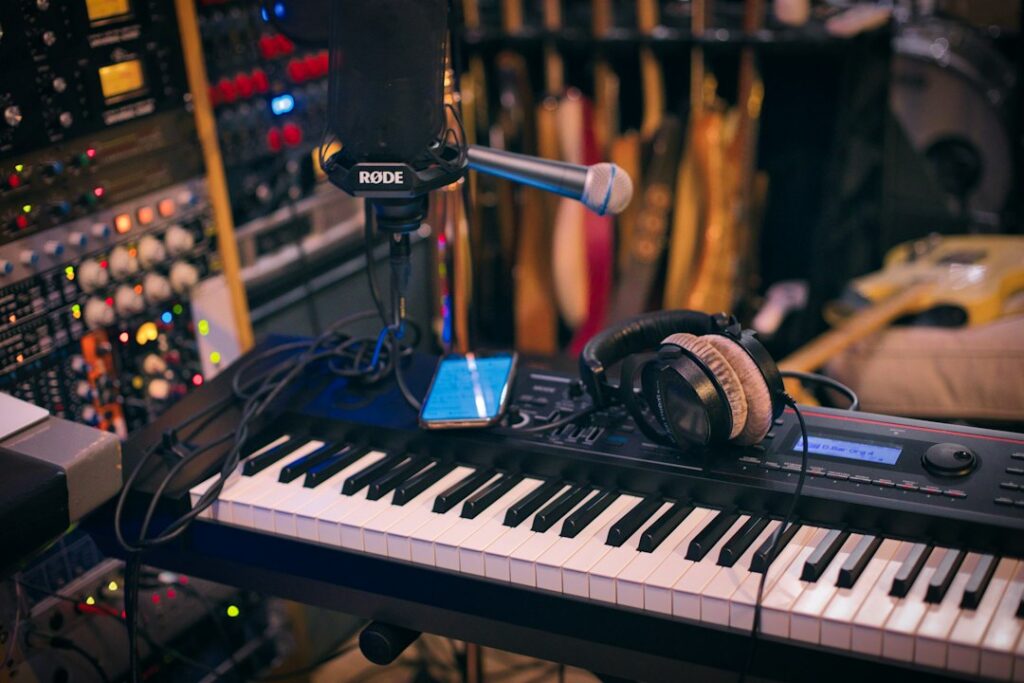
Featured photograph: Caught In Joy on Unsplash. Illustrative stock photograph; it does not depict an AI-generated result or a tested product.
Updated September 26, 2026. This article was created with AI assistance. For general information; check current product terms and obtain qualified advice where appropriate. Read our disclaimer.


