AI can help put a scent preference into words. It cannot smell a perfume through your phone, know whether you will enjoy it, or establish that an essential oil will treat a health problem. Those distinctions matter when a shopping quiz promises a fragrance that is “scientifically matched” to you.
A useful starting point is a small, ordinary task: describe fragrances you already like, identify questions to ask a seller, and compare the actual information on product labels. Treat the result as a shopping aid, with room to decide that you prefer no fragrance at all.
What AI actually does in fragrance design
There is real industrial work behind some of the headlines. In its 2018 account of Philyra, Symrise described a collaboration with IBM Research using fragrance formulas and historical data to suggest combinations. A perfumer then refined the suggestions. This was a product-development system working with specialist data and human expertise.
That example does not validate every consumer scent quiz or a recipe from a general chatbot. A recommendation based on your answers may simply match descriptive words to a catalogue. Ask what information the service actually uses and what “personalized” means before paying extra.
Make a preference card, not a medical profile
Start with information you can assess yourself: examples you enjoy, notes you dislike, whether you want a faint or noticeable scent, where you would use it, and your spending limit. There is usually no reason to upload medical records or a detailed account of your mental health to obtain descriptive vocabulary.
Help me describe a fragrance preference for a shop assistant. I like light citrus and woody descriptions, dislike very sweet descriptions, and want something subtle. Suggest questions about samples, ingredients and returns. Do not recommend treatments, invent product claims or create an essential-oil recipe.
Check the response for assumptions. “Woody” does not guarantee a particular ingredient, and “gentle” is not a safety certification. If AI suggests a named product, open the manufacturer’s current page yourself. Confirm that it exists, that the description matches, and that the price and sample options are current.
Keep your own notes after trying a suitable sample according to its directions. A simple “liked / disliked / unsure” record is more informative for your next purchase than a personality label assigned by software.
Separate enjoyment from health claims
A pleasant smell and a proven treatment are different claims. The National Center for Complementary and Integrative Health’s lavender summary says it is unclear whether lavender aromatherapy benefits anxiety, stress, sleep quality, insomnia or several other conditions. Research on a particular oral lavender product cannot simply be transferred to a diffuser, a perfume or a homemade blend.
When a seller cites a study, look for the actual product, route of use, participants and outcome. Did researchers measure a medical outcome, or did people report liking a scent? Was the product tested in the same form being sold? An AI-generated paragraph saying “studies show” is not a substitute for those details.
In the United States, the FDA explains that intended use determines how an aromatherapy product is regulated. Claims to treat anxiety, relieve pain or help sleep can be drug claims. A product being available for sale, or marketed as natural, does not establish that its treatment claims have been approved.
Keep safety decisions outside the chatbot
The FDA also notes that plant-derived ingredients can cause irritation, toxicity or allergic reactions. “Natural,” “organic” and “AI-selected” are not guarantees of safety. Follow the actual product directions rather than a chatbot’s dilution, ingestion or application instructions.
Do not use a generated recipe to decide to swallow essential oils or apply concentrated oils to skin. If you have a health condition, take medicines, are pregnant, or are considering use around a child, discuss the specific product and proposed use with an appropriate health professional. Ask a veterinarian about use around pets rather than treating human fragrance advice as animal advice.
Shared spaces also need a human decision. Check whether others want fragrance present, and respect a request for a scent-free room. A personalized recommendation for one person does not establish suitability for everyone nearby.
A sensible stopping point
Success can be a clear preference card, a verified sample option and fewer unsupported claims in your shopping decision. You do not need a subscription, a custom formulation or a promised wellness transformation. AI earns its place when it helps you ask better questions and leaves the final choice with you.
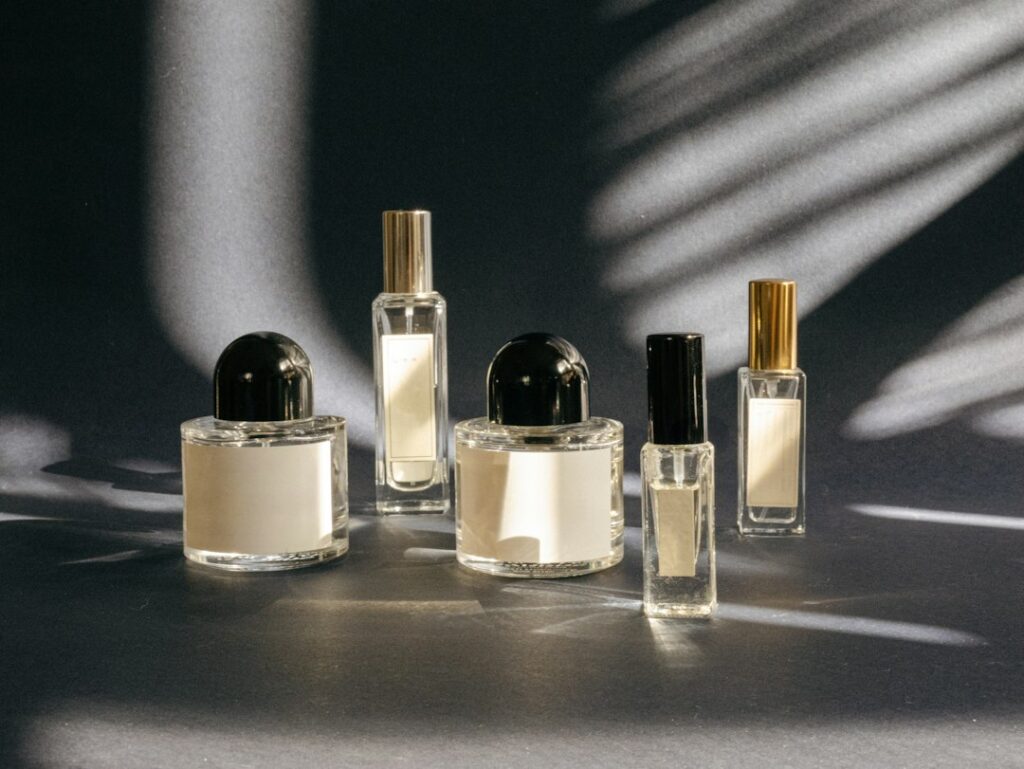
Photo: Lera Ginzburg on Unsplash. Illustrative fragrance bottles; no particular product or medical benefit is endorsed.
Updated September 25, 2026. Prepared with AI assistance and checked against the sources linked in this article. This is educational information, not personal medical, veterinary or other professional advice, and not a hands-on product test. See our disclaimer.
Website controls updated : added copying, manual text selection, text-file saving and article text-size choices for the complete practice request. The request text is unchanged. See the checks and remaining accessibility limits. This update is not a new source review or AI-product test.