A plant-identification app can make a nature walk more interesting by suggesting names to investigate. That is different from deciding that a plant is safe to eat. If a tour is advertised as “AI-guided foraging,” ask who is making the identification and food-safety decisions before booking.
A worthwhile outing can focus on observation, local ecology and learning from a knowledgeable guide. You do not need to taste or collect anything for the experience to be useful.
Ask what “AI-guided” actually means
The term might mean a route planned with software, image suggestions on a phone, automated commentary or a human guide using digital notes. These are different services. Ask for a plain description of what the technology does and where a person checks it.
An image match or confidence score is not an edibility certificate. Multiple apps agreeing does not establish that they provide independent evidence or that they considered the exact specimen, plant part and local conditions.
Never use an app, chatbot, generated image or online comment as the sole basis for eating a wild plant or mushroom. If there is uncertainty, do not eat it. A disclaimer attached to an app does not make a questionable identification safe.
Look for relevant human expertise
Ask who leads the tour, how they learned to identify local species and how they handle uncertainty and potentially dangerous look-alikes. Experience should relate to the region and organisms involved, not simply confidence using an app.
Poison Control’s discussion of toxic horse chestnuts illustrates the danger of confusing superficially similar plants and advises learning with experienced foragers. This is an example of the identification problem, not a field guide for choosing chestnuts.
A credible provider should explain what they will not identify or serve. Be cautious if every photograph gets an instant definitive answer, if the guide dismisses uncertainty, or if tasting is treated as a way to check an unknown plant. Choose an observation-only option when the provider’s expertise or process is unclear.
Check access and collection rules separately
A mapped location does not establish permission to enter, pick plants or lead a paid activity. Ask the provider how they confirm landowner or land-manager requirements for the specific route.
Rules can differ even between nearby parks. For example, the Cuyahoga Valley National Park compendium sets out local resource-protection rules and collection provisions. Read the current rules for the place you will actually visit rather than copying an allowance from another park.
Permission to observe is not necessarily permission to collect, and permission for personal use may not cover commercial activities. Avoid publishing exact locations of sensitive species or private property simply because an app makes sharing easy.
Understand the limits of a correct name
Identification alone does not establish that a specimen is suitable to eat. The plant part, condition, preparation, contamination risks and the individual participant’s circumstances can matter. Do not assume that something growing in an urban green space is uncontaminated.
Ask whether food will be provided, who prepares it, how ingredients are documented and how allergies or dietary restrictions are handled. Do not let a tour or app make medical suitability promises. You should be free to decline all tasting without pressure.
If someone may have eaten a poisonous plant or mushroom, contact the appropriate poison center promptly rather than waiting for AI to identify it or for symptoms to develop. For an emergency, use local emergency services. Poison Control provides U.S. contact and response guidance; outside the United States, use the relevant local service.
Give AI a useful preparation task
Turn this tour description into questions for the provider. Separate confirmed details from missing information about the human guide, route, accessibility, permissions, tasting, emergency arrangements and cancellation. Do not identify edible species, propose harvesting sites or recommend foods from photographs.
Confirm the practical answers directly. Check distance, terrain, meeting point, weather arrangements, toilets if needed and whether the pace works for you. Download essential route and contact information if the area has unreliable reception.
During the outing, record observations without treating them as instructions for later harvesting. Keep the guide’s explanation, an app’s suggestion and your own uncertainty clearly separated in your notes. A photo album is a learning record, not a menu.
Review what you actually learned
A good result might be recognizing which features an expert examines or understanding why two similar plants require careful distinction. It need not be a bag of ingredients or a promise that you can now guide other people.
For general outdoor preparation, see our article on planning an outdoor trip with AI. Use technology to organize questions and observations while qualified people, local rules and appropriate safety practices govern the activity.
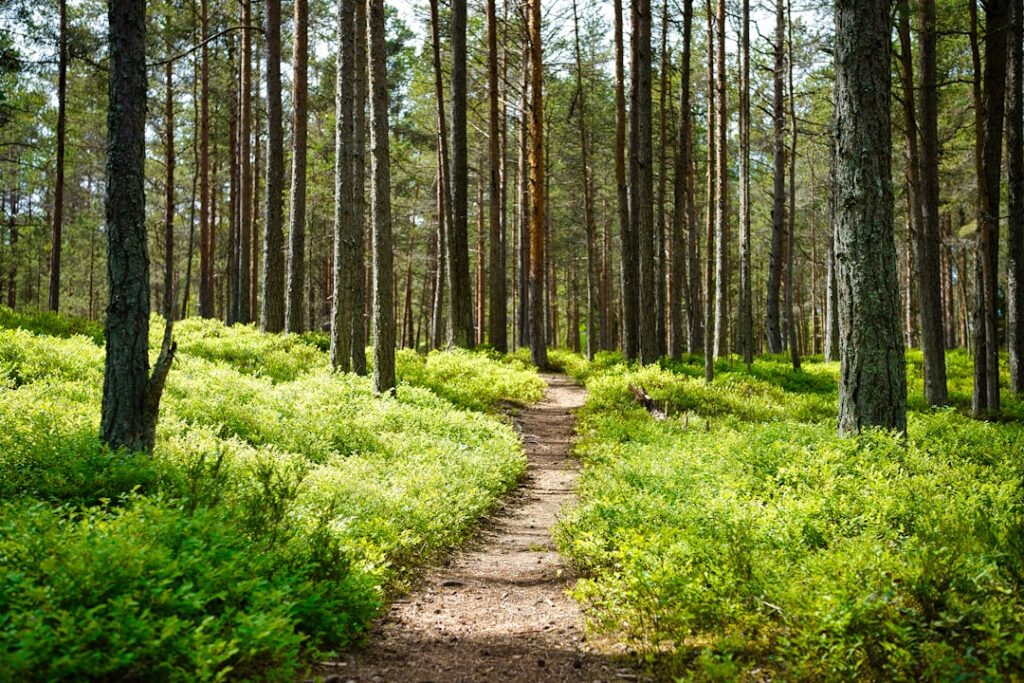
Photo: Maksim Shutov on Unsplash. Illustrative woodland scenery; no plant shown is identified as edible or available for collection.
Updated September 26, 2026. Prepared with AI assistance and checked against the linked sources. This is general information, not personal medical, legal, financial or other professional advice, and not a hands-on product test. See our disclaimer.


