
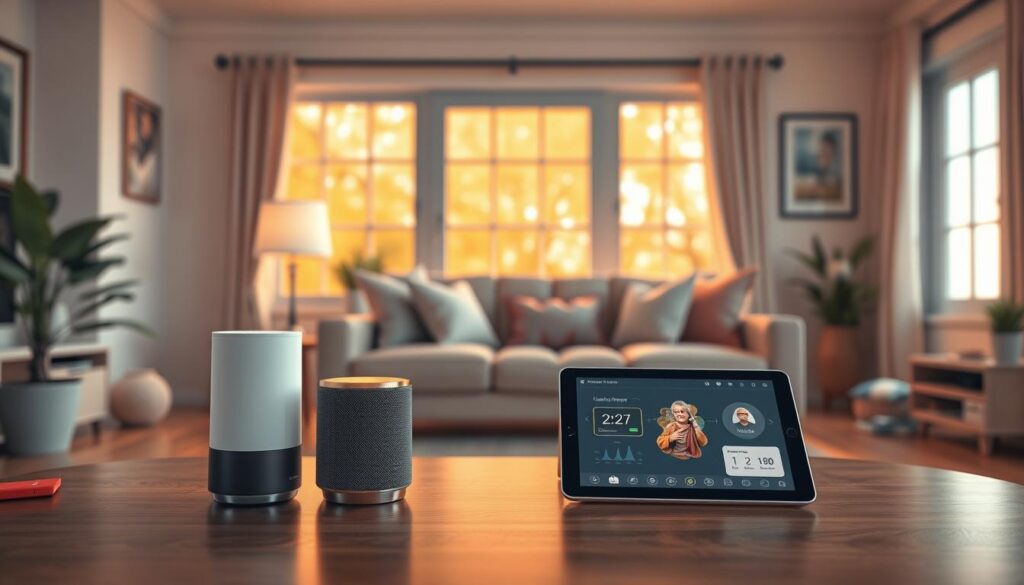
Aging in place lets you stay in your own home, keeping your dignity and comfort. As you get older, new technology helps keep you safe and independent.
Using AI for Home Safety After 60 makes your home smarter. It watches over you, keeping you safe without feeling like you’re being watched.
There are many independent living aids to help you stay on your own. They give you peace of mind, so you can enjoy your hobbies and family time.
These advanced tools work with your caregivers, alerting them only when needed. This way, you stay connected to your support while enjoying your home.
Understanding the Role of AI for Home Safety After 60
Smart technology is changing how we age by adding layers of protection. By using AI for Home Safety After 60, you can make your home safer and more responsive. This lets you stay independent while knowing help is always there.
How Smart Technology Supports Aging in Place
The main goal of aging in place technology is to make your home fit your needs. With home automation for seniors, daily tasks get easier and safer. These systems help without being in the way.
You can set up your home to fit your routine. This means your home stays comfortable and easy to use as your needs change. By removing common problems, you can live on your own for longer.
The Shift from Reactive to Proactive Monitoring
Old safety systems wait for emergencies to act. But proactive monitoring looks for problems before they happen. It watches your habits to spot health issues early.
Sensors track things like how often you use the bathroom or fridge. If it sees a big change, it automatically notifies your family or caregivers. This data-driven approach gives you peace of mind, knowing you’re being watched over.
Fall Detection and Emergency Response Systems
Adding advanced monitoring tools to your daily life can greatly improve home safety. Using smart home security for seniors lets you stay independent while knowing help is always ready. With proactive monitoring, your home can spot risks before they become emergencies.
Utilizing Radar-Based Sensors like Walabot Home
Today’s tech offers safe, non-intrusive safety with radar-based devices. Tools like Walabot Home offer fall detection systems without the need for pendants or watches. These sensors attach to walls and use radio waves to track movement, spotting falls even in private spots like bathrooms.
Wearable AI Devices vs. Ambient Monitoring
Deciding between wearable devices and ambient sensors depends on your comfort and lifestyle. Wearables track your health on the go. But ambient monitoring works in the background, without needing your action.
Automated Alerts for Caregivers and Emergency Services
A good safety network needs reliable communication in emergencies. Systems like the Ring Alarm Pro are great caregiver support tools. They have emergency internet backup and 24 hours of battery power, ensuring alerts get through even without power or Wi-Fi.
Don’t forget about environmental dangers that could harm your home. Installing water leak detection sensors, like those from YoLink, can prevent costly and dangerous accidents. These devices send instant alerts, letting you fix small issues before they become big safety risks.
Smart Lighting and Environmental Control
Integrating home automation for seniors can change your daily life. It makes it easier to interact with your home, reducing physical effort. This helps you stay independent and safe.
Voice-Activated Systems like Amazon Alexa for Daily Tasks
Voice-activated home assistants let you control your home without touching anything. You can set up routines with just your voice. For example, say “start my day” to open blinds, start coffee, and get the weather.
These systems are like a helpful friend all day. They save you from moving around the house for simple tasks. This is great for saving energy and staying organized.
Automated Lighting to Prevent Nighttime Falls
Good lighting is key for safety at home. Smart lighting for elderly people makes sure paths are always lit at night. Lights turn on when you move, like in hallways or bathrooms.
This seamless automation stops the risk of falling in the dark. It keeps your home bright, making you and your family feel safer.
Smart Thermostats for Temperature Regulation
Keeping your home at a good temperature is important for your health. Smart thermostat benefits include controlling the temperature from anywhere or on a schedule. No more fiddling with hard-to-use thermostats.
These devices learn what you like and adjust the temperature for you. They keep your home just right, avoiding uncomfortable temperatures. This is a key part of home automation for seniors, making life easier and safer.
AI-Powered Security and Access Management
Keeping your home safe is key for seniors to stay independent and worry-free. Smart devices help manage your home without needing to check every door. They offer a proactive layer of protection that keeps you safe while letting you enjoy your home.
Video Doorbells like Google Nest Doorbell for Visitor Screening
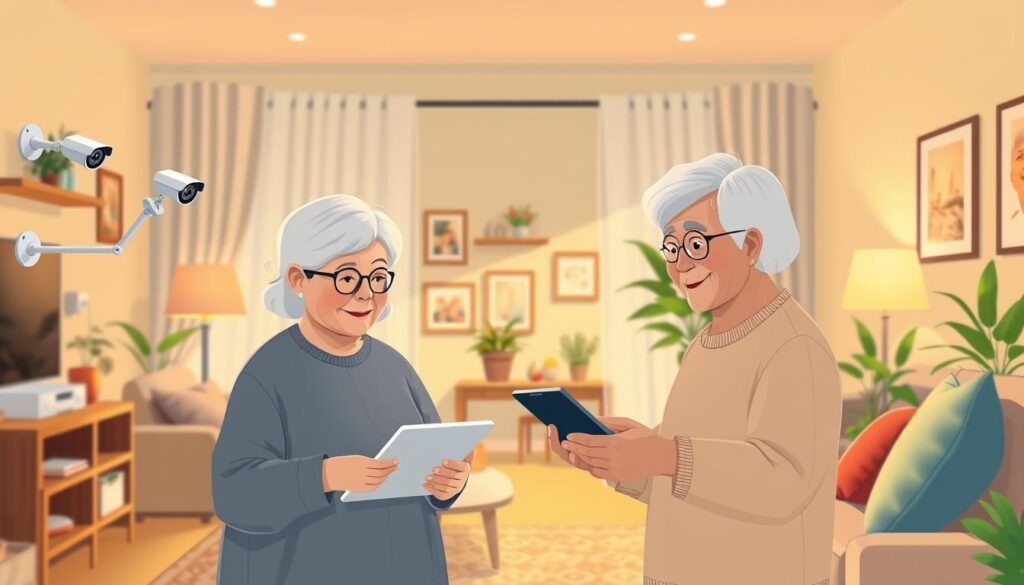
Today’s smart doorbells for safety let you see and talk to visitors without getting up. The Google Nest Doorbell sends clear video to your phone or tablet. This is great if you have trouble moving or just want to check who’s there before opening the door.
The TP-Link Tapo D130 goes further. It uses AI to tell people from animals, cars, and packages. You get precise notifications, so you only talk to those who need to see you.
Smart Locks for Secure and Keyless Entry
Switching to a digital deadbolt boosts your smart lock security. The Schlage Arrive Deadbolt is a reliable keyless entry system. You can give temporary access to family, caregivers, or service providers through an app.
These locks also let you check if your door is locked from anywhere. If you forget, you can lock it with a tap on your device. This keeps your home safe and adds unmatched convenience to your daily life.
Monitoring Unusual Activity Patterns
AI can learn your household’s usual patterns to spot any odd activity. It alerts you or your family if something looks off. This intelligent monitoring acts as a silent guardian, watching over your home even when you’re resting.
If the system finds activity that’s not normal, it sends an alert right away. This keeps you informed and ensures help is always accessible if needed. These tools together create a strong safety net that supports your lifestyle and boosts your security.
Health Monitoring and Medication Management
Managing daily health needs gets easier with the right digital tools. Modern technology lets you see your health through small changes. For example, smart sensors can spot changes in bathroom use or fridge access, showing early health signs.
Smart Pill Dispensers like Hero Health
Sticking to a medication schedule is key for good health. Medication management tools like Hero Health make this easier. They sort and dispense pills on time. These tools send alerts to your phone if you miss a dose, helping you stay on track.
AI Integration with Wearable Health Trackers
Smart health trackers give a full picture of your health. They track heart rate, sleep, and activity all day. AI looks at this data to spot trends you might miss, helping you fix issues early.
Data Sharing with Healthcare Providers
The best part of remote health monitoring is connecting with your medical team. You can share health data securely with doctors. This leads to better consultations and quicker help. These caregiver support tools keep your family and doctors updated in real-time.
Privacy Considerations in AI-Equipped Homes
When you use modern home automation, keeping your privacy in smart homes is key. It’s important to use technology that helps you without feeling watched. You should always feel in charge of your home.
Balancing Safety with Personal Autonomy
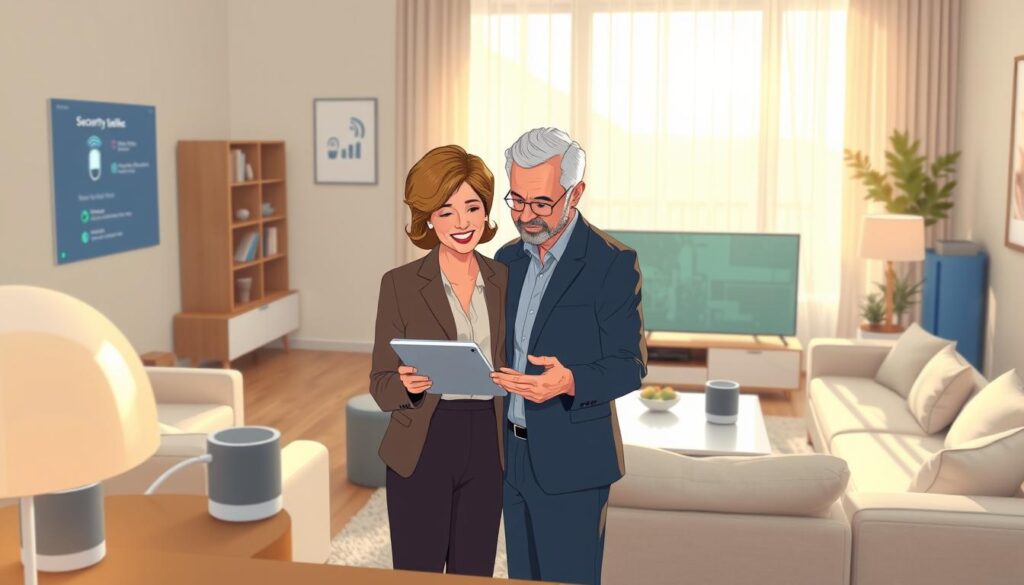
Smart tech aims to give you peace of mind while keeping you independent. You can set limits by picking devices with customizable monitoring features. This way, you only get alerts when needed, not all the time.
Always check your device settings to match your comfort level. By adjusting these tools, you keep your dignity while enjoying AI’s safety benefits. Personal autonomy is key to a happy, secure home.
Securing Smart Home Networks Against Cyber Threats
Good cybersecurity for seniors starts with simple habits. Always change your smart device passwords to something strong. Keeping your router’s software up to date also helps block unwanted access.
Using a guest network for your smart devices is a smart move. It keeps them safe from your personal devices. Staying informed about security updates keeps your network safe.
Choosing Devices with Local Processing Capabilities
Choosing devices that process data locally boosts your privacy. When data is processed locally, it doesn’t go to the cloud. This keeps your info safe at home, reducing the risk of data breaches.
Look for devices that work offline or store data locally. This is a smart choice for cybersecurity for seniors who want AI’s benefits without risking their privacy. Making smart choices today means a safer, more private future.
Selecting the Right Technology for Your Needs
Creating a safe home starts with the right tools for your daily life. Every home is unique, and your needs should guide your choices. This way, you can make a space that’s both safe and comfortable for you.
Assessing Mobility and Cognitive Support Requirements
First, think about what you need physically and mentally. If balance is a challenge, look for aging in place technology that helps prevent falls. For cognitive support, find devices that remind you of daily tasks or medication times.
Knowing your limits helps you choose the right tools. You don’t need every gadget to stay safe. Pick what really helps you stay independent.
Budgeting for Long-Term Smart Home Maintenance
Smart homes cost more than just the initial buy. Remember the ongoing costs like subscription fees or cloud storage for video. Having a dedicated maintenance budget keeps your systems up to date.
Think about the life of your independent living aids when budgeting. Some might need battery swaps or software updates. Planning for these costs avoids surprises and keeps your home running well.
Ensuring Ease of Use for Seniors
The best tech is easy to use. Look for senior-friendly smart devices with simple interfaces. Stay away from systems that are hard to use or need constant fixing.
Choose devices with voice control or big, clear displays for easier use. If a device is hard to use, it might end up unused. Pick options that are easy to use to make your smart home a helpful part of your life.
Conclusion
Modern innovation changes how you approach aging in place. It makes your living space adapt to your needs. This keeps your autonomy safe.
Choosing systems that protect your privacy and safety gives you peace of mind. Devices like Google Nest or Hero Health help with daily routines. They help you stay independent while getting the help you need.
Your home becomes a partner in your wellness journey. The right technology makes it a secure place for the future. Start by finding the most important areas for support in your life.
Begin your journey to a safer future today. Look at your current home to see where smart upgrades are most valuable. Making these improvements ensures a comfortable and independent life for years to come.