
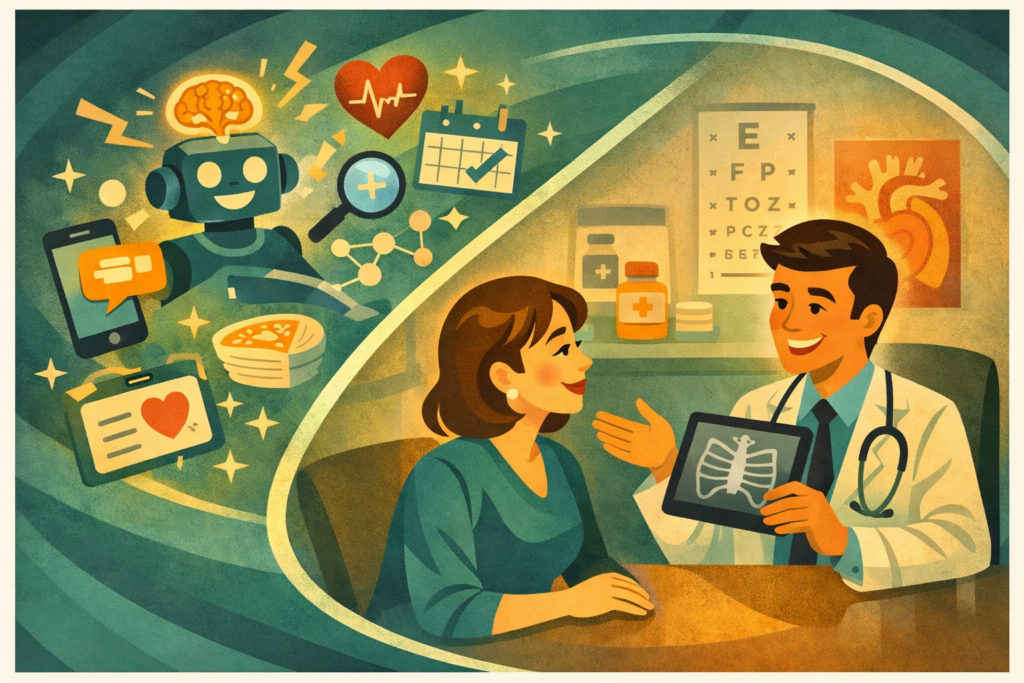
Modern technology is changing the medical world fast. Artificial intelligence in healthcare is now a reality. It helps doctors find diseases quicker and aids in making new medicines.
At your next doctor’s visit, you might see changes. Clinics are using tablets instead of paper and digital bots for scheduling. These changes make doctor visit preparation easier and faster.
Telehealth sites use smart algorithms to match you with the right doctors. This ensures you get care that meets your needs. These tools help you focus on your health, not paperwork.
The way we experience healthcare is moving to digital solutions. The digital age brings more precision to your care. High-tech systems analyze your health data before you even arrive.
The Modern Challenge of Making the Most of Limited Appointment Time
Healthcare systems are under a lot of pressure. Making the most of your time with your doctor is now more important than ever.
Nigam Shah, a professor at Stanford University, says AI is being used for tasks like billing. But it could do so much more, like helping us understand diseases better. This shows the big challenge for both patients and doctors: using time wisely and technology to improve care.
Patients often feel rushed, trying to share their concerns in little time. This can mean important issues get missed. Doctors also have to gather info, diagnose, and care quickly.
AI in healthcare is not just about making things faster. It’s about making care better. AI tools help patients prepare and doctors make better choices.
Efficient doctor visit preparation is essential for getting the most out of your time. Knowing about AI in healthcare and its uses can help you improve your care experience.
Use AI to Prepare for Doctor Visits Smarter
AI is changing how we get ready for doctor visits. Today, over 350,000 mobile health apps use AI. These apps offer many ways to improve your experience at the doctor.
AI tools can do many things, like diagnose conditions or support mental health. It’s important to pick the right tools and know how to use them well.
Selecting AI Health Tools That Work for You
When picking an AI health tool, think about what you need it for. Do you want to track symptoms or understand your diagnosis better? Choose tools that healthcare experts recommend and have good reviews. Make sure they are safe and follow healthcare rules.
Popular AI tools can track symptoms, remind you to take medicine, and even chat with you. Picking the right tool helps you prepare better for your doctor visit.
Creating Your Pre-Visit Preparation Checklist with AI
AI can make a detailed checklist for your doctor visit. It looks at your health data and history. This way, it finds important things to talk about with your doctor.
To make a checklist, use AI tools that look at your health. They suggest questions or topics to discuss. This saves time and makes your visit more productive.
Building a Complete Health Profile
A complete health profile is key for good doctor visits. AI helps by organizing your health data, tracking symptoms, and predicting health issues.
With a detailed health profile, you can give your doctor the latest information. This helps them make better decisions about your care. AI tools keep your profile up to date, so you’re always ready for your doctor visits.
Track and Document Your Symptoms Using AI Technology
AI technology is changing how we track and record health symptoms. It makes it easier to spot patterns and get the right medical care. With AI tools, you can keep a detailed and accurate symptom journal. This is key for good healthcare.
These tools make tracking symptoms simple and offer insights for doctors. This leads to better health outcomes.
AI-Powered Symptom Journals That Identify Patterns
AI-powered symptom journals help track symptoms over time. They find patterns you might miss. These journals use smart algorithms to analyze your data, giving you insights into your health.
For example, some journals can spot links between symptoms or symptoms and things like diet or environment. This info is super helpful for managing chronic conditions or tracking illness progress.
Using Voice-to-Text AI for Daily Health Logging
Voice-to-text AI technology makes logging your health easy. Just talk about your symptoms to create a detailed log without typing.
This tech is great for those with tight schedules or who struggle with written logs. The AI accurately writes down what you say, giving your doctor a full picture of your health.
Visual Symptom Tracking with AI Photo Analysis
AI is also good at tracking visual symptoms. AI photo analysis can watch for changes in visual symptoms like skin issues or wound healing.
By looking at photos taken at different times, AI can spot small changes. This visual data helps doctors make better treatment plans.
Generate Targeted Questions with AI Assistance
AI can make your doctor visits better by helping you ask the right questions. It uses technology to create a list of questions based on your health concerns. This way, you can use your time with the doctor more effectively.
Atropos Health, founded by Nigam Shah, is a great example. It uses AI to combine millions of health records. This helps doctors find answers for similar health scenarios. It’s a similar idea for patients to get informed questions.
Crafting Effective Prompts for Medical Question Lists
Creating good prompts is key to asking the right medical questions. Start by telling an AI tool about your symptoms, medical history, and current worries. It will then make a list of questions for you.
You can also use AI chatbots or health apps. They ask you questions to understand your health better. These tools help you figure out the most important questions for your doctor.
AI Tools That Help You Prioritize Your Concerns
Not all questions are equally important. AI can help you sort out what’s most important. It looks at your symptoms and medical history to find the key questions.
This way, you focus on the most critical issues with your doctor. Your visit will be more efficient and effective.
Tailoring Questions to Your Specific Condition
AI can also tailor questions to your specific health situation. It looks at data from similar cases. This gives you insights into the most relevant questions for you.
Using AI to generate and tailor questions makes your doctor visit more productive. It improves your overall patient experience.
Streamline Your Medical Records with AI Organization Tools
Using AI to organize your medical records can make healthcare more efficient and personal. It can be hard to manage your health history, but AI tools can help. These tools keep your health data organized, so your doctors always have the latest info.
Document Scanning and OCR Technology
AI document scanning and OCR (Optical Character Recognition) technology make digitizing your medical records easy. They turn paper documents into digital ones, making them easier to store and access. OCR technology also makes text from scanned documents readable, cutting down on mistakes.
You can use AI apps to scan your medical documents. They turn these images into digital records. This saves space and keeps your documents safe and easy to find.
Automated Medical History Summaries
AI tools also create automated medical history summaries. These summaries put your medical history into a clear, easy-to-read format. They highlight important info like allergies, medications, and past diagnoses. This is really helpful in emergencies or when seeing a new doctor.
AI looks at your medical data to make these summaries. This way, your doctors have all the info they need to care for you well.
Secure Cloud Storage Solutions for Health Data
Keeping your health data safe is key. AI-powered cloud storage services use top-notch security like encryption and access controls. These solutions keep your data safe and make it easy for your doctors to access it.
For example, CommonSpirit Health is testing an AI program in its patient portal. This shows how AI can improve health data security and management.
Enhance Communication During Your Appointment
AI is changing how we talk to doctors, making it better and faster. You can make your patient experience better by using AI tools during visits.
Real-Time AI Translation of Medical Terminology
Understanding medical terms can be tough during doctor visits. Real-time AI translation helps by explaining terms right away. This way, you get what your doctor is saying clearly.
Recording Your Appointment with AI Transcription
Recording your visit can be very helpful. AI can write down what was said. But, you need to know the rules about recording talks.
Understanding Recording Laws in Your State
Recording laws differ by state. Some need everyone’s okay to record. Knowing your state’s laws is important.
HIPAA-Compliant AI Transcription Services
Choose an AI transcription service that follows HIPAA rules. This keeps your health info safe. Otter.ai and Rev.com are good choices.
Tips for Getting Your Doctor’s Permission
Always ask your doctor before recording. Tell them it’s for your own use. It helps you understand your care better.
AI Note-Taking Apps That Capture Key Information
AI note-taking apps help by catching important points. Evernote and OneNote use AI to highlight key info. This makes it easy to look back later.
Dr. Andrew French from CommonSpirit Health says AI helps doctors listen better. It lets them focus on you while AI writes down what’s said. This makes care better and your visit more enjoyable.
Maximize Post-Visit Results with AI Follow-Up
AI technology can greatly improve your post-visit care by giving you personalized support and insights. With AI tools, you can actively manage your health. This ensures you follow your treatment plan and make smart health choices.
Using AI to Research and Understand Your Diagnosis
Getting a diagnosis can raise many questions. AI can help you research and understand your condition by giving you access to lots of information. You can use AI-driven platforms to look up your diagnosis, understand its implications, and learn about treatment options.
These platforms have filters and categorization to help you find relevant and reliable info. By using AI to research your diagnosis, you can understand your condition better. This empowers you to manage it more effectively.
Setting Up AI-Powered Medication Reminders
Following a medication regimen can be tough, but AI-powered medication reminders can help. These reminders can notify you when it’s time to take your medication. This keeps you on track with your treatment plan.
Some AI tools also track your medication adherence and provide insights into your habits. This info is valuable for your healthcare provider. It gives them a clearer picture of your treatment progress.
Tracking Treatment Progress with AI Analytics
AI analytics can play a key role in tracking your treatment progress. AI analyzes data from sources like wearable devices, symptom journals, and medication records. It identifies patterns and trends that might not be obvious.
This info helps you and your healthcare provider make informed decisions about your treatment. For example, if AI analytics show a medication isn’t working, your doctor might change your treatment plan.
Preparing for Follow-Up Appointments
AI can also help you prepare for follow-up appointments by organizing your health data and identifying key issues to discuss. Having a clear overview of your progress and any concerns helps you make the most of your visit.
Pediatrician Jocelyn Wilson uses an AI tool that listens to her conversations with patients. It transforms them into a clinical visit summary, saving her over an hour a day. You can use AI to streamline your follow-up appointments, ensuring you cover all important topics and make progress in your treatment.
Conclusion
As healthcare changes, using artificial intelligence can really help your experience. AI tools can help you get ready for doctor visits and track your symptoms. They also help you ask the right questions and organize your medical records.
AI is changing how you talk to doctors, making it better and more personal. It includes tools like AI symptom journals and real-time translation of medical terms. These tools aim to make your healthcare experience better.
Nigam Shah, a key figure in AI healthcare, says we’re making good progress. But, we should know what AI can and can’t do. As research grows, AI will become more important in healthcare.
Knowing what AI can do in healthcare helps you take charge of your health. It’s about using AI’s strengths while understanding its limits.