
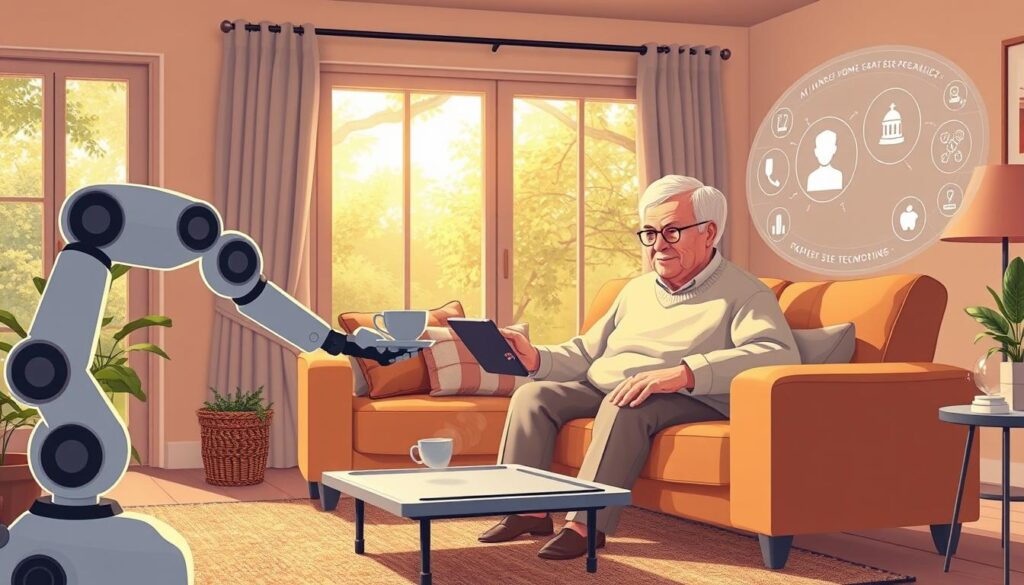
The world’s population is aging fast, with 1.5 billion people expected to be 65 or older by 2050. This makes finding good elder care solutions very important. Traditional care methods are expensive, like nursing homes and assisted living. But, many families are choosing home care as a cheaper and more personal option.
Aging in place means using technology, like AI caregiving tools, to help seniors stay in their homes safely. With caregiving technology, you can give your loved ones the support they need while keeping their independence.
Choosing home-based care is not just a personal choice. It’s also a necessity because of the changing demographics. When looking into care for your parents, it’s key to understand how AI caregiving can improve their lives.
The Growing Need for Home-Based Elder Care
The aging population is leading to a big increase in the need for home-based elder care. As people live longer, staying in their own homes becomes more important. This is why home care is becoming a key need.
Current Challenges in Elder Care
Elder care is facing big challenges, like high costs and a lack of caregivers. The cost of home care, about $54,000 a year, is a big expense for many families.
Rising Costs of Nursing Homes and Assisted Living
The prices for nursing homes and assisted living are going up. This puts a lot of pressure on families’ finances. Nursing home costs can be too high for many families to handle.
Shortage of Professional Caregivers
There’s also a big shortage of professional caregivers. This makes it hard for families to find the support they need for their loved ones.
The Emotional Value of Aging in Place
Aging in place has a lot of emotional value. It lets seniors stay in their own homes, keep their independence, and stay connected with their community. This improves their quality of life a lot.
Understanding Future Impact AI Caregiving: Keep Parents at Home
The future of elder care is here. AI caregiving technology lets your parents stay safe and independent at home. This new way of caring combines different technologies for full support.
What is AI Caregiving Technology?
AI caregiving technology offers many solutions to improve care for seniors. It includes smart monitoring systems, voice-activated assistants, and predictive health analytics. These work together to make a safe and caring space.
How AI Systems Support In-Home Care
AI systems are key in supporting in-home care. They provide constant help and watch over seniors. This makes seniors safer and gives families peace of mind.
24/7 Monitoring Capabilities
AI caregiving technology can watch over seniors all day, every day. It spots falls, checks health, and alerts caregivers or family to any problems.
AI systems get to know and adapt to seniors’ needs over time. This adaptive learning capability means care is tailored and works well, meeting each senior’s unique needs.
Key AI Technologies Transforming Home Elder Care
AI is changing home elder care, making it safer and more efficient. The elderly population is growing, and we need new ways to care for them. AI offers many technologies that help both caregivers and seniors.
Smart Monitoring Systems
Smart monitoring systems are key in AI-driven elder care. They use sensors and cameras to keep an eye on seniors at home.
Fall Detection and Emergency Response
These systems can spot falls and call for help. They use smart algorithms to alert caregivers or emergency services right away.
Activity and Mobility Tracking
They also track daily activities and mobility. This helps spot changes early, allowing for quick action.
Voice-Activated Assistants
Voice-activated assistants are getting popular in elder care. They can do many tasks, making life easier for seniors.
Medication Reminders and Management
One great thing about these assistants is reminding seniors about their meds. They set reminders and alerts, helping seniors keep up with their medication.
Daily Schedule Assistance
They also help with daily schedules. From setting appointments to reminding about important events, they keep seniors organized and connected.
Predictive Health Analytics
Predictive health analytics is another big impact of AI. It analyzes health data to predict health problems early.
Early Warning Signs Detection
It can spot early signs of health issues. This is very helpful in managing chronic conditions.
Health Trend Analysis
It also helps analyze health trends. Caregivers can understand a senior’s health better and make better decisions.
AI technologies are making home elder care more personalized and effective. As they improve, they will be even more vital in supporting seniors and their caregivers.
Benefits of AI Caregiving for Seniors and Families
AI caregiving brings many benefits to seniors and their families. It makes home care better by adding AI technology. Seniors see a big improvement in their quality of life.
Enhanced Safety and Security
AI caregiving systems make seniors safer and more secure. Smart monitoring systems watch for falls, track health, and alert caregivers in emergencies. This means seniors get help fast, lowering injury risks.

Increased Independence for Seniors
AI caregiving helps seniors stay independent. Voice-activated assistants help with daily tasks like reminders and scheduling. This lets seniors manage their lives better.
Reduced Caregiver Burden
AI systems ease the load on caregivers. Studies show AI caregiving can boost caregiver productivity by 35% and cut injuries by 20%.
Preventing Caregiver Burnout
AI caregiving automates routine tasks, preventing burnout. Caregivers can focus on emotional support and companionship. This reduces their stress and workload.
Remote Monitoring for Family Members
AI caregiving lets family members check on their loved ones from afar. This gives peace of mind, which is great for families who are far apart. It ensures their loved ones are safe and cared for.
Implementing AI Caregiving Solutions in Your Home
To add AI caregiving to your home, start by knowing what your parents need. Look at their daily routines, health, and any challenges they face.
Assessing Your Parents’ Specific Needs
First, check how your parents handle daily tasks like bathing, dressing, and taking medicine. See where they might need help and how AI can assist.
For example, AI can watch their movements and warn you if they fall or act strangely.
Selecting the Right AI Technologies
After figuring out what your parents need, pick the right AI tools. Look at voice-activated helpers for reminders, scheduling, and fun.
Smart monitoring systems can also keep you updated on their health and safety.
Setting Up an AI-Enhanced Care Environment
After choosing the right AI, set up the care area. You might need to change your home a bit to fit the new tech.
Home Modifications for Technology Integration
You might have to add more outlets or change the lights to make AI devices work better.
Internet and Power Requirements
Make sure your home has good internet and enough power for the AI tech.
Good internet is key for AI solutions to work smoothly.
Financial Considerations and Resources
Looking into AI caregiving options means understanding the costs and savings. The money side of these technologies is complex. It includes the initial cost, ongoing expenses, and long-term benefits.

Cost Comparison: AI Caregiving vs. Traditional Care
It’s key to compare AI caregiving costs with traditional care. AI might need a big upfront tech investment. But, it could lower costs for in-home care or assisted living. A detailed cost comparison can help families make informed decisions about their care options.
Insurance Coverage and Medicare Options
Knowing about insurance and Medicare is important for AI caregiving. Some plans might cover AI caregiving, like medical alert systems or telehealth. It’s essential to review your insurance policies and consult with providers to determine the extent of coverage.
Available Subsidies and Tax Benefits
Families should look into subsidies and tax benefits for AI caregiving. Government programs and tax credits might help with caregiving costs, including AI. Consulting with a financial advisor can help you navigate these options and maximize your savings.
Addressing Concerns About AI Caregiving
Using AI for caregiving has its downsides. Before you decide to use it for your parents, you should know about its risks.
Privacy and Data Security
One big worry is how AI might affect privacy and security. AI systems gather personal info about your parents’ lives. It’s key to pick AI that keeps data safe and follows rules like HIPAA.
Technology Adoption Challenges for Seniors
Seniors might find it hard to use AI caregiving tech. Easy-to-use designs are important. Also, teaching seniors how to use these tools can make them feel more at ease.
Balancing Human and AI Care
It’s vital to find a balance between AI and human care. AI should help, not take over, human care.
When AI Should Complement, Not Replace Human Care
AI is great for watching health and sending reminders. But, human caregivers are key for emotional support and making tough decisions.
Creating a Hybrid Care Plan
A mix of AI and human care is best. This way, you can meet all your parents’ needs. It’s a plan that covers their physical, emotional, and social health.
Conclusion: Embracing the Future of Elder Care
AI technologies are getting better and will soon be a big part of elder care. They will make life better for seniors and their families. By using AI caregiving, you can help your loved ones stay at home with dignity.
AI solutions like smart monitoring and voice-activated assistants can help a lot. They work alongside human care to give your parents the support they need. This way, you can keep the human touch while benefiting from AI’s help.
Thinking about the future of elder care? Stay up to date with AI caregiving news. This will help you make the best choices for your loved ones. And ensure they get the care they deserve.