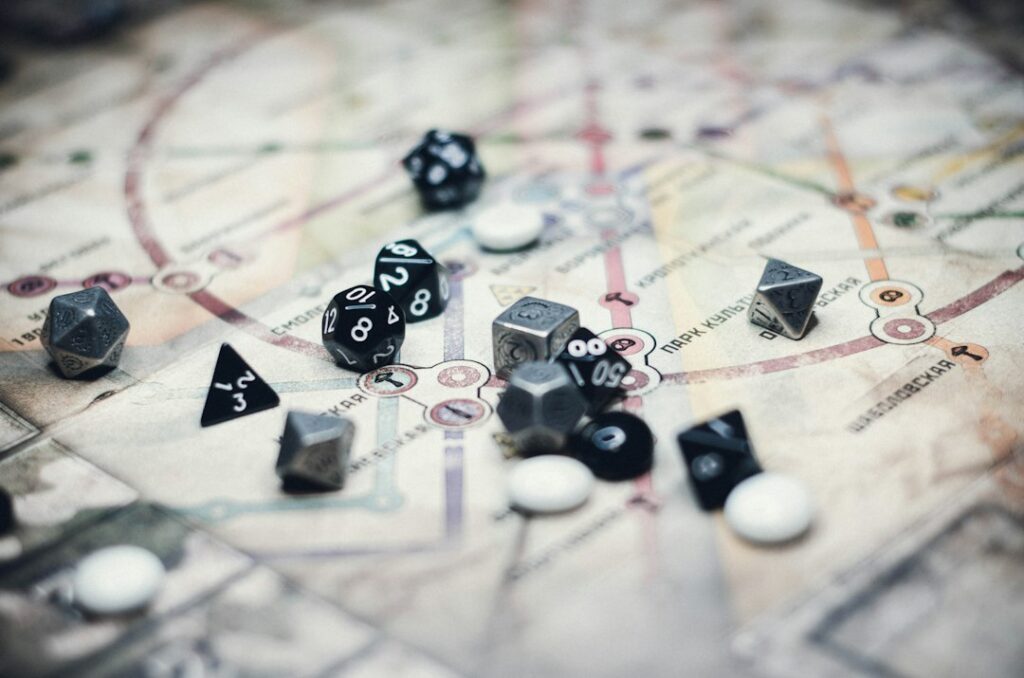
AI can be useful before a tabletop role-playing session: it can suggest a setting, draft a character description or offer three ways to introduce a clue. It becomes less useful when the group must keep stopping to correct invented rules or contradictory details.
Give the assistant a limited preparation job. Keep a person responsible for the session, and treat its output as material to edit rather than instructions the players must follow. A short, coherent adventure is easier to run than a large generated world nobody has read.
Agree on the game and the group’s boundaries
Start with the system, edition, expected session length and the group’s experience. Ask players what kinds of themes they want and which subjects should stay out. Decide whether AI assistance is welcome before bringing generated material into the game.
Do not upload private player messages or personal experiences to make characters more realistic. Summarize agreed preferences in general terms: light mystery, no graphic violence, easy entry for newcomers, and a conclusion within one evening.
The official Dungeons & Dragons rules describe a cooperative game in which players describe their actions and the Dungeon Master helps determine the results using the rules. Other systems differ. Use the actual rules for your chosen game, not a chatbot’s confident recollection of them.
Build a small adventure you can understand
For a first attempt, request one location, three supporting characters and a problem with more than one possible solution. Ask for descriptive material separately from game statistics so you do not accidentally use invented mechanics.
Here is an original fictional prompt:
Help me prepare a 90-minute tabletop mystery set in a riverside village. A public clock has stopped just before a festival. Create three original characters, three short scenes and several clues. Make repair, negotiation and investigation possible approaches. Keep the tone friendly. Do not include combat statistics, copied game text or rules claims. List facts that the game master must decide.
A workable outline could begin at the silent clock tower, continue to a repairer’s workshop and finish near the river where a missing component was last seen. That is a starting structure, not a requirement for players to visit places in a fixed order.
Check that the clues point to something understandable. If one missed conversation would make the mystery impossible, put another route to the same information elsewhere in the setting.
Check characters, clues and rules yourself
Read the full outline before playing. Give each supporting character a clear role, a motive and one useful piece of information. Remove names that sound too similar. Check who knows which facts and whether the timeline works.
For each scene, note what the players can learn and what happens if they take an unexpected approach. Avoid writing long speeches the group must listen to before it can act. A few practical notes are usually easier to use at the table.
If you need a game statistic, spell effect, difficulty rule or character option, verify it in the correct edition’s official material. Label any deliberate house rule and agree it with the group. AI-generated numbers are not evidence that an encounter is fair or appropriate.
Keep a short record of what actually happens
Make a separate session sheet for established facts: character names, promises made, discovered clues, resources used and unresolved questions. Update it from the group’s decisions rather than from the original generated outline.
If you ask AI to summarize notes afterward, compare the summary against the notes. It may turn an uncertain suspicion into a fact or invent a tidy explanation for something the players never resolved.
During play, consult the assistant only when it helps the flow. Preparing three spare names or a list of harmless shop items in advance may be more useful than pausing for a fresh response at every turn. The game master can describe a consequence without asking a model to approve it.
Let players change the story
A generated plan is not a contract. If the players repair the clock immediately, the evening might become a celebration or a new small problem. Do not force them back into the planned mystery to use every paragraph you prepared.
When a player proposes an unexpected solution, apply the group’s rules and judgment. AI cannot know the table’s mood from a written outline, and it should not be used to decide whether someone is having fun.
Be clear if you offer a paid session
Charging to host a game is a service commitment, not an automatic income stream from generated text. Explain the session length, what participants receive, your role and any AI assistance. Check the relevant publisher’s current permissions before distributing or selling material based on its game.
Do not promise a fully personalized campaign you have not reviewed. For more on explaining your process, see when to tell people AI helped you. The useful result is a prepared human host with flexible material and a group that has room to make its own story.
Updated September 26, 2026. This article was prepared with AI assistance; linked sources were checked during this update. It provides general information, not personalized professional advice. See our disclaimer.
Featured photograph: Nika Benedictova on Unsplash. Stock photograph for illustration, not a product test or customer example.


