If you enjoy explaining a dish you know well, an online cooking demonstration can be a manageable project. AI can help organize your lesson, draft a shopping list from a verified recipe and turn your own notes into a participant handout.
Start with one demonstration rather than a “virtual chef empire.” Teaching through a camera, selling prepared meals and shipping ingredient kits are different activities. Each creates its own practical responsibilities, and software does not remove them.
Choose one dish and one teaching goal
Use a recipe you are entitled to use and have actually prepared successfully. Pick a skill you can explain, such as arranging a preparation sequence or demonstrating a familiar technique. Avoid making your first lesson about a process you have only read in a chatbot response.
Decide whether viewers will watch or cook along. A demonstration can show a prepared stage while the audience watches. A cook-along needs time for people using different equipment and working at different speeds. Explain that distinction before anyone signs up.
Write down ingredients, equipment, preparation needed beforehand and what the participant should learn. Keep the original recipe beside your planning notes so you can spot an AI-generated change.
Give AI the lesson-planning job
Using only my verified recipe and preparation notes, draft an online demonstration outline. Include equipment, ingredients, setup, teaching points and places where participants may need extra time. Preserve quantities, units and safety instructions. Flag missing information. Do not invent substitutions, cooking temperatures, health benefits or claims that this recipe was tested by you.
Compare the outline line by line with the recipe. Check that quantities are not silently scaled, ingredients are not omitted and the sequence still works. An attractive handout can contain a small but consequential unit error.
Ask for a second version in plain language if needed, then read it aloud. Remove unnecessary narration when the audience needs to watch what your hands are doing. Use AI to reduce confusion rather than to add a dramatic story about a dish’s health effects.
Verify food safety outside the chatbot
FoodSafety.gov’s four-step framework covers cleaning, separation, cooking and chilling. Use authoritative guidance appropriate to the actual recipe and ingredients. A camera view or an AI description cannot establish that food has reached a safe internal temperature or that a work surface is free from contamination.
Build necessary checks into your demonstration. Do not shorten a safety step to fit a livestream schedule. If a process needs more time than the lesson allows, explain the preparation and show a clearly identified later stage rather than pretending it happened instantly.
Check the complete ingredient list and actual package labels. The FDA’s food-allergy information explains why allergens and unintended cross-contact matter. Do not promise that an AI-suggested substitution makes a dish safe for someone’s allergy or medically prescribed diet. Those needs require appropriate individual guidance and reliable ingredient information.
Rehearse the real session
Run through the demonstration with your actual camera, microphone and work area. Confirm that the relevant action is visible, your instructions can be heard and cables or equipment do not interfere with cooking.
Time the setup, preparation, teaching and cleanup. Note pauses that need an explanation and steps that are hard to see. If you record a practice session, watch the entire result rather than judging one attractive frame.
For a cook-along, ask a willing adult to review the instructions and identify unclear steps. Their kitchen and equipment may differ from yours. Feedback helps improve the lesson; it does not certify a recipe or guarantee that every participant can perform it safely.
Keep a paid offer narrow and honest
State what the session includes, what participants must provide, the format, cancellation terms and whether a recording is included. Describe your actual experience and qualifications. Do not let AI invent customer testimonials or imply professional dietary expertise.
Before adding prepared-food sales, delivery or ingredient kits, check the requirements for your location and operation. The FDA’s food-business overview points to federal, state and local responsibilities, which vary by product and facility. Offering something online does not settle which rules apply.
Use real figures for ingredients, preparation, teaching time, platform fees and any other costs. A full class is not the same as a profitable class. Ask AI to organize the numbers, but check arithmetic and assumptions yourself.
Improve the lesson from evidence
After the trial, record what participants understood, which questions repeated and what took longer than expected. Revise one or two specific parts before offering a larger series.
For presenting an instructional recording, see our article on making a useful video without appearing on camera. The strongest cooking lesson still depends on a verified recipe, clear teaching and competent food handling. AI helps you organize those strengths; it does not supply them automatically.
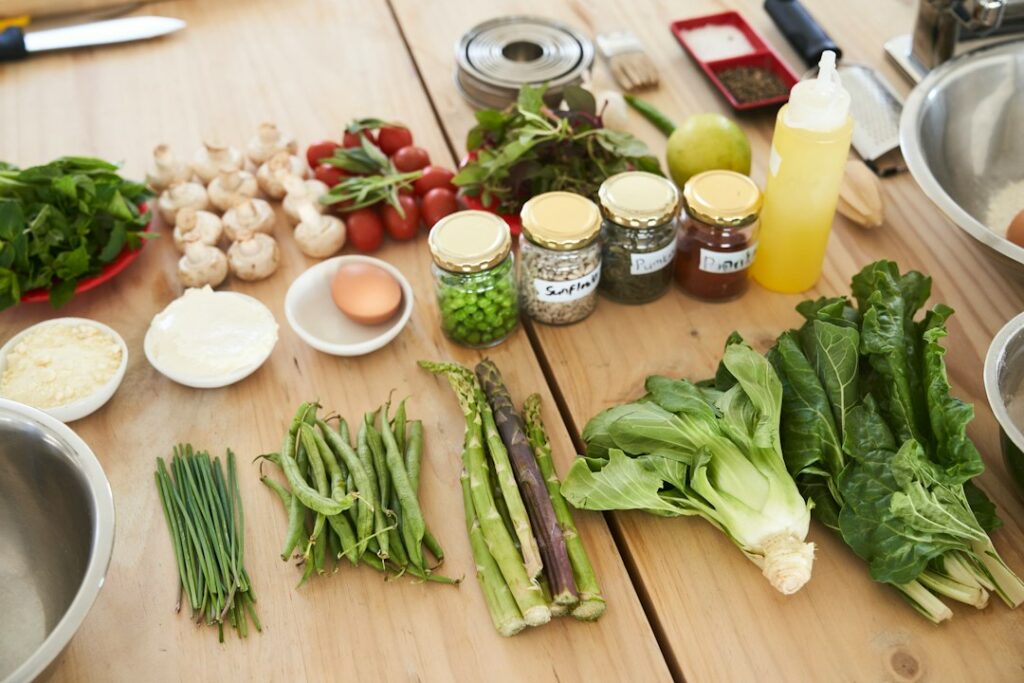
Photo: Gareth Hubbard on Unsplash. Illustrative ingredients, not an AI-tested recipe or a demonstrated food-safety procedure.
Updated September 26, 2026. Prepared with AI assistance and checked against the linked sources. This is general information, not personal medical, legal, financial or other professional advice, and not a hands-on product test. See our disclaimer.


