A smart thermometer can make a useful record of an illness. It cannot tell you everything that is wrong, predict whether you will become seriously ill, or guarantee that an infection will not spread. The practical question is whether the connected features make temperature tracking easier for your household.
Kinsa is an example of this distinction. Its thermometer measures temperature; its app organizes information and provides guidance. Calling the whole system “AI” does not turn one measurement into a diagnosis.
Separate the reading from the app
According to Kinsa’s app description, compatible thermometers can send readings to the app through Bluetooth. The app supports individual profiles, symptom and medication records, reminders, and sharing an illness timeline. These are manufacturer-described features, not results of a hands-on test by this site.
Three different things can appear on the same screen: a temperature measured by a sensor, symptoms someone entered, and guidance generated from the information supplied. Keep those categories separate. A missing symptom entry does not mean the symptom was absent. A reminder does not mean a medicine was taken.
Check the exact model before buying
Kinsa has sold different thermometer designs. Instructions for one model should not be assumed to apply to another. An old review may describe a discontinued model, different connection method, or earlier app.
- Write down the model name and confirm that its current instructions match the device being sold.
- Check phone and operating-system compatibility, the required app, and whether an account is needed.
- Check the measurement method, cleaning instructions, battery requirements, and whether the display is easy for you to read.
- Ask whether you can take and read a temperature if the phone is unavailable.
- Check how to export or share a record, and whether the receiving clinician can use that format.
For example, Kinsa provides specific instructions for using QuickCare without its app. That is useful model-level information; it is not a promise that every connected thermometer works the same way.
Make a record someone else can understand
A clear timeline is often a more useful goal than a complicated dashboard. Record the date, time, person, reading, units, and measurement method. Add symptoms in your own words. If you record medication, distinguish a planned reminder from the actual dose and time taken; follow the label and your clinician’s instructions.
Here is a fictional record-keeping example: one household member enters a reading in the morning and another enters one in the evening. The morning entry includes the measurement method, but the evening entry does not. A careful summary should flag the missing information instead of claiming that the illness improved or worsened.
If you use an AI tool to format notes, ask: “Organize these entries by date. Preserve the numbers and units exactly. Separate measured readings from reported symptoms. Mark missing information. Do not diagnose or recommend medication.” Then compare its output with the original entries. You can do the same task with a notebook, without uploading health information anywhere.
What the app cannot settle
A temperature reading and an automated suggestion do not replace an assessment of the person. Seek medical advice for concerning symptoms or uncertainty about what to do, even if an app sounds reassuring. Do not use a chatbot to decide medication doses or to overrule a clinician’s instructions.
A community illness trend also cannot determine which illness an individual has. Treat any local-risk information as context, not a personal test result. There is no need to buy a connected thermometer simply because you have reached a particular birthday.
Decide whether the connection earns its place
Before creating profiles, read the current privacy policy and review sharing settings. Find out who can access the record, how to remove it, and what remains after an account is deleted. Use the sharing method your care team recommends rather than posting a screenshot publicly.
The purchase makes more sense when several caregivers need a consistent record or when manual logging is a genuine nuisance. If a reliable thermometer and a short written log already work for you, an app may add little. For a device linked to a clinic, also read what to ask about remote health monitoring.
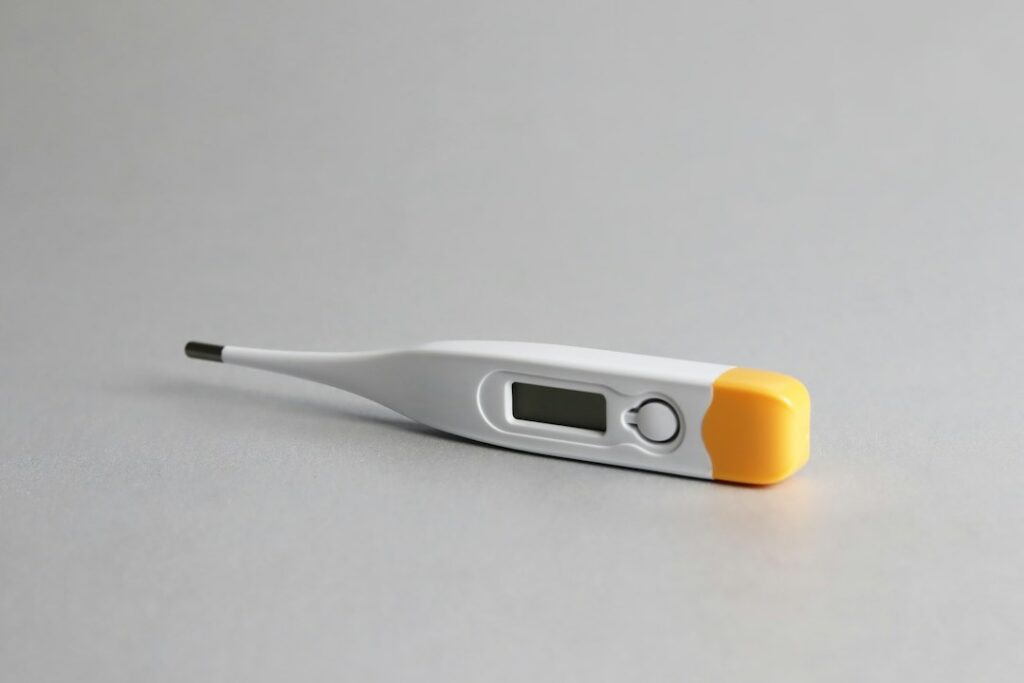
Photo: Edgar Soto on Unsplash. Illustrative photograph of a generic thermometer, not a Kinsa product.
Updated September 23, 2026. Prepared with AI assistance and checked against the sources linked in this article. This is educational information, not personal medical advice or a hands-on product test. See our disclaimer.


