

Do you struggle with joint pain every day? Keeping your mobility up, like in your knees, hips, and back, is key. As you get older, your joints naturally wear out. This can cause pain and make moving harder.
An AI-powered plan can help you make a plan just for you. It uses new tech to figure out what you need. This way, you can work on improving your knee health, hip health, and back health to move better.
This guide will show you why keeping your joints healthy is important. It will also explain how using AI can really help your life.
Understanding Joint Pain: Causes and Impact
It’s important to know what causes joint pain to find relief and move better. Joint pain comes from many sources, affecting your life in different ways.
Common Causes of Joint Pain
Several common causes lead to joint pain. These include:
Age-Related Degeneration
As you get older, your joints wear out naturally. This can lead to osteoarthritis.
Injury and Trauma
Getting hurt or injured can cause joint pain and stiffness. This often happens in sports or accidents.
Inflammatory Conditions
Diseases like rheumatoid arthritis or gout can cause inflammation. This leads to pain and discomfort in the joints.
How Joint Pain Affects Daily Life
Joint pain can make everyday tasks hard. Even simple actions like walking or climbing stairs can be tough. It can really lower your quality of life.
The Connection Between Joint Health and Overall Wellness
Joint health is closely linked to overall wellness. Keeping your joints healthy is key for your well-being. It helps you move and do daily tasks better.
The Science of Joint Mobility and Function
To tackle joint pain, we must understand joint mobility. This is the range of motion in a joint. It depends on the joint’s structure and the muscles, tendons, and ligaments around it. Knowing how joints work helps us find ways to move better and feel less pain.
Anatomy of Knee, Hip, and Back Joints
The anatomy of knee, hip, and back joints is quite complex. The knee joint is a hinge joint that links the thigh bone to the shin bone. The hip joint is a ball-and-socket joint that connects the femur to the pelvis, allowing for a wide range of motion. The back, or spine, is made up of multiple vertebrae connected by discs and facet joints, giving it flexibility and support.
Normal Range of Motion vs. Restricted Movement
Every joint has its own normal range of motion. For instance, a healthy knee can bend and straighten smoothly. But, when a joint can’t move as it should, it’s called restricted movement. This can happen due to injury, inflammation, or other conditions. Knowing the difference is important for diagnosing and treating joint mobility issues.
Factors Affecting Joint Flexibility and Strength
Several things can affect how flexible and strong our joints are. These include muscle imbalances, postural habits, and genetic predispositions.
Muscle Imbalances
Muscle imbalances happen when some muscles are too strong and others are too weak. This can lead to abnormal movement patterns and strain on the joints.
Postural Habits
Poor postural habits can cause abnormal wear and tear on joints. This affects their mobility and function.
Genetic Predispositions
Genetic factors can influence how our joints are structured and function. This means some people might be more likely to have certain joint issues.
Traditional Approaches to Joint Pain Management
Many traditional methods are used to manage joint pain. These methods have helped many people find relief. They include physical therapy, medication, and sometimes surgery.
Physical Therapy and Exercise-Based Interventions
Physical therapy is key in managing joint pain. It offers customized exercises to improve joint mobility and strengthen muscles. These exercises help reduce pain and improve function.
Medication and Surgical Options
For many, medication is the first line of defense against joint pain. This can include over-the-counter pain relievers and anti-inflammatory drugs. In some cases, corticosteroid injections are used. If these options fail, surgical options like joint replacement or arthroscopy may be considered.
Limitations of Conventional Treatment Methods
Traditional methods have their limits. Medication can have side effects, and not everyone is a good candidate for surgery. Physical therapy requires ongoing effort and may not offer quick relief. It’s important to understand these limitations when planning treatment.
Knowing the pros and cons of traditional joint pain management helps people make better choices. It also highlights the need to explore other ways to manage joint pain.
Joint Pain & Mobility: Build an AI‑Guided Plan for Knees, Hips, and Back
Managing joint pain needs a plan made just for you. AI-guided plans are changing how we handle knee, hip, and back problems. They use advanced tech to help you make a plan that fits your needs and improves your life.
What Makes AI-Guided Plans Different
AI-guided plans are special because they offer personalization beyond standard protocols. They’re not like one-size-fits-all plans. Instead, they’re made just for you, based on your unique needs and condition.
Personalization Beyond Standard Protocols
AI looks at lots of data to make a plan just for you. It focuses on your joint health needs. This means the treatment is more effective and right for you.
Continuous Learning and Adaptation
The AI system keeps learning from the data it gets. It changes your plan as needed to match your health changes. This continuous learning makes sure your treatment stays effective.
How AI Technology Personalizes Joint Care
AI is key in making joint care personal. It looks at your medical history, lifestyle, and how you’re doing. This info helps make a plan that really meets your needs.
Benefits of Data-Driven Joint Health Management
Using data in joint health management has big benefits. It leads to better treatment results and more patient involvement. By using data and AI insights, you can take charge of your joint health.
AI-guided plans are a big step forward in managing joint pain and mobility. They offer personalized, adaptive, and data-driven care. This is great news for those looking to ease joint pain and live better.
AI-Powered Assessment Tools for Joint Health
AI tools are changing how we check joint health. They give exact and tailored checks. Doctors can now really see how your joints move, where you feel pain, and your muscle health.
Movement Analysis Technology
Movement analysis tech is key for checking joints. It uses special tools to look at how you move. It finds out where you’re strong and where you’re not.
Computer Vision for Gait Analysis
Computer vision helps check how you walk. It spots tiny changes in your walk. Doctors use this to find out if your joints are okay.
Wearable Sensors for Joint Tracking
Wearable sensors track your joint movements. They give info on how flexible you are and how well your joints work. This helps make a plan to help your joints.
Pain Pattern Recognition Systems
Pain pattern systems use AI to spot and study your pain. They help doctors make plans to help your specific pain.
Progress Tracking and Adaptive Programming
Tracking your progress and changing plans is what these tools do. They keep an eye on how you’re doing. This way, your care can always be the best for your joints.
With these AI tools, you can learn more about your joint health. You can work with your doctors to make a plan that improves your movement and eases pain.
Customized Exercise Protocols Using AI
AI is changing how we care for our joints by making personal workout plans. It looks at your joint health, pain, and other health details. Then, it creates customized exercise protocols just for you.

Knee-Specific Mobility Exercises
Keeping your knees healthy is key. AI plans include exercises to strengthen knee muscles. This improves stability and lessens pain.
Strengthening the Quadriceps and Hamstrings
Strong quadriceps and hamstrings are vital for knee health. Squats, lunges, and leg press are good for this. AI adjusts these exercises based on your progress.
Improving Knee Stability
AI plans also focus on knee stability. Single-leg squats and balance exercises are part of this. They boost your body’s sense of position and knee function.
Hip Strengthening and Stabilization
Strong hips are important for joint health. Weak hips can cause poor posture and stress other joints. AI plans include hip abductions and glute bridges to strengthen the hips.
Addressing Hip Flexor Tightness
Hip flexor tightness can cause pain in the hips and lower back. AI-guided stretching can help loosen this tightness. It improves hip flexibility and reduces pain.
Building Gluteal Strength
Strong glutes are key for hip stability and lower body strength. Deadlifts and lunges are good for this. AI tailors these exercises to fit your needs and progress.
Back Pain Relief and Prevention Techniques
Back pain can really affect your life. AI plans can help by strengthening your core and improving spinal mobility.
Core Stabilization Exercises
Exercises that strengthen your core are vital for back health. AI plans include planks, bridges, and pelvic tilts. These exercises improve posture and strengthen your core.
Spinal Mobility Routines
Spinal mobility exercises help keep your spine flexible. AI tailors these exercises to fit your needs. This ensures a safe and effective routine for you.
Nutrition and Lifestyle Factors in Your AI Joint Health Plan
Starting your AI-guided joint health plan? Remember, nutrition and lifestyle factors are key to healthy joints. What you eat, how you sleep, and how you handle stress all matter. They can affect your joint health.
Anti-Inflammatory Diet Recommendations
An anti-inflammatory diet is vital for lessening joint pain and swelling. Eat foods high in omega-3s like salmon and sardines. Also, add foods full of antioxidants, like berries and leafy greens. These can help ease joint pain and boost your health.
Supplements for Joint Support
Even with a good diet, some supplements can help more. Here are a few:
Evidence-Based Options
Glucosamine and chondroitin sulfate are well-known for joint health support. Studies show they might cut down on joint pain and enhance function.
Personalized Supplementation Through AI Analysis
Your AI plan can suggest personalized supplementation based on your needs. This custom approach ensures you get the best support for your joints.
Sleep and Stress Management for Joint Recovery
Getting enough sleep and managing stress well are key for joint recovery. Bad sleep can make joint pain worse, and too much stress can cause more inflammation. Try stress-reducing activities like meditation or deep breathing. Also, make sleep a priority to help your joints.
Implementing Your AI Joint Health Plan
To start your AI joint health plan, download an AI health app and create your digital health profile. This first step is key to making the plan fit your needs and likes.
Getting Started with AI Joint Health Apps
Many AI health apps are out there, each with its own special features. Top Platforms and Their Features include apps for custom workouts, tracking pain, and healthy eating tips.
Top Platforms and Their Features
When picking an app, look at how easy it is to use, how complete it is, and if it works with wearables or other health apps.
Setting Up Your Digital Health Profile
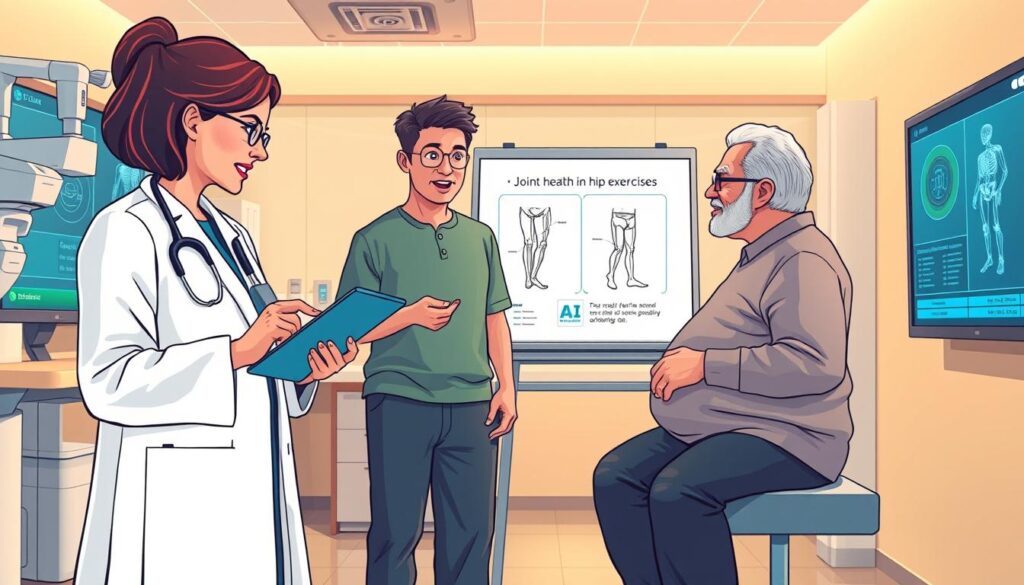
Creating your digital health profile means adding your health history, current symptoms, and goals. This info helps make a plan just for you, focusing on your joint health.
Setting Realistic Goals and Expectations
It’s important to set achievable goals and understand that improving joint health takes time and effort.
Integrating AI Recommendations into Daily Life
To make the most of your AI joint health plan, add its advice to your daily routine. Creating Sustainable Habits is vital for lasting success.
Creating Sustainable Habits
Begin by making small changes, like a short walk each day or morning exercises.
Working with Healthcare Providers
Also, team up with your healthcare providers to make sure your AI plan matches any other treatments you’re getting.
Conclusion: The Future of Joint Health Management
You now know how AI can change your joint health care. AI in healthcare lets you get medicine made just for you.
The future of joint health care is all about using data. This lets doctors make plans that fit you perfectly. AI looks at how you move, your pain, and how you’re doing. It changes the plan if needed.
Research shows AI can really help patients get better faster. Using AI in your daily life can make your joints move better and hurt less.
As AI gets better, we’ll see even more tailored medicine. Using this tech can make your joint health better and your life happier.