
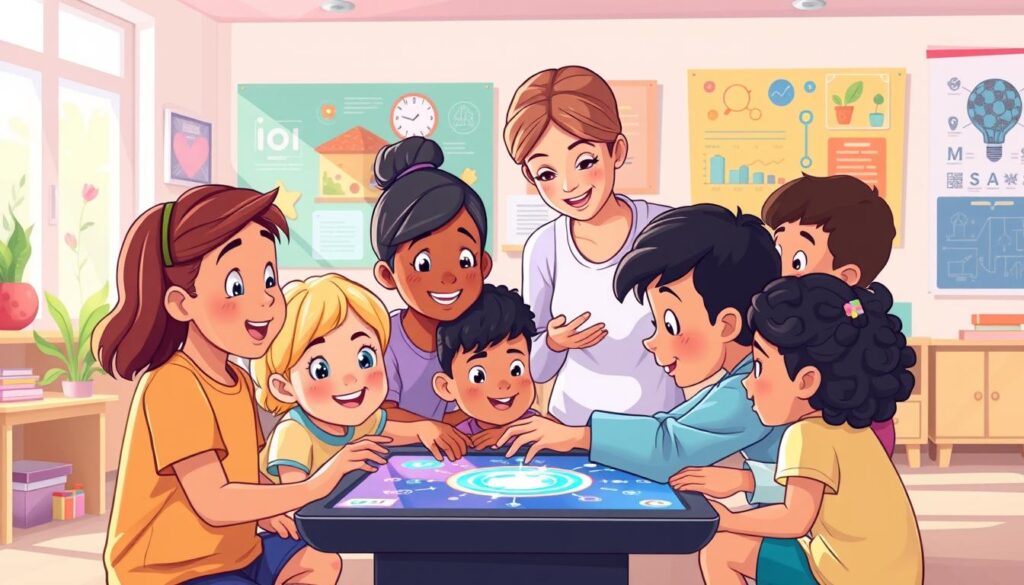
If you’re a parent over 40, you’ve seen how fast technology is changing our lives. Artificial intelligence (AI) is now a big part of our daily routines. It’s in our virtual assistants and in complex systems that make decisions for us.
It’s important to get your kids ready for this new world. You need to understand the value of AI literacy and how it helps future-proof children. This way, you can help them grow up in a world where tech and human skills work together well.
As a parent, it’s key to see how AI will shape your child’s future. You should be involved in their preparation. This means learning about AI and how it can improve their skills and chances in life.
The Generation Gap: Understanding Technology as an Over-40 Parent
It’s key for over-40 parents to close the technology gap with their kids. New tech moves fast, making it hard for parents to keep up. This gap can affect how well parents support their kids’ AI skills.
As an over-40 parent, you might find it tough to understand new tech. But, you can bridge this gap. Showing interest in your kids’ tech and learning together can strengthen your bond. It also helps you understand the tech they use.
Embracing this challenge can make your relationship with your kids better. It’s about learning together and exploring AI. This way, you both learn from each other, creating a supportive environment.
By starting to understand the tech your kids use, you’re closing the gap. You’re also getting ready to support their AI journey. This approach keeps you connected with your kids’ tech world and helps guide them in a changing world.
Why AI Literacy Is Essential for Today’s Children
AI is changing how we work and live. It’s key for kids to learn about AI to keep up. Knowing about AI is now a must for the next generation.
AI literacy means more than just using AI tools. It’s about understanding AI’s workings, its effects, and how to use it well. This knowledge helps kids make smart choices in a world where AI is common.
Teaching AI literacy in children’s education will shape their future careers. As AI changes job markets, knowing AI basics is vital. It’s not just about using AI, but also knowing its limits and biases.
Schools need to update their lessons to include AI literacy. This way, kids will get the future skills needed to excel in an AI-driven world. It prepares them for a future where AI is part of everyday life and work.
By focusing on AI literacy, you’re equipping your kids for a fast-changing world. It’s a vital step to ensure they’re ready for the challenges and chances ahead.
Leveraging Your Life Experience as an Older Parent
Age brings wisdom, and as an older parent, you can use this wisdom to help your kids get ready for AI. Your life experience gives you a special view on how tech changes society. This lets you share important insights with your children.
Being an older parent has its perks. You can use your past experiences to shape your parenting strategies. You’ve seen many tech changes and know how AI fits into your kids’ world. This helps you guide them in using AI wisely.
Your maturity also lets you talk about the ethical considerations of AI. Issues like privacy, bias, and digital citizenship are important. By sharing your knowledge, you help your kids use AI responsibly.
Also, your experience can help find ways for your kids to use AI in a good way. For example, through school projects or activities that boost STEM skills. This approach helps them get ready for AI challenges ahead.
By using your life experience, you can greatly influence your kids’ understanding of AI. This helps them become more ready for AI.
Raising AI-Ready Kids When You’re Over 40: Practical Strategies
Starting your kids on the path to AI readiness is key. As a parent over 40, you bring valuable life experience and human values to the table. These can help your kids understand and navigate the AI world.
Practical strategies are vital for teaching AI literacy to your family. One great way is through family tech learning projects. These can be anything from coding basics to seeing how AI is used in daily life. For example, you can build a simple AI model or look at how AI changes what you see on social media.
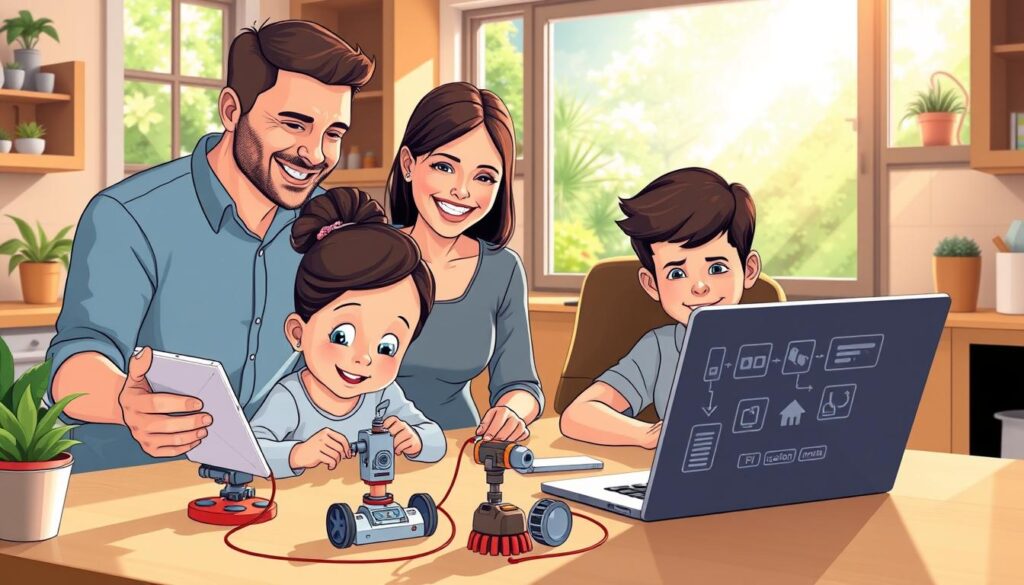
Family tech projects are a fun way to teach AI literacy. Start with projects that are both fun and educational, like making a chatbot or exploring AI in education. This hands-on approach helps make AI less scary and more understandable for your kids.
Overcoming Tech Intimidation
Many over-40 parents feel overwhelmed by new tech. But, overcoming tech intimidation is key to guiding your kids. Start by saying it’s okay to not know everything and be ready to learn with your kids. Use online resources like tutorials and educational websites to learn more about AI and tech.
By using these practical strategies and doing family tech learning projects, you can boost your kids’ AI readiness. The aim is not to be a tech expert right away. It’s about creating a supportive space where your kids can explore and learn about AI.
Age-Appropriate AI Education for Different Stages
Teaching kids about AI is key in today’s world. As a parent, you’re important in introducing AI to your child at the right time.
For young kids, start with the basics. Simple Coding and Algorithmic Thinking are great for a strong AI foundation. Use games and activities to help them solve problems.
Simple Coding and Algorithmic Thinking
Start with basic coding using tools like Scratch or Blockly. These tools help kids learn algorithms and think logically.
AI-Enhanced Educational Tools
As kids get older, introduce AI-Enhanced Educational Tools. These tools make learning fun and help kids think critically.
Introduction to AI Concepts
Teach older kids about AI Concepts. Explain how AI works and its effects on society. This helps them see AI’s big picture.
Digital Citizenship and Ethics
Teaching Digital Citizenship and Ethics is key in the AI age. Kids need to know about AI’s ethics, like privacy and bias.
Advanced AI Learning Opportunities
For kids interested in AI, offer Advanced AI Learning Opportunities. This could be AI competitions, projects, or extracurricular activities.
Preparing for AI-Influenced Careers
Help your kids Prepare for AI-Influenced Careers. Talk about the skills needed for future jobs. Stress the value of being adaptable, learning continuously, and being creative in an AI world.
Balancing Screen Time with Real-World Skills
Raising a well-rounded child means balancing screen time with activities that boost physical and social skills. It’s vital to teach AI literacy in today’s world. But, it’s also key to make sure your child has real-world experiences.
Getting your child to do physical activities like sports, dance, or just playing outside is great. These activities help them stay healthy and develop social skills by interacting with others.

Hands-on learning experiences also improve real-world skills. Cooking, gardening, or DIY projects spark creativity and problem-solving. They help apply what your child learns in practical ways.
To find a good screen time balance, set limits on screen use. Try to find other activities for your child. For example, make some areas of your home screen-free or plan family outings that are active and social.
By balancing screen time with real-world activities, your child will gain a wide range of skills. They’ll learn about AI literacy, physical abilities, and how to interact with others. This balanced approach will prepare them for the future.
Resources for Tech-Challenged Parents
As a parent, understanding AI can seem tough. But, you’re not alone. There are many resources for parents to help you prepare your kids for AI. You can find online courses, tutorials, and parenting communities to support you.
If you’re a tech-challenged parent, start with online resources. Sites like Code.org and Scratch offer AI learning resources for beginners. They make coding and AI easy to learn, even if you’re not tech-savvy.
Joining a community of parents can also help. Look for local or online forums to share experiences and advice. Schools and community centers often have workshops on technology and parenting.
Using these resources can boost your confidence and knowledge. You’ll be better equipped to help your kids in an AI world. Remember, you’re part of a community facing the same challenges. Together, you can find the support and guidance you need.
Conclusion: Embracing the Future Together
Raising AI-ready kids is a team effort between you and your children. Working together, you can help them succeed in a world with AI. This journey is filled with challenges, but it’s also full of opportunities.
As a parent, you play a big role in preparing your kids for the future. Using your experience and finding the right balance is key. This way, you can help your kids grow and thrive.
Learning and growing together is what embracing the future is all about. It’s about supporting each other as technology changes. This not only helps your kids get ready for AI but also strengthens your bond.
By focusing on AI readiness, you’re helping your children build a better future. A future where they can explore and achieve in a world driven by AI.