
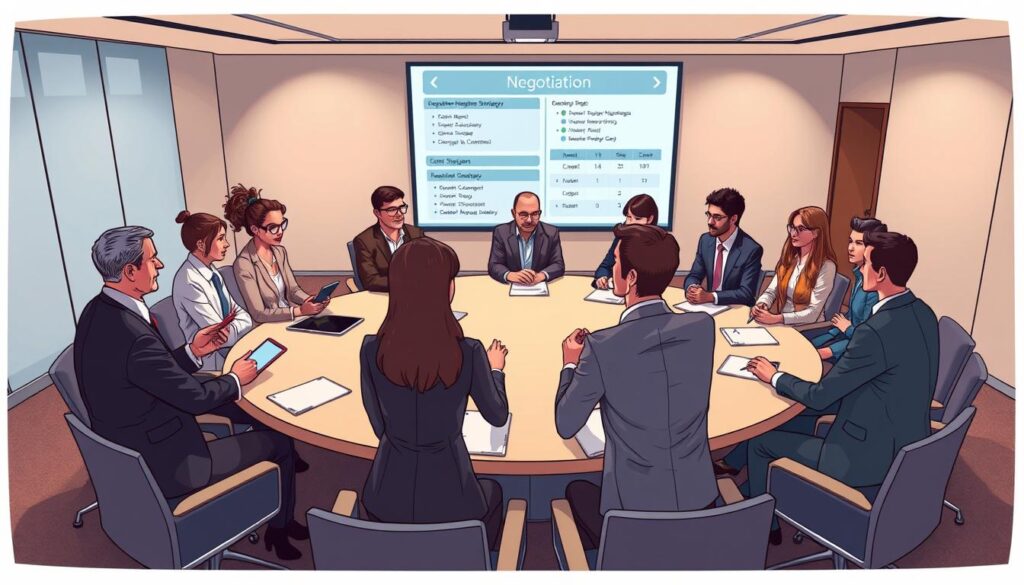
You’ve probably been in spots where negotiation skills are key. This could be when talking about salary, pricing with clients, or setting boundaries in work or personal life.
Learning to negotiate well can be tough. But, what if you could practice and get better in a safe, real-like setting? That’s what the Negotiation Gym offers, using AI role-play to mimic real-life situations.
With AI role-play, you can boost your negotiation skills. It prepares you for many scenarios, from sales training to daily talks that need good negotiation.
The Power of Negotiation Skills in Today’s World
In today’s fast world, negotiation skills are key for success. They help in both personal and professional life. Good negotiation can change many aspects of life for the better.
Why Negotiation Matters in Professional and Personal Life
Negotiation is a vital skill for professional development and personal growth. It helps people communicate well, solve conflicts, and reach their goals. At work, it can lead to better pay, successful deals, and strong partnerships.
Common Negotiation Scenarios Everyone Faces
Negotiation is not just for business; it’s part of daily life. You face it in salary talks, business partnerships, and setting personal boundaries. Learning to negotiate well can boost your confidence and lead to better results.
Improving your negotiation skills can help you grow personally and professionally. This can lead to success in many areas of life.
Understanding the Negotiation Gym Concept
The Negotiation Gym idea is about a safe place to get better at negotiating. It’s like a gym for your negotiation skills. Here, you can practice without worrying about real-life problems.
What Is a Negotiation Gym?
A Negotiation Gym is a place where you can try out different negotiation situations. It’s great for improving your skills for work or personal life. You can learn and get better at negotiating here.
How Practice Transforms Negotiation Abilities
Practicing in a Negotiation Gym helps you get better at negotiating. You get repetition and feedback. This helps you find what you need to work on and feel more confident.
The Science Behind Skill Development Through Repetition
The Negotiation Gym works because of the power of skill development through repetition. By doing the same negotiation scenarios over and over, your brain gets better at it. This leads to better results in real negotiations.
So, you can become a better negotiator. You’ll have the skills and confidence to succeed in many negotiation situations.
Negotiation Gym: Use AI Role-Play to Ask for More (Salary, Pricing, Boundaries)
AI is changing how we learn to negotiate. With AI role-play, you can get better at negotiating in many areas. This includes salary talks, pricing, and setting boundaries.
The Revolutionary Approach of AI-Powered Practice
The Negotiation Gym’s AI role-play is a revolutionary approach to learning negotiation. It gives you a safe place to practice and get better. You can try out different negotiation strategies without worrying about real-world consequences.
Benefits of Using AI Over Traditional Role-Play
AI role-play has many advantages over traditional methods. It offers a consistent and reliable opponent. This means you can practice as much as you want without the changes that come with human partners.
AI also adjusts to your skill level. It gives you the right amount of challenge to help you grow.
How AI Creates Safe Learning Environments
AI role-play makes a safe learning environment. It lets you practice negotiation without worrying about real-world problems. This safe space is perfect for trying out new strategies, making mistakes, and learning from them.
It also helps you build confidence in your negotiation skills.
Setting Up Your AI Negotiation Practice Environment
To start with AI negotiation practice, you need a good setup. This means picking the right AI tools and making scenarios that feel real.
Top AI Platforms for Negotiation Practice
There are many AI platforms for practice, like those with ChatGPT and other Large Language Models (LLMs). These tools have features that fit your needs.
Configuring ChatGPT and Other LLMs for Role-Play
To use ChatGPT or other LLMs for role-play, you must set up the scenario. This includes the context, the other party’s role, and your goals. This way, you can try out different negotiation strategies.
Creating Realistic Negotiation Scenarios
It’s important to make scenarios that feel real for practice. Think about the industry, the other party’s needs, and possible agreements or conflicts. By trying different scenarios, you’ll get better at negotiating.
Mastering Salary Negotiations Through AI Role-Play
To succeed in salary talks, being well-prepared is key. You need to know how to handle objections and respond well. AI role-play is a modern way to improve your negotiation skills by practicing in real-like scenarios.
Preparing Your Case with Data and Research
Good salary negotiation starts with solid preparation. You should research your role’s market value and understand your worth. Use online tools and industry reports to find average salaries for your job.
Common Employer Objections and How to Counter Them
It’s important to know and tackle common employer concerns. These might include budget issues, lack of experience, or being seen as too expensive. Prepare strong counterarguments that showcase your skills, achievements, and the value you can add to the company.
Practice Scenarios for Different Career Stages
AI role-play lets you practice salary talks for any career stage. Whether you’re starting out, moving up, or discussing executive pay, AI can mimic the right scenarios.
Entry-Level Position Negotiations
For new jobs, focus on your education, internships, and your desire to learn and grow.
Mid-Career Advancement Discussions
At mid-career, talk about your achievements, extra duties, and the impact you’ve had in your current role.
Executive Compensation Packages
Executive talks involve more than just salary. Practice negotiating bonuses, stock options, and other benefits too.
Pricing Negotiations: Getting What Your Products and Services Are Worth
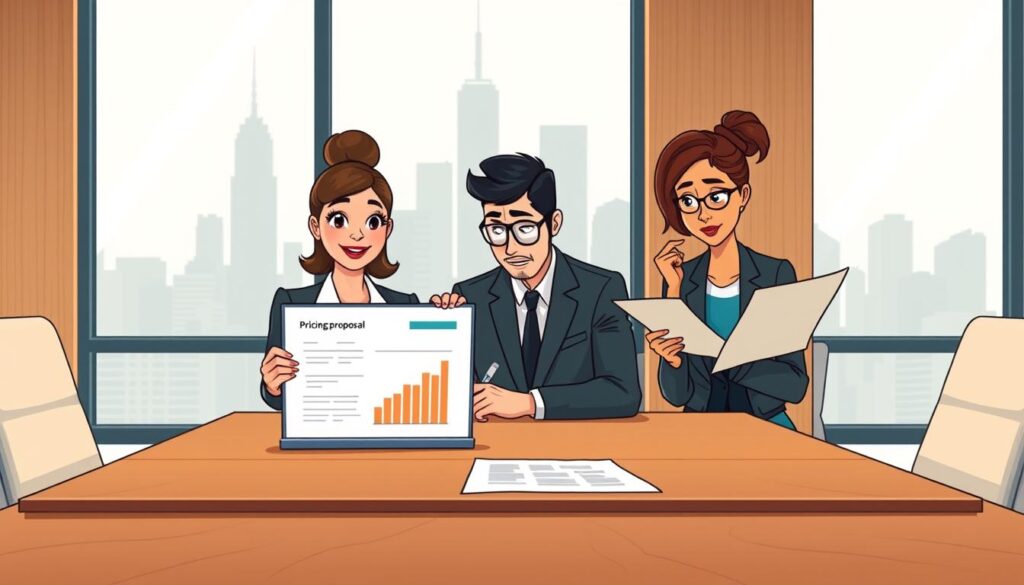
Pricing negotiations are a delicate art. They require a deep understanding of value-based pricing arguments. To negotiate well, you must clearly show the unique value your products or services offer to clients.
Value-Based Pricing Arguments
To make strong value-based pricing arguments, focus on the benefits and results. Explain how your product or service solves problems or improves the client’s situation. Use data and case studies to show the impact of your work.
Handling Price Resistance from Clients
Clients often resist prices due to budget constraints or not understanding the value. To handle this, listen to their concerns and address them directly. Offer alternatives or flexible pricing models that meet their needs while keeping your value.
AI Role-Play Exercises for Freelancers and Business Owners
AI role-play exercises can improve your pricing negotiation skills. By practicing with AI, you can simulate various client scenarios. This includes price resistance and complex negotiations with multiple variables.
To start with AI role-play, identify common negotiation scenarios. Then, set up the AI to simulate these situations. Practice often to get better and adapt to different client behaviors.
Setting and Defending Boundaries with AI Practice
AI practice helps you feel more confident in setting boundaries. It’s key in both personal and work life. AI role-play can make you better at it.
Identifying Your Non-Negotiables
First, figure out what you can’t give up. Think about your values and what’s most important to you. This could be work-life balance, personal space, or how you feel.
Assertive Communication Techniques
After knowing what you can’t give up, learn to say it clearly. Being clear, direct, and respectful is what assertive communication is. AI role-play helps you practice using “I” statements and staying firm but polite.
Scenarios for Workplace and Personal Boundary Setting
AI lets you try out different situations for setting boundaries. You can practice saying “no” to too much work or setting limits with family. It helps you feel more confident and ready to handle tough situations.
Using AI to work on your boundary-setting skills can make your life better. It helps your relationships, reduces stress, and boosts your happiness.
Advanced Negotiation Techniques to Practice with AI
Improving your negotiation skills is key. Learning advanced techniques can help you succeed in salary talks, pricing, and setting boundaries. These strategies can make a big difference in your outcomes.
BATNA: Developing Your Best Alternative
Learning about BATNA, or Best Alternative to a Negotiated Agreement, is vital. Your BATNA is the best option if talks break down. Knowing your BATNA boosts your negotiation power and lets you walk away if deals aren’t good enough.
Anchoring and Framing Strategies
Anchoring and framing strategies are also important. Anchoring sets the initial terms, shaping the final deal. Framing makes information more appealing. For example, calling a price a discount can make it more attractive.
Reading and Responding to Different Negotiation Styles
It’s important to understand and respond to various negotiation styles. Negotiators usually fall into three groups: competitive, collaborative, and avoidant.
Competitive Negotiators
Competitive negotiators aim to win. To deal with them, be ready to stand strong and back up your points with data.
Collaborative Negotiators
Collaborative negotiators look for win-win solutions. Being open and listening well can lead to better deals with this style.
Avoidant Negotiators
Avoidant negotiators avoid direct talks. To negotiate with them, make the setting comfortable and address their concerns directly.
Practicing these advanced techniques with AI can sharpen your negotiation skills. This way, you’ll be ready for complex negotiations.
Customizing AI Responses for More Challenging Practice
To improve your negotiation skills, it’s key to customize AI responses. This makes your practice more realistic and tough, like real-world scenarios. It prepares you for demanding situations.

Creating Difficult Negotiation Personalities
You can make the AI act like different people in negotiations. This could be from very aggressive to very passive. It helps you get better at dealing with all kinds of negotiation styles.
Programming Specific Objections and Roadblocks
Customizing AI responses lets you prepare for common problems. You can set up specific challenges to practice solving them. This boosts your negotiation skills and confidence.
Simulating High-Pressure Situations
High-pressure situations are common in negotiations. With AI customization, you can practice dealing with tight deadlines or many stakeholders. It helps you stay calm and focused.
Using these advanced features in your practice makes you ready for tough situations. You’ll be able to reach your negotiation goals more easily.
Measuring Your Progress in the Negotiation Gym
As you keep practicing in the Negotiation Gym, it’s key to track your progress. Progress tracking helps you see where you need to get better and how to improve. This way, you can fine-tune your negotiation skills.
Tracking Key Improvement Metrics
To really measure how you’re getting better at negotiating, look at a few important things. These include how confident you feel, how fast you respond, and how well you deal with objections. Watching these areas can show you what you’re good at and what you need to work on.
Recording and Analyzing Your Responses
Recording your negotiation sessions, whether it’s with AI or a real person, is super helpful. It lets you look back at your answers and see patterns. This helps you make your negotiation skills even better.
Getting Feedback from AI and Human Sources
AI feedback gives you straight facts about how you’re doing in negotiations. On the other hand, human feedback offers a deeper look at your negotiation style. Using both kinds of feedback can really boost your negotiation skills.
By using these methods, you can track your progress in the Negotiation Gym. This way, you can keep getting better at negotiating.
Real-World Success Stories from AI Negotiation Practice
AI in negotiation has made a big difference in many areas. It helps with career advancement and business growth. People and companies using AI negotiation are seeing great results.
Career Advancement Through Better Negotiation
Professionals using AI negotiation have seen higher salary increases and better job chances. They learn to handle important career moments better.
Business Growth from Improved Deal-Making
Businesses using AI negotiation in training have seen better deal-making. This has boosted their business growth and made them more competitive.
Personal Relationship Improvements Through Better Communication
AI negotiation practice also helps in personal relationships. It improves communication skills. This leads to stronger, more lasting relationships.
These success stories show how AI negotiation practice can change things. As more people and companies use it, we’ll see even more progress in career advancement, business growth, and personal relationships.
Conclusion: Building Your Negotiation Muscle for Lifelong Success
You’ve started by learning about the Negotiation Gym and how AI can boost your negotiation skills. It’s important to keep practicing to succeed in negotiation for life. The Negotiation Gym is a place where you can improve your skills safely, getting ready for real-life situations.
By using AI to practice, you’ll get better at negotiating. You’ll feel more confident in talks about salary, prices, and setting boundaries. This will help you do well in your career and personal life.
Keep pushing yourself with new scenarios and tough negotiation styles. As you get better, you’ll know how to handle tough situations. The Negotiation Gym helps you not just get better at negotiating. It helps you build skills that will last a lifetime.