
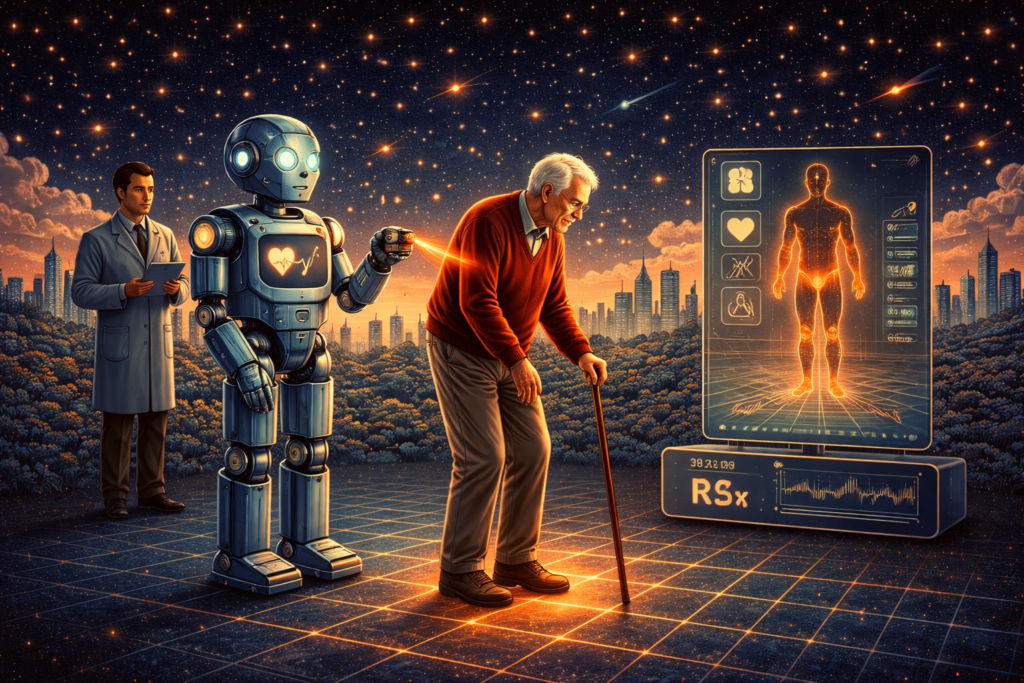
Imagine a future where your clothes help keep you healthy. They might notice when you start walking differently, even if you don’t.
Researchers have created wearable mesh sleeves for your limbs. These smart devices track your movements all day. They do this without needing you to visit the doctor often.
Smart monitoring spots tiny changes in how you walk. These small changes can be the first signs of getting weaker. Doctors use this info to stop serious problems in seniors.
By catching these issues early, doctors can act fast. This helps you stay active and safe at home for a longer time.
Can AI Catch Frailty Before a Fall? This question is changing how we care for seniors in the U.S.
Preventing accidents before they happen saves lives and cuts down on medical costs. This smart fabric is a big step forward in healthcare for all.
Understanding Frailty and Why Falls Happen
Frailty syndrome is a state that makes people more likely to get sick or hurt. It happens when the body can’t handle stress well. This means frail people often fall, go to the hospital, and may even die.
What Frailty Means for Your Health
Being frail affects your health a lot. It leads to less mobility, a lower quality of life, and higher healthcare costs. When you’re frail, your body can’t easily get better from illnesses or injuries.
Frailty is not just a natural part of aging; it’s a condition that can be managed. Knowing about frailty and its health effects helps you take steps to avoid falls and other bad outcomes.
How Frailty Increases Your Fall Risk
Frailty makes it harder to stay balanced and stable. It also affects how you walk and move. This makes it more likely for you to fall.
The link between frailty and falls is complex. It depends on your health, medicines, and your environment. Knowing how frailty increases your fall risk helps you stay safe.
Warning Signs You Shouldn’t Ignore
There are signs that show you might be frail and at risk for falls. These include losing weight without trying, feeling very tired, weak, or having trouble moving or balancing. If you notice these, talk to your doctor right away.
Traditional Fall Risk Assessments and Their Limitations
Old ways of checking fall risk use doctor’s checks and what you tell them. But, they have big limits. They might miss important factors that increase your fall risk.
Current ways to diagnose frailty are mostly about reacting to problems, not preventing them. This means they might not catch frailty until it’s really hurting your health. Knowing the limits of these methods shows why we need better, like those using AI.
Can AI Catch Frailty Before a Fall?
Artificial intelligence is becoming key in spotting frailty before falls happen. AI looks at different data points to guess if someone might fall. This helps doctors act fast to prevent accidents.
How AI Recognizes Subtle Changes in Your Movement
AI systems can spot tiny changes in how you move that show frailty. These small changes are hard for people to see but AI catches them. It sees them as signs of risk.
Machine learning is a big part of this. It helps AI get better at making predictions over time.
The Role of Machine Learning in Predicting Falls
Machine learning algorithms look at data from wearable devices and other systems. They find complex patterns in this data. This lets them guess if someone is likely to fall.
What Data AI Systems Analyze to Assess Your Risk
AI looks at many types of data to figure out your risk of falling. This includes:
Gait Speed and Balance Metrics
How fast and steady you walk is a big clue about frailty. AI checks your gait speed to understand your physical health.
Daily Activity Patterns and Changes
Changes in your daily habits can also show frailty. AI watches for these changes. It looks for things like less activity or changes in your routine.
AI uses data from wearable devices and more to see your frailty risk. This helps doctors take steps to stop falls before they happen.
AI Technologies Currently Detecting Frailty
AI is changing how we spot frailty with new tech. These tools help elderly care by finding frailty risks early and accurately.
Wearable Devices That Monitor Your Movement
Wearable tech is now key for tracking health, including frailty. They watch your moves, giving clues about frailty.
Smartwatches and Fitness Trackers
Smartwatches and fitness trackers are everywhere. They check your activity, heart rate, and more. This info helps see if you might be frail.
Specialized Fall Detection Wearables
Some wearables are made just for catching falls. They use sensors to spot falls and call for help if needed.
Camera-Based Systems Analyzing Your Gait
Camera systems are another way to find frailty. They look at how you walk and move. This can show signs of frailty.
Smart Home Sensors Tracking Your Daily Routines
Smart home sensors help detect frailty too. They watch your daily life at home. This shows how independent you are and if you might be frail.
These sensors check many things, like how you move and sleep. They give a full picture of your health.
What AI-Based Frailty Detection Means for You
Understanding AI-based frailty detection is key to its benefits. AI in healthcare is growing, helping in preventive care, like frailty assessment.
Benefits You Can Expect from AI Monitoring
AI monitoring for frailty brings many advantages for your health. It can spot changes in your movement early. This alerts doctors to risks, leading to quick action.
Earlier Intervention Before Falls Occur
Early detection lets doctors take steps to prevent falls. This might include physical therapy or changes to your home. It’s all about keeping you safe.
Personalized Risk Assessments for Your Situation
AI systems give personalized risk assessments based on your data. They consider your health history and lifestyle. This makes the advice you get very specific to you.
Peace of Mind for You and Your Family
Knowing your health is monitored brings peace of mind. It’s good for you and your family, which is very important.
Challenges and Limitations to Consider
AI-based frailty detection has many benefits but also challenges. Knowing these can help you make better choices for your care.
Privacy Concerns with Continuous Monitoring
AI monitoring raises privacy concerns. It involves collecting and analyzing personal data. This raises questions about data security and privacy.
Accuracy Varies Across Different Systems
The accuracy of AI systems can differ a lot. It depends on the technology, data quality, and how it’s used. Knowing the limits of the technology is important.
Cost and Accessibility Issues
The cost and accessibility of AI-based frailty detection can be a problem. As the technology grows, costs might change. This could make it more affordable for everyone.
Conclusion
Technology is getting better, and AI is changing how we care for the elderly. It can spot when someone might fall before it happens. This is thanks to AI-powered wearables.
These devices help catch problems early. This could lower the chance of falls and injuries.
AI is getting better at helping with frailty and preventing falls. This is good news for both the elderly and healthcare systems.
Healthcare can use AI to find who’s at risk and help them. This could make older people’s lives better and healthier.
Looking ahead, AI will be key in caring for the elderly. It will help us detect frailty and prevent falls better.