

Have you heard about people making successful SaaS apps fast with AI APIs? Rapid application development has changed how entrepreneurs and indie hackers make products.
Think about making a working SaaS app in under 5 hours. Thanks to tools like Bolt.new, this is now possible. The author built a club membership management platform, showing the power of AI-powered development.
Using AI APIs can cut down development time a lot. This lets you focus on adding value for your users. It also gives entrepreneurs a chance to quickly test ideas and see if they work.
What is a Micro-SaaS and Why Build One?
In the fast-changing world of software, Micro-SaaS has become a key player. It changes how businesses make software, focusing on specific needs and keeping things simple.
Defining Micro-SaaS Products
Micro-SaaS products aim to solve a single problem for a certain group of people. They are often made by small teams or even one person. Examples include tools for managing projects or marketing automation software for specific needs.
Benefits of the Micro-SaaS Business Model
The Micro-SaaS model has big advantages. It means lower costs, faster launch times, and the ability to keep up with market changes. It lets entrepreneurs test ideas with little money upfront.
Why AI APIs Make Rapid Development Possible
AI APIs are key to quick Micro-SaaS development. They let developers use pre-made AI tools, speeding up the app’s core features. This makes adding advanced features faster.
For example, using natural language processing APIs can add cool text analysis to your Micro-SaaS. This makes your product more valuable to users.
Planning Your One-Day Micro-SaaS with AI APIs
Building a micro-SaaS with AI APIs in just one day requires careful planning. You need to pick a good idea, choose the right AI APIs, and set a realistic timeline.
Identifying a Viable Micro-SaaS Idea
Start by thinking of ideas that solve real problems or meet specific needs. Think about who your target audience is and what problems you can solve. Check out your competition and see if people would use your product.
Selecting the Right AI APIs for Your Project
After you have a good idea, pick AI APIs that fit your project. Look at natural language processing, image recognition, and predictive analytics APIs. Make sure the APIs are reliable, can grow with your project, and have clear instructions.
Creating a Realistic One-Day Development Schedule
To build your micro-SaaS in 24 hours, you need a detailed plan. Break tasks into smaller parts. Focus on the main features, the UI, and testing.
Morning: Setup and Core Functionality
Start by setting up your workspace and adding the main features of your micro-SaaS. This includes adding the AI APIs and setting up the backend.
Afternoon: UI Development
In the afternoon, work on making the UI user-friendly. Pick a frontend framework that lets you work fast. Design a UI that’s easy to use and improves the user experience.
Evening: Testing and Deployment
At the end of the day, test your micro-SaaS to find and fix bugs. When it works well, deploy it and get ready for launch.
Setting Up Your Development Environment
Starting your micro-SaaS in 24 hours begins with setting up your development environment. This step is key for quick development and deployment.
Essential Tools and Technologies
You’ll need the right tools to develop a micro-SaaS fast. Use platforms like Databutton for streamlined development. Also, have version control systems like Git and integrated development environments (IDEs) for your programming languages.
Configuring Your Workspace for Rapid Development
Setting up your workspace efficiently is vital for quick development. Organize your project well and use automation tools to save time. This lets you focus on the core features.
Time-Saving Development Templates and Boilerplates
Using pre-built templates and boilerplates can greatly speed up development. Find templates that fit your micro-SaaS needs and customize them. This can save you hours of setup time.
Leveraging AI APIs for Core Functionality
Using AI APIs is key for making a micro-SaaS work fast. These tools boost your app’s power and value for users.
Overview of Popular AI APIs for Micro-SaaS
Many AI APIs fit well with micro-SaaS apps. Here are a few:
OpenAI’s GPT APIs
OpenAI’s GPT APIs are great for handling text. They help with writing and chatbots. These APIs make text interfaces smart and help with customer support.
Google Cloud Vision
Google Cloud Vision is top for image work. It’s good for recognizing and analyzing images. You can use it for classifying images and more.
Microsoft Azure Cognitive Services
Microsoft Azure Cognitive Services has lots of AI tools. It includes vision, speech, and language. This API set helps build complex AI features in your app.

Integrating APIs with Your Application
To add AI APIs to your app, follow these steps. First, pick the right APIs for your app. Then, get API keys and set up how to log in. Last, use the APIs to add new features, fixing any problems that come up.
Building Features Around AI Capabilities
When adding AI features, think about how to use the APIs best. For example, OpenAI’s GPT APIs can help with writing tools. Google Cloud Vision is good for image analysis. The goal is to find AI solutions for real user problems.
By using AI APIs well and creating features that use them, your micro-SaaS will shine. It will offer real value to your users.
Building the Backend Infrastructure
A well-designed backend infrastructure is key to a successful Micro-SaaS app. It manages important tasks like user authentication, data storage, and API management.
Creating a Serverless Architecture
Using a serverless architecture makes your backend scalable and cost-effective. It lets you write code without worrying about server management. You can use AWS Lambda or Google Cloud Functions for serverless APIs.
Setting Up Authentication and User Management
It’s vital to have a strong authentication system to protect user data. Services like Firebase Authentication or Auth0 can help manage user identities. They support various login methods, including social logins.
Implementing API Endpoints and Data Storage
API endpoints are key for backend interaction. You need to create RESTful APIs for efficient requests and responses. For data storage, consider NoSQL databases like Firestore or MongoDB for their flexibility and scalability.
By focusing on these areas, you’ll build a strong backend infrastructure. This will support your Micro-SaaS app’s growth and performance.
Developing a User-Friendly Frontend
To make a great micro-SaaS, focus on a user-friendly frontend. A good interface makes users happy and keeps them coming back.
Choosing a Frontend Framework for Speed
Picking the right frontend framework is key for quick work. React and Vue.js are top choices because they’re fast and flexible. Think about your team’s skills and what your project needs.
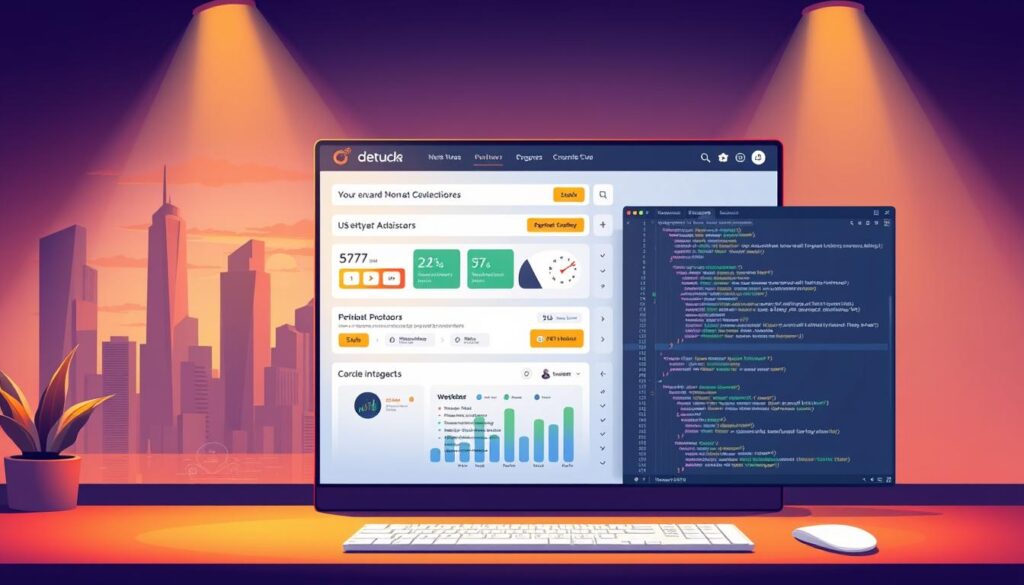
Designing an Intuitive User Interface
A good UI is intuitive and responsive. Use simple language in your UI and keep the design the same everywhere. This makes it easy for users to find their way around.
Connecting Frontend to AI-Powered Backend
To use AI well in your micro-SaaS, link your frontend to the AI backend. Set up API endpoints for your frontend to talk to the backend. This brings in real-time data and personalized experiences.
By working on these points, you’ll make a frontend that’s not just pretty but also works well. It will offer a smooth and fun user experience, all thanks to AI.
Deploying and Monetizing Your Micro-SaaS
Now that your micro-SaaS is ready, it’s time to get it out there and make money. Quick deployment is key to start seeing returns on your investment.
Quick Deployment Options
You can deploy your micro-SaaS in several ways. Options include serverless architectures and containerization with Docker. Platforms like AWS Lambda and Vercel make deployment fast, getting your app live in minutes.
Setting Up Payment Processing
To make money, you need a secure payment system. Stripe and PayPal have strong APIs that work well with your app. They support many payment methods and currencies.
Implementing Subscription Tiers
Offering different subscription tiers can help you earn more. Think about basic, premium, and enterprise plans. Each tier can have unique features and support levels.
Tracking Usage and Performance Metrics
It’s important to track your app’s performance. Use tools like Google Analytics and Mixpanel to see how your app is doing. They help you understand user engagement, retention, and revenue growth.
By focusing on these areas, you can deploy and monetize your micro-SaaS successfully. This sets it up for long-term success.
Conclusion: From Concept to Launch in 24 Hours
You’ve learned how to create a micro-SaaS in just one day with AI APIs. Using the right tools and tech, you can quickly make and launch your app, like FastDeck AI. A successful launch depends on good planning, choosing the right AI APIs, and working efficiently.
As you work on your micro-SaaS, remember it’s just the start. Focus on giving value to your users and keep improving your app. With the right strategy, you can have a successful launch and grow your business for the long haul. This marks a big achievement in your rapid development journey.