
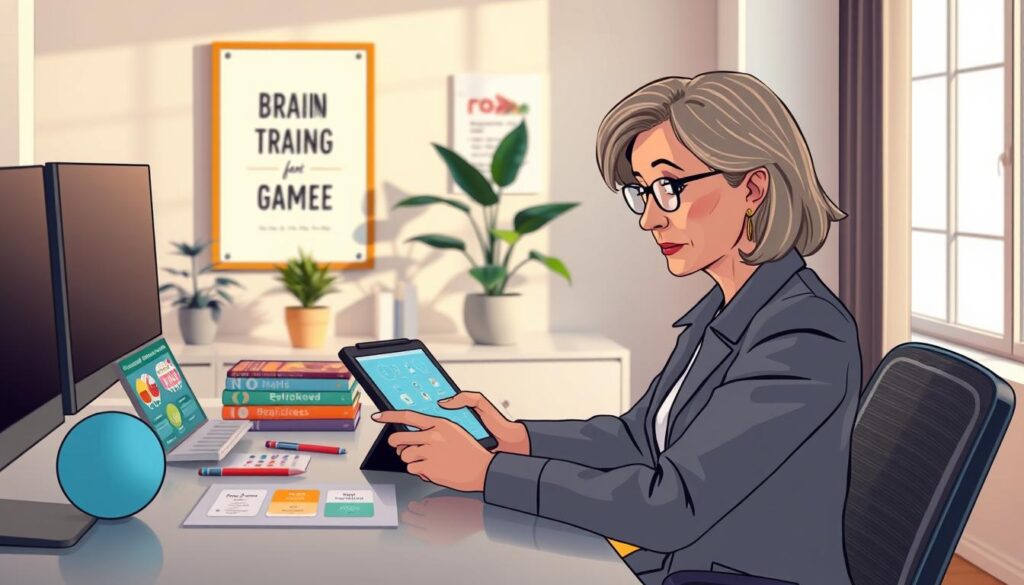
As you get older, keeping your cognitive function sharp is key. After 40, you might notice your memory and cognitive abilities changing. Research shows that cognitive training can boost brain health and thinking skills in older folks.
Trying AI memory workouts is a smart way to keep your brain active. These workouts can help improve your memory. Studies reveal that cognitive training can raise levels of a brain chemical that drops with age, leading to better brain health.
Adding AI-driven cognitive training to your daily routine can help you keep your brain sharp. It’s a proactive step towards maintaining your brain health and thinking abilities.
Understanding Cognitive Changes After 40
Cognitive changes after 40 are a natural part of aging. Understanding them can help you adapt and keep your brain healthy. As you age, your brain changes in ways that can affect how you think.
Normal Age-Related Memory Changes
After 40, your memory might not be as sharp. Forgetfulness can become more common. It might take longer to learn new things. This is because of normal changes in the brain, like fewer neural connections.
The Science Behind Brain Aging
The science behind brain aging is complex. Research shows that as we age, the brain’s neuroplasticity helps a lot. Neuroplasticity lets the brain make new connections, which can help with age-related thinking problems.
Knowing about these changes and neuroplasticity can help you support your brain health.
Why Brain Health Matters More After Midlife
When you reach midlife, the role of brain health becomes even more critical. It touches many areas of your life. Your brain goes through big changes that can influence how well you think and feel.
Keeping your cognitive vitality sharp is key. It helps you do everyday tasks smoothly, enjoy social times, and explore your interests without mental blocks.
Long-Term Cognitive Benefits of Early Intervention
Starting early with brain health efforts can bring lasting cognitive gains. Studies reveal that cognitive training and healthy living after midlife boost brain function. They also lower the chance of cognitive decline.
Early action can help slow down or stop age-related mental slowdowns. This ensures a more fulfilling life as you get older.
Risk Factors for Cognitive Decline
Knowing the risk factors for cognitive decline is vital. It helps you take steps to safeguard your brain health. Genetics, lifestyle, and some health issues can up your risk.
Being informed about these risks lets you make better choices for your lifestyle and health. This can help protect your mental sharpness.
Traditional Memory Exercises vs. AI-Powered Workouts
The way we train our brains is changing with AI-powered workouts. For years, traditional memory exercises were key to improving our minds. But, they have their limits.
Limitations of Conventional Brain Training
Old brain training methods often don’t fit everyone well. They can lead to a stand-still. Traditional memory exercises are usually the same for everyone. They don’t change with your progress or what you’re good at.
How AI Personalizes Cognitive Challenges
AI workouts, though, offer a personalized approach to brain training. They use algorithms that adjust to how well you do. This means you get cognitive challenges that match your needs.
This keeps the training fun and keeps your brain sharp. You’ll see better results and better brain health.
Brain Health After 40: AI Memory Workouts That Actually Challenge You
AI memory workouts are changing how we keep our brains sharp after 40. They offer personalized cognitive challenges. These programs use smart algorithms to check your brain skills and make a plan just for you.
Adaptive Difficulty Algorithms
Effective AI memory workouts use adaptive difficulty algorithms. These algorithms watch how you do and change the exercises as needed. When you get better, the tasks get harder, keeping your brain sharp. This keeps your brain growing and stops you from getting stuck.
Personalized Training Paths Based on Performance
AI memory workouts also create personalized training paths for you. They look at what you’re good at and what you need to work on. This way, you spend your time on exercises that really challenge you.
By mixing adaptive difficulty algorithms with personalized plans, AI memory workouts are a great way to boost your brain health after 40. This method keeps you interested and helps you see real progress.
5 Types of AI Memory Workouts for Different Cognitive Skills
AI brain training offers memory workouts for various skills. These programs enhance working memory, processing speed, and more. They improve attention, problem-solving, and language skills.
Working Memory Enhancement Programs
Working memory is key for mental math, following instructions, and staying focused. AI workouts for working memory challenge you to hold and manipulate information in your mind.
Spatial Memory Exercises
Spatial memory exercises use AI to create 3D environments. They test your ability to navigate and remember spatial layouts. This improves your ability to visualize and recall object arrangements.
Verbal Memory Challenges
Verbal memory challenges involve remembering words, phrases, or numbers. AI adjusts the difficulty level based on your performance. This ensures you’re always challenged but not overwhelmed.
Processing Speed Training Applications
Processing speed is vital for quick information processing. AI-driven training applications use various tasks to boost your processing speed.
Reaction Time Games
Reaction time games test how fast you respond to visual or auditory stimuli. As your reaction time improves, the games get more challenging.
Pattern Recognition Challenges
Pattern recognition challenges involve identifying complex patterns. AI adjusts the complexity based on your performance.
Attention-Boosting AI Exercises
Attention is a critical skill that AI exercises can improve. These workouts help you focus on tasks while ignoring distractions.
Selective Attention Training
Selective attention training focuses on specific information while ignoring irrelevant data. AI creates scenarios that challenge your focus.
Divided Attention Workouts
Divided attention workouts require processing multiple information sources at once. These exercises enhance your multitasking abilities.
Problem-Solving and Executive Function Workouts
Problem-solving and executive function involve planning, decision-making, and adapting. AI workouts for these areas improve your ability to solve complex problems.
Language and Verbal Fluency AI Challenges
Language and verbal fluency are key for communication. AI challenges in this area aim to enhance your vocabulary, syntax, and speech coherence.
Incorporating these AI memory workouts into your training regimen can improve your cognitive skills. It helps maintain brain health as you age.
Leading AI Brain Training Platforms and Their Approaches
Exploring AI brain training, you’ll find top platforms with new ways to boost your brain. They use cutting-edge tech for personalized training.

Neuroscience-Based Applications
Some platforms work with neuroscientists, making sure their methods are backed by science. Cogmed and Peak focus on skills like memory, attention, and speed. They offer exercises tailored to improve these areas.
These apps use smart algorithms to adjust to your skills. They aim to enhance your brain function based on neuroscience.
Gamified Cognitive Training Programs
Gamified training is another key area in AI brain training. Lumosity and BrainHQ use games to make training fun. They offer a range of games to boost different brain skills.
These programs make training fun and easy to stick with. They also help track your progress and keep you motivated.
Integrating AI Memory Workouts Into Your Daily Routine
Adding AI memory workouts to your daily routine can greatly improve your brain health. Being consistent is essential for brain training. By making AI memory workouts a daily habit, you can see big improvements in your thinking.
Creating a Sustainable Brain Training Schedule
To make a lasting brain training schedule, set aside a specific time each day for AI memory workouts. Start with short sessions of 10-15 minutes and increase the time as you get used to it. Choose a time that fits your daily life and is easy to stick to.
Try doing your AI memory workouts in the morning or before bed. The goal is to find a time that fits well into your day. This makes it easier to keep up with your brain training.
Combining Digital and Real-World Cognitive Exercises
AI memory workouts are great, but adding real-world brain challenges can boost your brain health even more. Try activities that test your brain, like puzzles, reading, or learning something new. You can also make daily tasks like calculating tips or planning routes mentally challenging.
By mixing digital AI memory workouts with real-life brain exercises, you create a complete brain training plan. This keeps your mind sharp and active.
Measuring Progress: How to Track Your Cognitive Improvements
To get the most out of AI memory workouts, knowing how to track your progress is key. It keeps you motivated and helps you fine-tune your training for better results.
Understanding Performance Metrics in AI Brain Training
AI brain training tools use performance metrics to check your cognitive gains. These might include how fast you respond, how accurate you are, and how well you complete tasks. Knowing these metrics helps you see how you’re doing and where you can get better. For example, some tools might combine your scores from different tasks into a composite score.

Setting Realistic Goals for Cognitive Enhancement
Setting realistic goals is vital for staying motivated and tracking real progress. Think about your current brain skills, how often you train, and what you want to achieve. For instance, you might aim to boost your working memory by a certain amount in a set time or get faster at doing everyday tasks.
By knowing your performance metrics and setting reachable goals, you’ll get the most out of your AI brain training. You’ll see real cognitive improvements over time.
Potential Limitations and Considerations of AI Brain Training
AI brain training has its limits, and knowing them is important. It offers personalized challenges, but there are things to think about. These factors help make the most of AI brain training for your brain health.
Digital Fatigue and Screen Time Concerns
Too much screen time can cause digital fatigue, which might undo the good of AI brain training. It’s important to balance digital training with other activities. This helps avoid too much screen time.
You can set limits on your daily training and take breaks. This helps keep your brain healthy.
Privacy Considerations with Brain Health Data
Using AI brain training means sharing personal data. It’s vital to know how this data is used and protected. Look for platforms with strong data protection policies to keep your info safe.
Complementary Approaches to Digital Brain Training
AI brain training is great, but it’s not the only way to keep your brain sharp. Complementary activities like exercise, socializing, and hobbies are also key. Mixing these with AI brain training can offer even better brain health benefits.
Conclusion: Embracing AI for Lifelong Brain Health
As you get older, keeping your mind sharp is key. AI-powered memory workouts can help a lot. They offer personalized training that fits your needs and skill level.
This approach makes brain training both fun and effective. It helps keep your brain healthy for life.
Adding AI memory workouts to your daily routine can change your life. It lets you track your progress and adjust your training. This keeps you motivated and focused on your brain health goals.
By using AI for brain training, you’re taking a big step. You’re working towards a healthy, sharp mind even in old age.
Research shows how important brain training is for health. AI is becoming a big part of this. Using these tools in your training can help you support your brain health. It also unlocks your brain’s full power.