
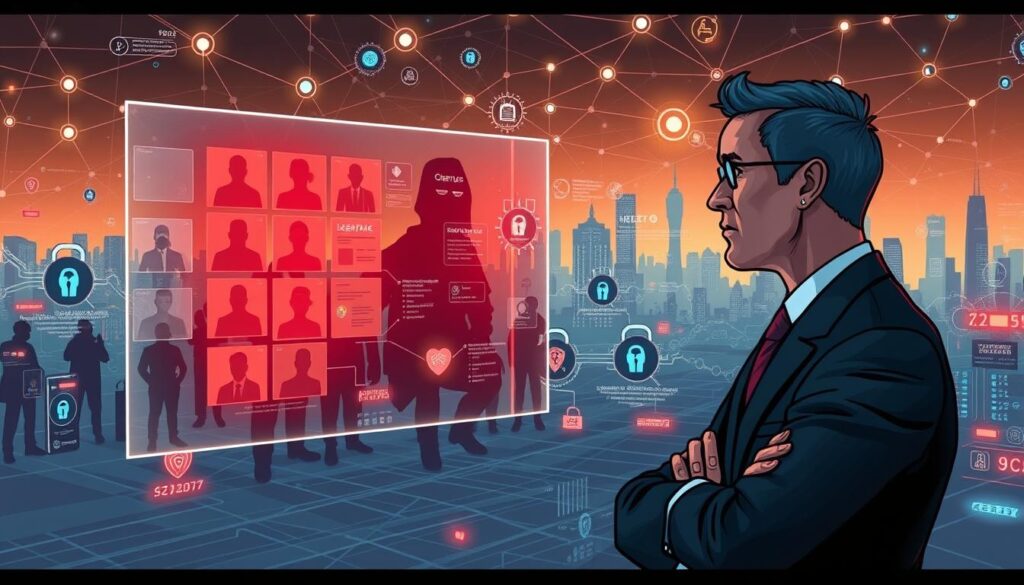
In today’s digital world, deepfakes and imposter scams are a growing concern. They can cause big financial and reputation losses for both people and businesses.
It’s important to know about an AI reputation shield and how it protects your online image. This article will explain why deepfake detection is key. It will also show you how to protect your identity from harmful actions.
We’ll look at the newest cybersecurity methods and tools. This will help you stay safe online and keep your reputation secure.
The Rising Threat of Digital Deception
Technology keeps getting better, but so do scams like deepfakes and imposter scams. These threats are becoming more common. They can hurt your money and reputation big time.
The Evolution of Deepfake Technology
Deepfake tech has come a long way. Now, it can make fake videos and audio that look very real. It uses artificial intelligence and machine learning to make digital content seem real. This makes it hard to tell what’s real and what’s not.
The Proliferation of Imposter Scams in the Digital Age
Imposter scams are everywhere now. Scammers use tricks to fool people and businesses. They often pretend to be someone you trust to get your trust.
Recent Statistics and Notable Cases
Recent numbers show a scary trend: billions of dollars lost to imposter scams. There have been big cases where people and companies fell for deepfake scams. This shows we need to be more careful and aware.
Understanding Deepfakes: What They Are and How They Work
Deepfakes are a growing threat to our online safety. They are fake videos, audios, or images that swap someone’s face or voice with another’s. This is done using advanced AI, like Generative Adversarial Networks (GANs) and diffusion models.
Technical Foundations of Deepfake Creation
Creating deepfakes involves machine learning algorithms. These algorithms study and mimic human faces and voices. This makes the forgeries very convincing.
Common Types of Deepfakes
There are different types of deepfakes:
Video Deepfakes
These fake videos make it seem like someone did or said something they didn’t.
Audio Deepfakes
Audio deepfakes mimic a person’s voice. They’re often used in scams or to spread false information.
Image Manipulation
Image manipulation changes static pictures to fake someone’s appearance.
How Deepfakes Are Distributed
Deepfakes can spread through social media, messaging apps, and websites. Knowing how they’re shared helps us fight their impact.
Anatomy of Imposter Scams in the AI Era
AI technology has made imposter scams more advanced. They now pose a big risk to people and businesses. These scams use new tactics to trick victims, making them harder to spot.
Social Engineering Tactics
Imposter scams use social engineering tactics to trick people. They send phishing emails, make fake phone calls, or use social media messages. These tactics aim to get sensitive info or make victims do something risky.
AI-Enhanced Impersonation Techniques
AI has improved how scammers fake identities. They can use AI voices, deepfake videos, or smart algorithms. This makes their fake messages seem real.
Common Platforms for Imposter Attacks
Imposter scams happen on many platforms. This includes social media, email, and phone calls. Knowing where to watch out can help you stay safe.
Red Flags to Watch For
To avoid imposter scams, look out for red flags. These include unexpected requests for info, odd communication, or offers that seem too good. Spotting these signs can help you stay safe.
Learning about imposter scams in the AI era helps protect you and your business. Stay informed to avoid these threats.
The Real-World Impact of Reputation Attacks
Reputation attacks affect many areas of your life. They can harm your personal, professional, and financial well-being. You might face different challenges when your reputation is attacked.
Personal Consequences
Being attacked can make you feel embarrassed. It can also hurt your relationships with family and friends. You might feel vulnerable and lose trust in people around you.
Professional Ramifications
At work, reputation attacks can block your path to success. You might lose business chances and struggle to move up in your career. It’s hard to win back the trust of your team and clients.
Financial Damages
Reputation attacks can also hurt your wallet. You might lose money and spend more on fixing your reputation. You might need to hire reputation management services to repair the damage.
Psychological Effects
The mental toll of reputation attacks is significant. You could feel anxious, stressed, and less confident. These feelings can be hard to shake off.
It’s important to understand how reputation attacks can affect you. Knowing this helps you protect your reputation and well-being.
AI Reputation Shield: Protect Yourself from Deepfakes and Imposter Scams
Deepfakes and imposter scams are getting smarter. Keeping your online reputation safe is more important than ever. An AI reputation shield is a top-notch way to guard your digital identity against these threats.
What Is an AI Reputation Shield?
An AI reputation shield uses advanced tech and strategies to fight deepfakes and imposter scams. It’s a strong defense system that uses AI and machine learning. It spots and stops reputation attacks before they happen.
Core Components of Effective Protection
Good AI reputation protection has a few key parts: advanced threat detection, real-time monitoring, and quick response. These work together to catch threats early and stop them.
How AI Protection Technologies Work
AI protection tech uses machine learning to find patterns and spot odd content. This helps identify deepfakes and imposter scams. It lets us take action fast to lessen their damage.
The Limitations of Current Solutions
Even with AI reputation shields, there are limits. Deepfake tech keeps getting better, and shields need updates to keep up. This is a constant battle.
Knowing how an AI reputation shield works is key for keeping your digital identity safe. It’s important for both individuals and businesses in today’s online world.
Personal Protection Strategies
AI-generated content has made personal protection key for keeping your digital life safe. Online threats are getting smarter, so it’s important to act fast. Protecting your identity and online image is a must.
Managing Your Digital Footprint
Your digital footprint is all the info about you online. Start by checking your social media and online accounts. Delete anything that could harm you or your privacy. Think carefully about what you share online and use tools to keep your info private.

Privacy Settings Optimization
It’s vital to set up strong privacy settings online. Check and update your privacy settings on social media, email, and more. Know who sees your info and how it’s used. Choose the strictest privacy options to keep your data safe.
Two-Factor Authentication Implementation
Two-factor authentication (2FA) adds a strong security layer to your accounts. You’ll need a second verification step, like a code or biometric scan, along with your password. This makes it much harder for hackers to get into your accounts.
Regular Identity Monitoring
Keep an eye on your identity and online presence to spot threats early. Use tools to track your name, financial info, and more. Set up alerts for any suspicious activity. Be ready to act fast if you see signs of fraud or impersonation.
By using these strategies, you can greatly improve your online safety. This helps protect you from deepfakes and imposter scams.
Business and Professional Protection Measures
In today’s world, businesses face threats from AI-driven deception. Deepfakes and imposter scams can harm your reputation badly. But, with the right strategies, you can keep your business safe.
Corporate Identity Verification Protocols
It’s key to protect your business with strong identity checks. Verify who your employees, partners, and clients are. Use multi-factor authentication and other advanced methods to do this. This way, you can lower the risk of fraud and impersonation.
Employee Training and Awareness
Teach your team about deepfakes and imposter scams. Regular training helps them spot threats and stay alert. This is a strong defense against AI attacks.
Brand Monitoring Systems
Use advanced systems to watch your brand online. These systems track your brand on different digital platforms. This lets you act fast against threats. Keeping an eye on your brand helps fight off deepfakes and scams.
Crisis Response Planning
Having a solid crisis plan is vital. It should cover what to do in case of an attack. Include how to communicate and fix the damage. Being ready helps you recover faster.
Detection Tools and Technologies
Deepfakes and imposter scams are getting smarter. It’s more important than ever to find good ways to spot them. Knowing about the tools to keep you and your group safe is key.
AI-Powered Deepfake Detection Software
AI tools can spot deepfakes by looking at media files. They find things that humans can’t see. For example, they check if lips and facial expressions match up right.
Digital Signature Verification
Digital signature verification is a big help in stopping fake stuff online. It checks if digital signatures and documents are real. This uses public-key cryptography to make sure everything is as it should be.
Blockchain-Based Authentication Systems
Blockchain systems are a safe way to check who you are and what you’re seeing. They use blockchain tech to keep records safe and sound. This makes it hard for scammers to mess with things.
Evaluating Tool Effectiveness
When picking tools to fight fake stuff, think about how well they work. Look at how accurate, easy to use, and scalable they are. Keeping up with new tech is also important to stay safe.
Legal Protections and Recourse
Understanding the legal landscape can protect you from deepfakes and imposter scams. There are many legal options to safeguard your reputation.
Current Legislation on Digital Impersonation
Laws on digital impersonation are changing. Some states have laws against deepfakes, while others are working on it. For example, California has laws against using deepfakes in elections.
Reporting Mechanisms
If you’ve been affected by deepfakes or imposter scams, report it. Social media platforms have tools for this. You can also complain to the Federal Trade Commission (FTC).

Working with Law Enforcement
In some cases, you might need to involve law enforcement. They can investigate and possibly prosecute those behind digital impersonation.
Civil Litigation Options
You can also take legal action against those responsible. This can help you get damages and stop further harm.
Response Strategies: When You’ve Been Targeted
Being targeted by digital deception needs quick and effective actions. When hit by deepfakes or imposter scams, acting fast is key to limit harm.
Immediate Actions to Take
The first move is to stay calm and figure out the situation. Find out how big the attack is and where it happened. Move fast to lock down your accounts by changing passwords and turning on two-factor authentication.
Documentation and Evidence Collection
Collecting evidence is essential for legal steps or reporting the scam. Save all evidence, like screenshots, URLs, and scam-related messages.
Reputation Recovery Tactics
To fix your reputation, take control of your online image. Update your social media, post positive content, and talk to your followers to regain trust.
Working with Reputation Management Professionals
In tough cases, think about getting help from reputation experts. They can guide you through the mess and help fix your reputation.
Using these strategies, you can handle and bounce back from deepfake and imposter scam attacks.
Evaluating AI Reputation Protection Services
In today’s digital world, AI-generated content can be both good and bad. It’s key to evaluate AI reputation protection services. Several important factors come into play when protecting your online reputation.
Key Features to Look For
When looking at AI reputation protection services, search for advanced detection algorithms. These should spot deepfakes and imposter scams well. Also, look for real-time monitoring and comprehensive coverage on different platforms.
Cost vs. Protection Analysis
It’s important to compare the cost of these services to the protection they offer. Think about the financial and reputational risks without protection. A detailed cost vs. protection analysis will guide your choice.
Questions to Ask Providers
Before picking a service, ask about their detection accuracy rates, response times, and customer support. It’s also important to understand how they handle different threats.
Red Flags and Warning Signs
Watch out for services that promise unrealistic results or are unclear about their methods. Poor customer reviews and inadequate support are warning signs. Choosing a reputable service is essential for protecting your online reputation.
By carefully evaluating these factors, you can find an AI reputation protection service that fits your needs. It will offer strong protection against digital deception.
Conclusion: Staying Vigilant in the Age of Digital Deception
The threat of deepfakes and imposter scams keeps growing. It’s vital to stay alert against digital tricks. Cybersecurity needs constant focus and knowledge to fight these new dangers. Keep learning about the tricks scammers use and protect your online self.
Knowing the dangers of deepfakes and imposter scams helps you stay safe. Use strong cybersecurity like AI tools and two-factor login. These steps can help prevent you from falling into digital traps.
Being careful in today’s digital world is key. Keep up with the latest in cybersecurity and be wary of anything odd. This way, you can keep your online image safe and sound.