
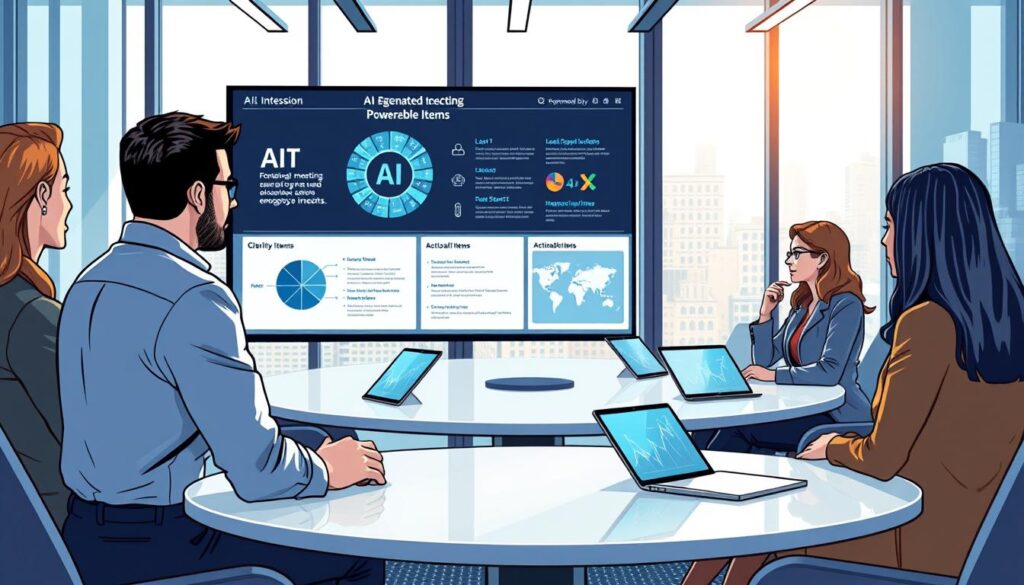
In today’s fast-paced nonprofit world, technology is key to growth and impact. You know how hard it can be to make your board meetings efficient and effective.
AI-powered meetings are changing how nonprofit organizations work. They help achieve missions better. With this tech, you can make meetings smoother, record decisions accurately, and assign tasks automatically.
This boosts your meeting productivity. It leads to clear actions and lasting change. This means a lasting impact. Exploring AI in your meetings can help you make a real difference in your community.
The Meeting Dilemma Facing Nonprofit Organizations Today
Nonprofit groups today struggle to make their meetings effective. As a leader, you know the frustration of meetings that don’t lead to action. They often fail to produce real results.
Time Constraints and Competing Priorities
Nonprofit workers face many tasks, making time constraints a big issue. With so many things to do, meetings can easily go off track.
There’s a lot to do, from raising money to managing programs. Meetings can add stress instead of being a place for good talks and decisions.
Lost Action Items and Follow-Through Gaps
Another big problem is lost action items and not following up. When meetings aren’t well-documented, important tasks can be forgotten.
This can cause delays and missed chances. A better way to manage meetings can help avoid these issues and boost productivity.
The Cost of Ineffective Meetings for Your Mission
Ineffective meetings cost more than just time. They can hurt your mission in real ways. Meetings that don’t lead to results can waste resources and lower morale.
Studies show nonprofits spend a lot on meetings that don’t help. Yet, only a small part of their budget goes to technology. This shows the need for better meeting practices and using tech to help.
What AI Technology Brings to Your Boardroom
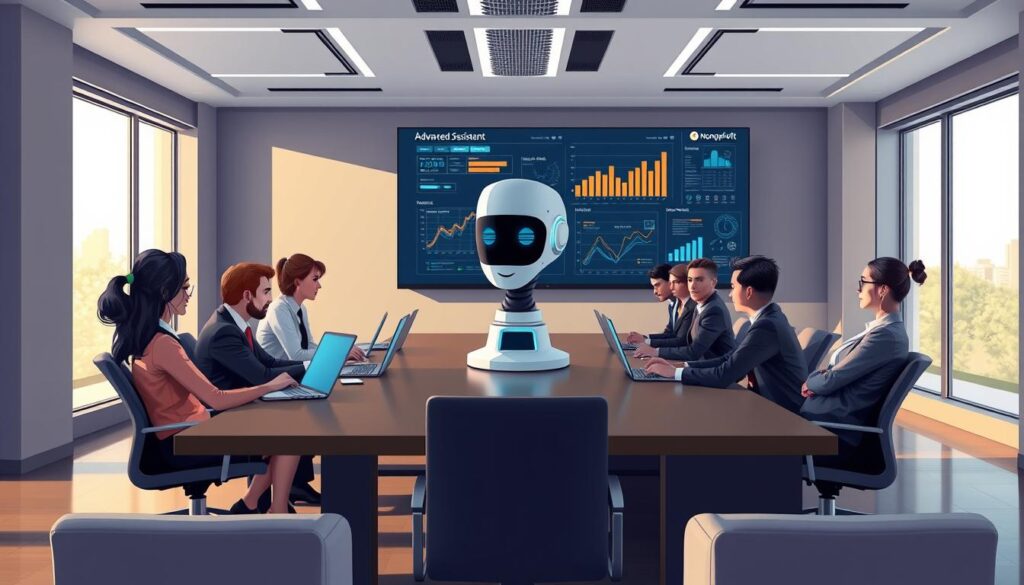
AI solutions are now common in nonprofit boardrooms to make meetings better. It’s not just about keeping up; it’s about making meetings more productive. AI helps nonprofit groups have focused, efficient, and productive meetings.
Real-Time Transcription and Documentation
AI brings a big advantage: real-time transcription and documentation of meetings. Tools like Otter.ai make it easy to capture every detail. This lets everyone focus on the discussion, not on taking notes.
This transcription also makes a detailed meeting record. It keeps everyone on the same page and prevents misunderstandings. It also makes sure no important tasks are forgotten.
Intelligent Action Item Extraction
AI can intelligently extract action items from meetings. It lists tasks and who’s responsible. This is great for making sure decisions are followed up on.
AI automates finding action items. It makes it easier for meeting participants and keeps tasks clear and tracked.
Meeting Analytics and Pattern Recognition
AI offers meeting analytics and pattern recognition. It analyzes data to find trends, like what topics are most discussed. This helps improve future meetings.
Understanding these trends helps nonprofits plan better meetings. It’s all about making meetings more effective.
Multilingual Support for Diverse Teams
AI’s multilingual support is key for diverse teams. It lets everyone participate, no matter their language. AI translation tools provide instant translation, breaking down language barriers.
This support is essential. It ensures everyone can share their ideas, no matter their native language.
How AI Transforms Meeting Preparation and Planning
AI can make your nonprofit’s meetings more efficient. It automates routine tasks and offers insights. This boosts the effectiveness of your meetings.
Automated Agenda Creation from Multiple Sources
AI creates detailed agendas by gathering info from different places. This includes:
Pulling from Emails, Documents, and Previous Meetings
AI systems collect data from emails, documents, and past meetings. This ensures all important topics are included in the agenda.
Prioritizing Topics Based on Urgency and Impact
AI analyzes the data to rank agenda items by urgency and impact. This way, the most critical issues get addressed first.

Smart Briefing Documents
AI generates smart briefing documents for meetings. These documents are brief and full of relevant info. They help with making informed decisions.
Historical Context and Trend Analysis
AI also provides historical context and trend analysis. It looks at past meetings and other data. This helps spot patterns and trends, aiding in decision-making and tracking progress.
Using AI in these ways, your nonprofit’s meetings will be better prepared. They’ll be productive and focused on your goals.
AI for Nonprofit Leaders: Turn Board Meetings into Clear Actions and Momentum
Nonprofit leaders can change their board meetings with AI. It helps capture decisions and makes everyone accountable. This way, meetings become strategic sessions that push your organization forward.
Capturing Decisions with Precision
One big challenge in nonprofit board meetings is recording decisions accurately. AI technology solves this by telling the difference between talks and real decisions. This ensures all important decisions are noted down.
Distinguishing Discussion from Decisions
AI tools analyze conversations in real-time. They spot when a decision is made and keep it separate from discussions. This makes your meeting minutes precise and trustworthy.
Documenting Voting Records and Consensus
AI also keeps track of voting records and consensus. It gives a clear, transparent view of how decisions were made. This builds trust among stakeholders.
Creating Accountability Through Automated Task Assignment
AI boosts accountability in nonprofits by automating task assignments. It makes sure everyone knows their role and what to do. This keeps the team on track.
Smart Task Distribution Based on Roles
AI looks at roles and assigns tasks smartly. This means the right people are working on the right tasks. It boosts efficiency.
Deadline Tracking and Reminders
AI task management tracks deadlines and sends reminders. This keeps tasks on schedule. It helps keep projects moving forward between meetings.
Building Progress Momentum Between Meetings
Keeping progress going between meetings is key. AI helps by sending updates and warning of delays. This keeps your nonprofit’s goals in sight.
Automated Status Updates
AI sends out updates on project progress. This keeps everyone informed and builds trust. It makes sure everyone is working towards the same goals.
Early Warning Systems for Delayed Actions
AI spots delays and alerts you to act fast. This proactive approach keeps projects on track. It prevents big problems before they start.
Developing Institutional Memory
AI also helps keep knowledge and decisions over time. This is vital for nonprofits. It ensures important info is saved, even when staff changes.
Using AI in board meetings makes your nonprofit more effective. It captures decisions, ensures accountability, and drives progress. This boosts meeting outcomes and supports your organization’s long-term success.
Implementing AI Tools in Your Nonprofit Without Breaking the Budget
AI tools for meetings are now affordable for nonprofits. You don’t have to spend a lot to use AI for better meetings. There are many cheap options to make your meetings more efficient, keeping your focus on your mission.
Free and Low-Cost AI Meeting Solutions
There are many AI meeting tools that are easy on the wallet for nonprofits. These tools have features that can really boost your meeting productivity.
Otter.ai for Transcription and Note-Taking
Otter.ai is a great tool for live transcription and notes. It’s perfect for catching action items and decisions in meetings, so you don’t miss anything.
Microsoft Teams Premium AI Features
Microsoft Teams has top-notch AI features for meetings. It includes advanced transcription and smart summaries of what’s discussed.
Google Meet now has AI summaries, giving you a quick meeting recap. This makes it easy to grasp meeting outcomes without digging through long recordings or transcripts.
Zoom AI Companion
Zoom’s AI Companion offers meeting summaries and action item tracking. It’s made to make your meetings more productive and ensure tasks are assigned clearly.
Integration with Your Existing Systems
It’s key to pick AI tools that fit with what you already use. This ensures a smooth workflow and avoids data silos, boosting efficiency.
To integrate well, check your current tech setup and pick AI tools that match. Many AI solutions are built for easy integration, with APIs and connectors for common software.
Training Your Board and Staff for Success
Getting your team to use AI tools well requires good training. Training everyone ensures they’re comfortable with the new tech, getting the most out of it.
Make a training plan that covers the AI tool’s features and best use. This might include workshops, online tutorials, or one-on-one sessions to answer any questions or worries.
Best Practices for AI-Enhanced Nonprofit Meetings
Effective AI-enhanced meetings in nonprofits need clear goals, human connection, and data privacy. By following best practices, nonprofits can get the most out of AI technology in their meetings.
Setting Clear Objectives Before Every Meeting
Before each meeting, it’s key to set clear goals. You should know what decisions to make and what to discuss. This ensures AI technology captures and documents these decisions well.
Having clear goals also helps make a focused agenda. This is vital for productive meetings. Share these goals with all participants before the meeting, so they’re ready.
Maintaining Human Connection and Engagement
AI can make meetings more efficient, but keeping human connection is also important. It’s about creating a space where everyone feels they can contribute.
When to Turn Off AI and Have Sensitive Conversations
There are times when you need to turn off AI and have private talks. This might be for confidential personnel matters or sensitive financial info.
It’s important to have a plan for when to pause or stop AI recording. This keeps things confidential and follows data privacy rules.
Balancing Efficiency with Relationship Building
Nonprofits should use AI for efficiency but also make time for building relationships. This means setting aside time for informal chats and networking during meetings.
Data Privacy and Confidentiality Considerations
Data privacy and confidentiality are key when using AI in nonprofit meetings. Make sure the AI technology follows data protection laws and keeps sensitive info safe.
Protecting Donor Information
Keeping donor info private is a big part of data privacy. Nonprofits must make sure AI technology doesn’t share donor data without permission.
Compliance with Nonprofit Governance Standards
Nonprofits must follow data privacy and confidentiality rules in governance. This means the AI technology used in meetings must meet these standards.
By following these best practices, nonprofits can make sure their AI-enhanced meetings are productive and follow the law.
Conclusion
Exploring AI in nonprofit meetings shows how it leads to clear actions and lasting impact. This helps your organization succeed. AI technology boosts meeting productivity and decision-making, helping you achieve your mission better.
Using AI tools in your meetings can change how you work. It automates tasks, gives insights, and promotes teamwork. This way, your organization can make a bigger difference in people’s lives.
To get the most from AI in meetings, set clear goals, keep human connection, and protect data privacy. By doing this and embracing AI, you’ll be on the path to nonprofit success and lasting impact.