

You’re at a critical point in your career today. Automation is changing how we work, making you feel the need to adapt fast. The Midlife Edge in an AI Job Market is not just about keeping up. It’s about growing and succeeding in this new world.
Studies reveal that 25% of job skills have changed. This change means we can’t just update our resumes. We need to understand the latest job market trends to stay ahead.
Your years of experience are something no algorithm can match. By changing how you see things, you can turn these changes into your biggest advantage. Strategic growth begins with valuing what you already know.
Key Takeaways:
- Recognize that 25% of workplace skills have evolved.
- Focus on leveraging deep experience over basic technical updates.
- Adopt a proactive mindset to master shifting industry demands.
Understanding Your Unique Value Proposition in the Age of Automation
Your career history is not a weakness; it’s your biggest strength in today’s world. As workplace automation changes industries, the need for seasoned judgment grows. Your professional experience is a foundation that algorithms can’t match.
Why Experience Outweighs Raw Technical Speed
Many think technical skills are key in today’s job market. But, companies see that speed without direction can lead to mistakes. True value comes from seeing problems before they happen.
You’ve honed skills over years, like pattern recognition in complex business cycles. Younger workers might learn new tools fast, but they often miss the big picture. Your professional experience helps you use technology wisely, aligning it with the company’s goals.
The Intersection of Institutional Knowledge and AI Tools
Many companies face a big AI skills gap. They have the tools but lack the talent to use them well. This is where your deep understanding of company culture and industry trends shines.
By combining your knowledge with AI, you become a key player. You help these systems produce results that are not just quick but also right and in line with long-term goals. You bridge the AI skills gap with your unique perspective, making workplace automation a chance for growth, not a threat to your job.
Leveraging The Midlife Edge in an AI Job Market
You have a lot of professional experience that’s very valuable, even with new tech. While machines can process data, your skills in complex situations are unique. By focusing on curiosity, creativity, courage, communication, and compassion, you can create a strong career strategy that lasts.
Translating Decades of Soft Skills into AI-Ready Competencies
Your experience in team management and problem-solving is not outdated. It’s the base for your future success. You can turn these skills into tangible assets by being the link between tech and business goals. Today, employers look for leaders who can use AI insights in practical ways.
See your past roles as preparation for today. Showing how your professional experience leads to better decisions makes you very valuable. This way, your career strategy stays flexible and focused on big goals, not just tech tasks.
The Power of Emotional Intelligence in Human-AI Collaboration
Machines can’t feel empathy, but you can. Your emotional intelligence is key for human-AI collaboration. You can read the room, manage expectations, and build trust. These skills are what companies need to keep their culture alive while using AI.
Using your natural ability to connect with others gives AI context it can’t provide. You’re not competing with machines; you’re guiding them. By mastering human-AI collaboration, you can use your emotional intelligence to boost team performance and innovation, something tech can’t do.
Identifying High-Growth Sectors for Experienced Professionals
Your experience is a big plus in areas with a big AI skills gap. By looking at job market trends, you can find industries that need your experience more than speed. A good career transition often means moving to areas where your knowledge boosts new tech.
Industries Where Human Oversight Remains Irreplaceable
Some sectors need the touch of a human, not just machines. In healthcare, finance, and legal services, decisions are too critical for computers. These areas want people who know the rules and how systems affect people.
Your skill in using data wisely is very valuable here. Companies need leaders who can make tech work in the real world. Your experience is your biggest strength in these fields.
Transitioning into AI-Augmented Management Roles
As more automation comes in, the need for overseers grows. Roles like AI Ethics Officers are key to keep AI use right. By focusing on AI ethics, you can earn more in new fields.
To move into these roles, show how your leadership skills are perfect for AI oversight. You’re not just managing people; you’re guiding the mix of human goals and machine power. Keep up with job market trends to find companies willing to invest in this partnership.
Upskilling Without Starting Over
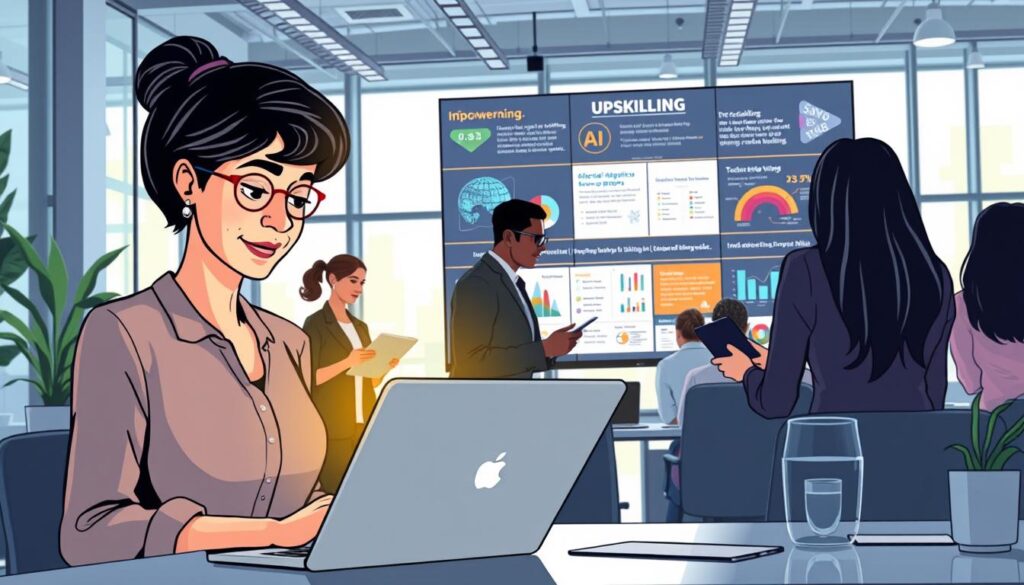
Upskilling means building on what you already know, not starting over. You have years of experience that new workers can’t match. By embracing lifelong learning, you can use new tools to boost your work.
Strategic Learning Paths for Mid-Career Workers
A good career transition doesn’t mean leaving your field. It’s about finding the right skills to meet new digital needs. Focus on skills that add to your experience.
Focusing on AI Literacy Over Deep Coding Skills
You don’t have to be a software engineer to succeed with AI. Learning to use AI tools well is key. Programs like the Google TensorFlow Developer Certificate can teach you in 6 to 12 months.
Utilizing Micro-Credentials and Executive Education
Short certifications and executive programs are quicker than getting a degree. These micro-credentials show you know how to use AI well. They let you keep your job while learning new skills. This way, your career transition stays fast and relevant.
Overcoming Age Bias in Tech-Centric Hiring
To beat age bias, you need to change how you show your work history. Many worry that being older might scare off tech hiring managers. But, maturity and stability are what companies really want to add to their teams.
By focusing on what you bring to the table, you can overcome bias. Show how you handle tough organizational issues. This makes your experience a plus, not a minus.
Reframing Your Resume for the Modern Applicant Tracking System
Today’s Applicant Tracking Systems (ATS) look for specific keywords and recent skills. Your resume should highlight relevant technical proficiencies instead of just listing jobs. Stick to the last ten years to keep your story fresh.
Use a clean, easy-to-read format for your resume. Make sure your summary talks about your knowledge of AI tools. This shows you’re up to date with digital trends.
Highlighted Adaptability and Continuous Learning
Showing you’re always learning is key in a tech world. Employers want to see you’re not stuck in the past. Show off any certifications, workshops, or projects that match today’s trends.
Viewing your career as a journey of constant evolution helps break age stereotypes. Show you’re ready to adapt and innovate. This proves you’re ready for tomorrow’s challenges.
Building a Personal Brand That Bridges Generations
Creating a brand that appeals to all ages is key in today’s fast world. Your personal branding should mix old wisdom with new tech skills. This makes you a valuable team member.
Positioning Yourself as a Mentor and Strategic Thinker
To stand out, show your worth as a bridge between old and new. Mentorship is about growing a team, not just teaching. Being a strategic thinker shows you plan for the future, not just today.

Share how your past solves today’s problems. Younger workers value your experience and wisdom. By focusing on strategic thinking, you show you can lead through change.
Networking Strategies for the Mid-Career Pivot
For a successful mid-career pivot, build your network actively. Don’t just reach out to old contacts. Go to events for new leaders to meet and share knowledge.
Also, join online groups for professionals. Be active in discussions to show you’re open to new ideas. This keeps your personal branding current and valuable. Your ability to connect with all ages is a big plus.
Managing the Psychological Shift of Career Evolution
Changing your career after forty is more than just learning new skills. It’s about changing how you see yourself. You’re moving from being an expert to exploring new, fast-changing areas. This change is key for career growth in today’s world.
This change can feel overwhelming. But it’s also a chance for personal growth. By facing these feelings, you can start taking action.
Embracing the Growth Mindset After Forty
Having a growth mindset is the best way to handle a mid-career pivot. See your years of experience as a starting point for learning more. This way, you stay curious and open to new things, like AI.
Reflecting on your values helps you connect your past to your future. Knowing what drives you gives you renewed confidence. This turns uncertainty into a chance for a fresh start in your career.
Navigating Imposter Syndrome in New Technological Landscapes
Feeling like an imposter is normal when you enter a new tech world. You might think your old skills don’t matter anymore. Seeing these thoughts as temporary hurdles is the first step to beating them.
Don’t let doubt stop you. Remember, your ability to understand complex things and lead teams is unique. These skills are something AI can’t replace. By focusing on your strengths, you keep your career moving up.
Conclusion
Your career path is a unique journey filled with wisdom gained over years. The rise of artificial intelligence doesn’t make you less valuable. It shows the need for leaders who understand human judgment.
Companies like Microsoft and IBM need people who can connect complex algorithms with real-world needs. You have knowledge that machines can’t match. By using modern AI tools, you make your experience a strong advantage.
Start today to match your professional goals with your values. Look for projects that let you mentor others and use your strategic thinking. The future of work needs leaders who are empathetic and curious about technology.
You are the creator of your next career chapter. See the job market changes as a chance to make a bigger impact. Your ability to adapt is your biggest asset in this changing world.