

Modern companies are changing how they hire talent. Automated systems now handle routine tasks. This means your unique skills are more valuable than ever.
Adaptability and emotional intelligence are now key for career growth. These skills are hard for machines to match.
Why do some skills get higher salaries? Software is great at processing data but can’t solve complex problems like humans do. True innovation is something only people can do.
Generative models struggle to create authentic work in art or strategy. By focusing on these areas, you can stand out. Mastering these rare abilities will help you succeed as technology advances. You can shape your future by focusing on what makes you unique.
The Shift in Value: Why AI Makes Human Skills More Expensive
The rise of automation has made human skills more valuable than ever. Machines handle simple tasks, but complex thinking is in high demand. This change is reshaping how companies spend their budgets and value talent.
The Paradox of Automation
Many think that machines would make human work less valuable. But the automation paradox shows the opposite. As AI does simple tasks, the work left is more complex and detailed.
These tasks need deep understanding that machines can’t match. So, people with these skills are in high demand. This means companies must pay more for the human touch needed in an AI-driven workplace.
Defining the Premium on Human-Centric Roles
In today’s economy, human-centric roles are the most valuable. These jobs need traits like empathy and creativity. These skills offer a level of strategic stability that machines can’t.
Companies are ready to invest in people who can connect technology with human needs. By focusing on these skills, you become key to a modern, tech-savvy team. The value of your work shows how important human insight is in a world dominated by machines.
The Human Skills Getting Pricier Because of AI in the Modern Workplace
In today’s world, your ability to think creatively is more valuable than coding skills. The AI-driven workplace values skills like critical thinking and problem-solving more than ever. These skills help you tackle complex, non-linear challenges.
Critical Thinking and Problem Solving
Professionals need to be skeptical and analytical. Machines can process data fast, but they struggle to understand the context behind it.
Navigating Ambiguity Without Algorithmic Guidance
When algorithmic guidance isn’t enough, your critical thinking skills become key. You must learn to make decisions with uncertain data. This skill sets you apart from those who rely only on software.
Creative Synthesis and Innovation
Innovation goes beyond just combining data. It’s about connecting ideas in new, human ways.
Moving Beyond Generative AI Patterns
Generative models can mimic styles but often repeat themselves. By practicing creative synthesis, you can create original solutions. Originality is what makes your work stand out in a world where AI can produce lots of content.
Adaptability and Continuous Learning
Technology changes fast, making your mindset more important than your knowledge. You need to be ready to adapt to new tools and workflows.
The Ability to Unlearn and Relearn
The most valuable skill today is being open to change. You must be willing to let go of old methods. By constantly learning, you keep your skills up-to-date as technology evolves.
Emotional Intelligence and Complex Interpersonal Dynamics
Algorithms are great at handling data, but they can’t deal with human emotions. Your emotional intelligence is key to connecting team members in ways tech can’t.

Building Trust in a Digital-First World
Building trust in remote work is more than just talking clearly. You need to show vulnerability and transparency to make everyone feel safe.
Digital tools can’t replace the non-verbal signs we use to connect. By making time for real check-ins, you help your team feel valued, even when you’re apart.
Managing Conflict and Team Cohesion
Conflict is normal in teamwork, but it’s also a chance to grow. Understanding each person’s needs and feelings is key to handling interpersonal dynamics.
Instead of using tech to solve problems, lead the conversation yourself. This way, you can tackle issues before they hurt the team’s unity.
The Role of Empathy in Leadership
Real leadership means connecting with others’ experiences. Machines can’t truly empathize, making your role even more vital.
Leading with kindness creates a space for creativity to flourish. Your emotional intelligence helps you guide others, turning challenges into chances for success.
By getting better at interpersonal dynamics, your team can handle fast changes in tech. Your ability to understand and respond to people is what sets you apart.
Strategic Thinking and Ethical Judgment in Automated Environments
In today’s automated world, success comes from linking data to human values. Software can spot patterns, but it misses the big picture of your goals. You must lead your digital strategy to make sure tech supports your vision.
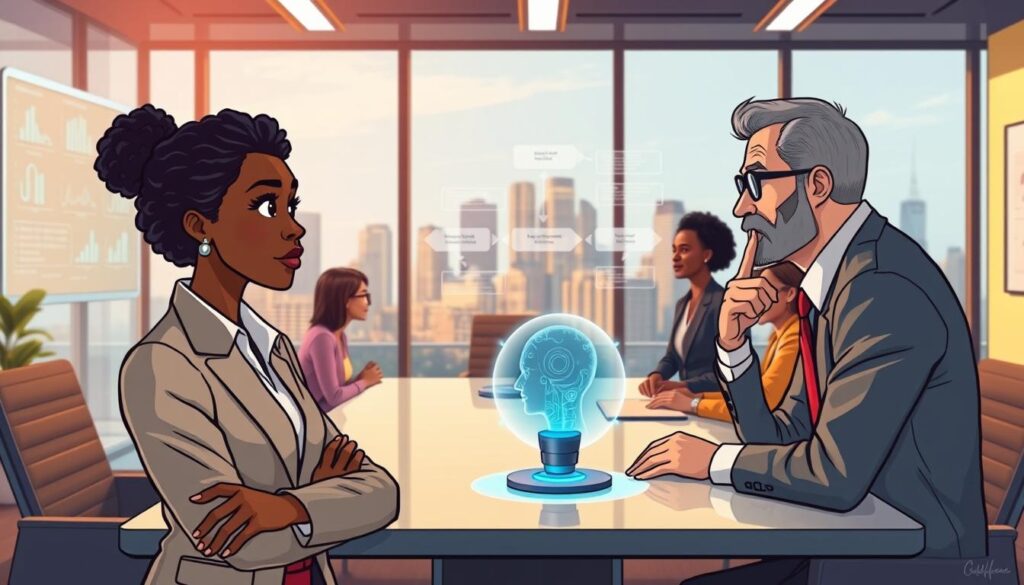
The Necessity of Human Oversight
Automated systems alone have blind spots in your operations. Human oversight is key, catching errors algorithms might miss. It keeps your output accurate and in line with your standards.
Active management lets you adapt quickly to changing data trends. You are the final filter deciding if a machine’s suggestion works for your market. Without you, even top tools can lead to big mistakes.
Navigating Ethical Dilemmas in AI Implementation
Every AI implementation comes with its own set of challenges. You need to think about how automated decisions affect your customers, employees, and community. Making ethical choices is not just about following rules; it builds trust with your stakeholders.
When introducing new tech, look for bias in the data. Early detection helps avoid PR problems. Your foresight in these matters sets you apart as a leader, not just a tech user.
Accountability When Algorithms Fail
Technology is never perfect, and you must be ready for failures. Accountability must remain a human responsibility, even with lots of automation. When an algorithm goes wrong, your team looks to you for the fix and the ethical path forward.
By owning these outcomes, you show you’re a strategic leader. Clear protocols for failure turn crises into chances to grow. Your commitment to your decisions keeps your organization strong in a world of automation.
Conclusion
Your career path is shaped by balancing machine precision with human traits. You have the power to shape your role by mastering empathy and logic. These are skills that software can’t replicate.
The real value of human labor is in making nuanced decisions in complex projects. Companies like Microsoft and Google need people who can interpret data and keep an ethical compass. See your daily tasks as chances to improve these skills.
Staying committed to professional growth keeps your skills up-to-date with technology. Look for training that boosts your creativity and ability to work with others. This way, you stay essential in any team.
Your ability to mix human insight with tech efficiency is your biggest asset. Identify where your judgment makes the biggest difference in your team. By focusing on these strengths, you build a career that grows with AI.