
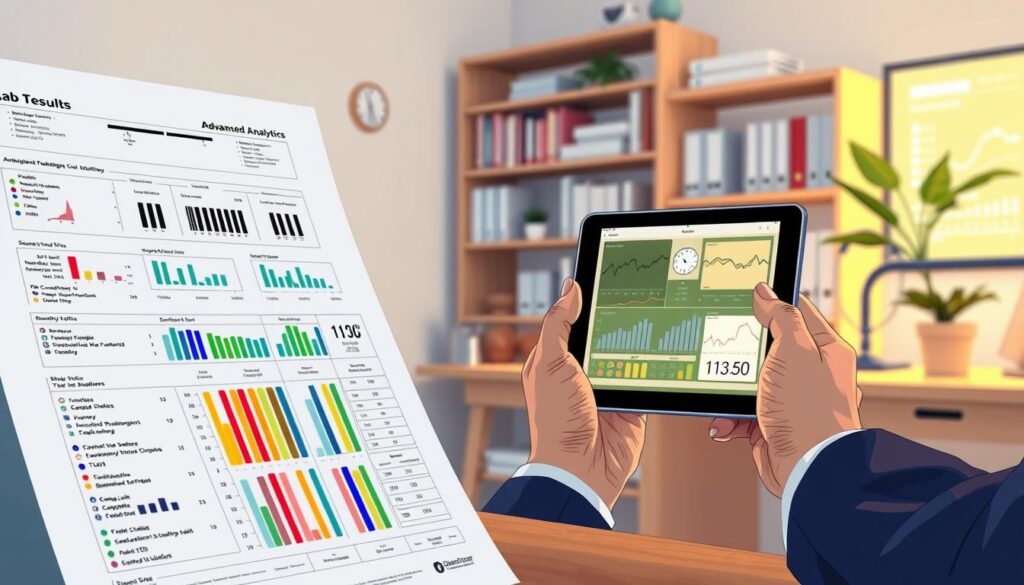
Modern medicine is fast, but patients often wait days for doctor feedback. Many now use digital tools to understand their lab results right away.
This change brings up a fascinating tension between quick access and accurate results. Technology gives fast answers, but it misses the detailed insights a doctor can offer.
Automated tools can help with lab test results, but there are risks. Relying too much on software for health decisions can cause unnecessary worry or a false sense of safety.
We need to figure out if these digital helpers really help or just make things harder. Finding the right mix of human skill and machine speed is key for patients today.
The Current Landscape of AI in Diagnostic Medicine
Federal mandates have changed how you see your medical records. Now, you get test results right away. This opens up a new world of understanding your health. AI in diagnostic medicine is now more than just lab software. It’s at the heart of managing your health.
How Machine Learning Algorithms Process Biomarkers
Machine learning algorithms quickly analyze complex biological data. They look at your blood and genetic markers for patterns. This gives a detailed view of your health.
This tech does more than spot odd numbers. It sees how different biomarkers connect. This way, you get a full picture of your health over time, not just a snapshot.
The Shift Toward Patient-Centered Digital Health Tools
The rise of digital health tools has changed patient care. You don’t have to wait for a call to know your lab results. With patient portals, you can see your data, track your health, and ask smart questions for your next visit.
These tools make you a key player in your care. They use advanced analytics in easy-to-use ways. This helps you understand complex health info and stay involved in your care.
Should AI Read Your Lab Results First?
The digital age has changed how we get our health info. But should we trust software for the first look? When you get your lab test results, you might want answers right away. But going from raw data to useful medical advice is not always easy.

The Case for Immediate AI-Driven Insights
Today’s AI-driven insights make health info more accessible than ever. You can upload reports and get summaries in seconds. Many people use AI chatbots to understand medical terms, making them feel less anxious before seeing a doctor.
These tools are great at spotting trends in your health data over time. They help you see your health metrics and take charge of your wellness. But, speed doesn’t always mean accuracy.
Why Human Oversight Remains the Gold Standard
Even with digital tools, human oversight is key in medical care. A machine can handle numbers, but a doctor’s intuition is unique. Your doctor knows your health history, which is vital for any diagnosis.
Professional medical guidance looks at your results in a complete way. Relying only on software can cause unnecessary worry or false security. A doctor offers empathy and judgment that algorithms can’t match.
The Role of Context in Clinical Interpretation
Good clinical interpretation needs more than just a reference range. Your lifestyle, medications, and family history affect your biomarkers. Without context, a lab value is just a number.
Doctors use their experience to consider all these factors against your symptoms. They know what’s normal for you. This makes the doctor-patient relationship invaluable.
Identifying False Positives and Algorithmic Bias
Be aware of the risks with automated analysis. Algorithmic bias can happen if the data used to train a model doesn’t match your demographic or health. This can give you skewed results.
Also, the chance of false positives is high when software looks at data alone. An AI might flag a result as concerning, even if it’s not clinically important. Always talk to a healthcare professional before making decisions based on automated reports.
Benefits and Risks of Automated Health Analysis
Getting your lab test results quickly can be both good and bad. Automated health analysis gives you a peek into your health. But, it’s important to balance digital ease with accurate medical info.

Speeding Up the Time Between Testing and Treatment
AI-driven insights can quickly sort through complex data. This means no more long waits for a doctor’s call. You can use digital tools to get your questions ready and understand medical terms better.
Being prepared helps you understand your health numbers better. This way, you can talk about your health goals with your doctor early on.
Reducing the Burden on Primary Care Physicians
The healthcare system is often overwhelmed with too many patients. AI chatbots can handle simple questions, freeing up doctors for tougher cases. This makes the clinic run more smoothly.
When doctors spend less time on paperwork, they can give you more personalized care. This is a big win for your health.
The Danger of Misinterpretation Without Medical Guidance
But, relying too much on tech can be risky. Without enough health literacy, you might misread your results or worry too much about your health.
Human oversight is key for a reason. Always see digital reports as a help, not a full replacement for a doctor’s advice. Your doctor can add context that tech can’t, making sure you’re well-informed and not worried for no reason.
Navigating Privacy and Data Security in the Digital Age
The rise of digital health tools has changed how we manage medical records. These tools are convenient but need careful handling of personal info. It’s key to know the security steps before sharing your health data.
Understanding HIPAA Compliance for AI Health Platforms
In the U.S., HIPAA compliance is key for protecting health info. Check if patient portals and apps follow these rules. This ensures your data is safe and private.
Being compliant is more than a legal formality; it’s a critical privacy shield. Always review an app’s privacy policy to see if it meets HIPAA standards. If an app can’t prove its compliance, think twice before sharing your data.
Protecting Your Sensitive Genetic and Metabolic Data
Your sensitive genetic data and metabolic info are very personal and need extra protection. Many fear their data could be used without consent. Make sure your data stays private and isn’t shared for other uses.
Choose platforms that give you data sovereignty, where you own your data. Good services will say your biological data isn’t used for their models. Keeping this info safe is crucial for your privacy and security.
Evaluating the Transparency of AI Decision-Making
The way AI makes decisions about your health should be clear. You should know how an algorithm decides about your lab results. This clarity lets you check the logic behind suggestions.
Look for tools that explain their findings clearly, not just give a score. When AI references medical studies, you can trust it more. Being informed helps you control your health journey.
Conclusion
Modern medicine is at a crossroads, where technology meets personal care. Now, you can track your wellness with advanced digital tools. These tools give you deep insights into your biological data.
Using AI-powered diagnostics can increase early detection by up to 30 percent. These systems connect lab numbers to lifestyle changes. This way, you get a clear view of your health with digital insights and medical advice.
Your role is key in this partnership. You must keep your data private and choose secure platforms. Companies like LabCorp and Quest Diagnostics are improving their digital services to meet these standards.
Being health literate means knowing when to trust algorithms and when to see a doctor. Use these tools to start important conversations with your doctor. This way, you can turn complex data into a plan for a healthier life.
What steps will you take to manage your health data this year? Share your thoughts on balancing technology with traditional care. Your insights can help others navigate the digital health landscape.