
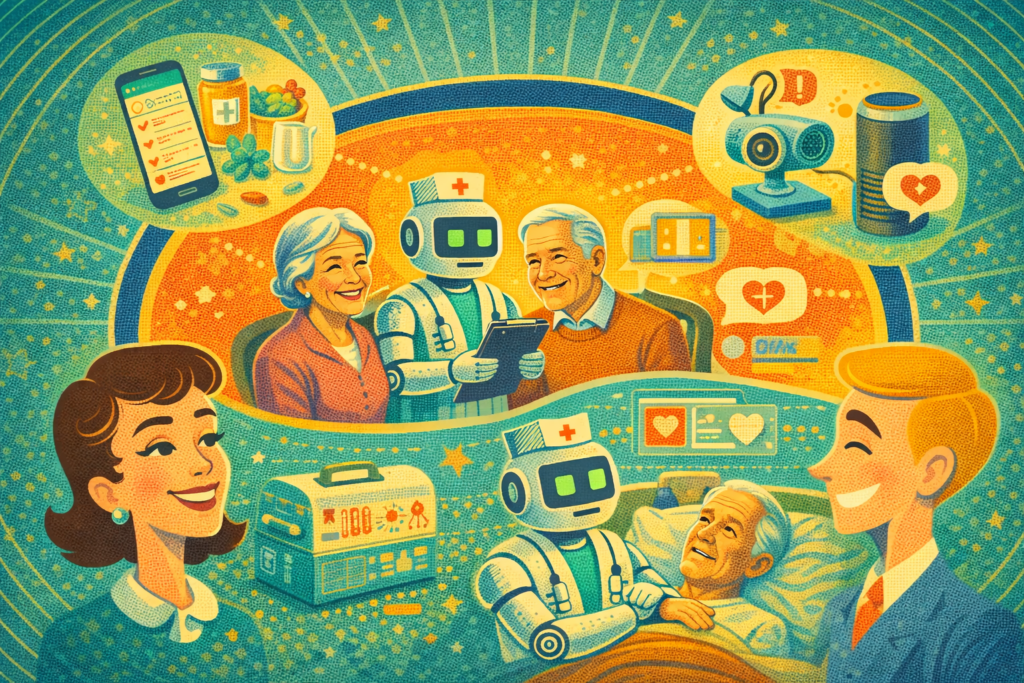
Managing your family’s health needs can be overwhelming. You juggle doctor appointments, medication, and safety all day, every day.
This constant stress can be exhausting without the right help. Finding time for yourself while caring for others is hard.
Now, smart senior health management systems can help. They use automated systems to watch over daily activities even when you’re not there.
These innovative tools send updates in real-time. They keep everyone informed. You get alerts for any sudden changes, so you can react fast.
Using these technologies for aging parents lets you spend quality time instead of dealing with paperwork. You can move from uncertainty to a clear plan for safety.
This article shows how digital assistants and smart sensors bring order to your home. They make medical oversight simpler, so you can relax.
You deserve a solution that works as hard as you do to keep your family safe.
The Reality of Modern Elder Care: Why You’re Overwhelmed
Dealing with elder care can be really tough. It’s not just about taking care of your aging parents. It’s about handling their daily needs and making big health decisions for them.
This job can be very stressful. It affects your relationship with your parents and your own well-being. Many caregivers struggle to keep up with their duties and other life responsibilities.
The Juggling Act: Work, Family, and Caregiving Responsibilities
One big challenge is balancing caregiving with work, family, and personal life. It’s hard to manage everything. This can lead to caregiver burnout, feeling emotionally, mentally, and physically drained.
Some caregivers have to change their work hours or even quit to care for their loved ones. This can hurt their finances and make them feel lost without their job.
Common Caregiving Challenges That Create Daily Chaos
Every day, caregivers face many tasks. These include managing medicines, going to doctor’s appointments, and helping with basic needs like bathing. The emotional side of caregiving, like dealing with memory loss or mood changes, adds to the stress.
Not having enough support makes things worse. Caregivers often feel alone and unsure of where to get help. They deal with issues like:
- Managing medication regimens
- Coordinating medical appointments
- Assisting with daily living activities
- Navigating healthcare systems
The Hidden Costs of Traditional Care Management
Traditional care management has hidden costs. Financially, caregivers might lose income or even their jobs. Emotionally, it can be very taxing, affecting family relationships and leading to burnout.
Also, the lack of efficient care management adds to the stress. It takes a lot of time and effort to coordinate care, handle paperwork, and deal with administrative tasks.
Understanding these challenges shows we need better caregiving solutions. Ones that make life easier for caregivers.
How AI for Aging Parents Delivers Less Chaos and Better Care
AI makes caregiving easier and more effective. It improves life for you and your parents. With AI solutions for elderly care, elder care challenges are easier to handle.
What AI Actually Means for Elder Care in Practice
AI for aging parents uses advanced algorithms and machine learning. It helps monitor and support the elderly. For example, AI can analyze data to predict and prevent health problems.
AI-driven algorithms can create smarter matches between caregivers and clients. This reduces turnover and improves care quality. It also gives families peace of mind.
Four Ways AI Reduces Your Daily Caregiving Burden
1. Personalized Care Plans: AI creates care plans that fit your parents’ needs and preferences.
2. Automated Reminders: AI sends reminders for medication, appointments, and tasks. This helps avoid missed events.
3. Real-time Monitoring: AI devices let you track your parent’s safety and well-being. You can respond quickly to emergencies.
4. Streamlined Communication: AI improves communication between caregivers, family, and healthcare. Everyone stays informed.
Measurable Improvements in Your Parent’s Quality of Life
AI in elder care greatly improves your parents’ quality of life. It provides accurate and timely care. This prevents health issues and boosts overall well-being.
AI companions also offer companionship and mental stimulation. They help with loneliness and cognitive decline. This approach ensures your parents get the support they need to thrive.
Practical AI Solutions You Can Start Using Today
You can start using AI to improve your aging parents’ care today. There are many tools available now. They make caregiving easier and ensure your parents get the best care.
Medication Management Systems That Actually Work
Keeping your aging parents’ medication schedule on track is key. AI-powered systems help manage their meds. This ensures they take the right doses at the right time.
Hero Automatic Pill Dispenser with Family Notifications
The Hero Automatic Pill Dispenser makes managing medication easy. It sends alerts to family if a dose is missed. This adds safety and peace of mind.
Amazon Alexa Medication Reminders and Tracking
Amazon Alexa can remind your parents to take their meds. It also tracks if they’re taking them. Alexa makes managing their medication easier.
Fall Detection and Safety Monitoring Technology
Falls are a big risk for aging parents. Quick detection and response are critical. AI-powered systems provide peace of mind and help when needed.
Apple Watch Fall Detection with Emergency SOS
The Apple Watch has a fall detection system. It can send an SOS if your parent falls and you’re not there.
Vayyar Care Touchless Room Sensor System
Vayyar Care offers a system that monitors movements. It detects falls without invading privacy. It’s a great way to ensure safety.
AI Companions for Daily Engagement and Mental Wellness
AI companions are great for your parents’ mental health. They provide companionship and activities.
ElliQ Social Robot for Conversation and Activity Prompts
ElliQ is a social robot. It talks to your parents and suggests activities. It’s a friendly way to combat loneliness.
Google Nest Hub for Video Calls and Routine Management
Google Nest Hub makes video calls easy. It also helps manage daily routines. It keeps your parents connected and organized.
Centralized Care Coordination Platforms
Centralized platforms help manage your parents’ care. They bring all the necessary tools and information together.
CarePredict Wearable System for Activity Monitoring
The CarePredict Wearable System tracks daily activities. It detects changes that might indicate health issues. It gives insights for better caregiving decisions.
Your Step-by-Step Guide to Getting Started with AI Care Tools
Caregivers can change their caregiving by using AI care tools. But, where do they start? First, they need to know the different technologies out there. Then, they must pick the ones that fit their parent’s needs best.
Evaluating Which Technologies Match Your Parent’s Needs
To evaluate caregiving technology well, think about what your parent needs. Do they need help with taking medicine, falling, or just someone to talk to? Look at their daily struggles and see where AI can help the most.
If your parent has dementia, an AI friend could help keep them engaged. For those with mobility problems, a fall detector is key.
Setting Up AI Devices Without Technical Headaches
Setting up AI devices might look hard, but many are easy to use. Look for devices with simple setup and good customer support.
Having a tech-savvy family member or friend help can make things easier.
Teaching Your Parents to Trust and Use New Technology
Introducing new tech to your parents needs patience and care. Show them how the device works and its benefits. Be there to help them when they first try it.
Getting them to use it often will help them feel more confident and trust it more.
Connecting AI Tools with Doctors and Care Professionals
Integrating AI with healthcare professionals is key for full care. Many AI tools let you share data with doctors, helping them make better choices.
To link AI tools with your parent’s doctors, choose ones that work with their healthcare systems. Then, follow the steps to share data.
Addressing Privacy Concerns and Maintaining Your Parent’s Dignity
When looking into AI for your aging parents, privacy and dignity are key concerns. It’s important to keep their personal info safe with new tech.
Protecting personal health information is a top priority. You must know how AI handles sensitive data. Look for AI tools that follow HIPAA rules to keep health info safe.
How to Secure Personal Health Information in AI Systems
To keep health info safe, first understand the data storage and transmission protocols of the AI system. Make sure data is encrypted both in transit and at rest. Also, keep the system’s software up to date to avoid security issues.
It’s also key to control who can access the AI system and the data it collects. Use robust user authentication and only give access when it’s needed.
Setting Boundaries Between Helpful Monitoring and Intrusion
Monitoring is vital for caregiving, but being too intrusive is not. Set clear boundaries on what info is collected and how it’s used. For example, you might choose not to monitor certain areas of the home.
Talk to your parent about these boundaries to keep them comfortable with monitoring. This keeps trust and dignity intact.
When AI Should Assist Versus When Human Intervention Is Essential
AI is great for routine tasks and data insights. But, human intervention is indispensable in some cases. For instance, AI can track vital signs, but humans are needed to understand these signs and make decisions.
Know when AI can help and when humans are needed. Humans offer emotional support and empathy, which are vital for well-being.
By balancing AI help and human care, you can give your parent the best care. This care respects their dignity and privacy.
Conclusion
When caring for aging parents, AI is changing the game. It makes managing daily care easier and less chaotic. AI caregiving solutions are a big help.
AI in elder care is not just a dream for the future. It’s here now, making life better for many families. It helps with things like managing medicine and keeping seniors engaged.
Looking ahead, AI will be even more important in elder care. By using these new technologies, you can give your parents the care they need. This way, they can stay independent and keep their dignity.