
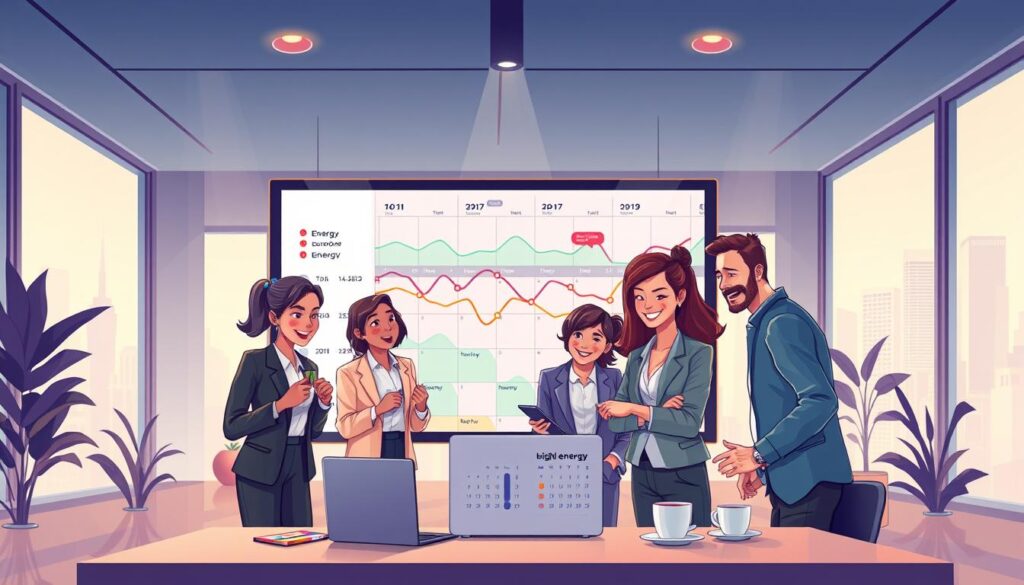
Feeling drained and exhausted from work? You’re not alone. Burnout is a big problem in today’s work world. It makes many employees feel tired and less productive.
Using AI scheduling can help fight burnout. It focuses on managing your energy, not just your work. This way, you can keep a good balance between work and life. You’ll also do your tasks better, leading to more productivity.
Learn how to make an effective anti-burnout calendar that focuses on your energy.
The Burnout Epidemic in Modern Work Culture
The modern workplace is facing a burnout crisis. Work demands are rising, causing stress, exhaustion, and lower productivity.
Statistics on Workplace Burnout in America
Recent studies show burnout statistics in the American workforce are alarming. Many employees feel mentally and physically drained from work stress.
The Hidden Costs of Chronic Exhaustion
Chronic exhaustion is more than just tiredness. It harms employee wellbeing, leading to less job satisfaction and higher turnover. The costs of burnout are huge, affecting both people and companies.
Why Traditional Productivity Systems Fail
Traditional productivity systems focus too much on getting tasks done. They ignore employee wellbeing, making burnout worse. These systems don’t consider individual energy levels or peak hours, causing inefficient work.
Understanding burnout’s causes and its impact helps us find better ways to fight it.
The Anti-Burnout Calendar: AI Scheduling for Energy, Not Just Productivity
A new way to manage calendars is emerging to fight burnout. It focuses on energy, not just getting things done. This energy-first approach changes how we plan our days, putting our well-being first.
This anti-burnout calendar idea is all about managing energy as much as time. With AI calendar management, people can make schedules that boost productivity and energy.
Defining the Energy-First Approach to Time Management
This new time management method focuses on matching tasks with our natural energy levels. It’s about finding our peak energy times and doing important tasks then.
How AI Transforms Calendar Management
AI is making calendar management more personal and flexible. It uses energy-based scheduling to plan tasks based on when we have the most energy.
The Science Behind Energy-Based Scheduling
This method is based on understanding our energy patterns and how they affect our work. Tools like LifeAt use science to improve focus and sleep, showing tech’s role in managing energy.
By using AI in calendar management, we can create better work routines. These routines support our well-being, not just our productivity.
Understanding Your Personal Energy Rhythms
To make the most of your day, you need to know your energy patterns. This means figuring out when you’re most awake, when you feel tired, and how to use these patterns to be more productive and happy.
Identifying Your Peak Performance Windows
Peak performance windows are when you’re most focused and productive. Studies show that doing tasks when you’re naturally most alert can really help. For example, if you’re a morning person, do important tasks then for the best results.
Recognizing Energy Drains vs. Energy Gains
It’s key to know what drains your energy and what boosts it. Energy drains might be long meetings or tasks that need constant focus without breaks. Energy gains could be short walks, meditation, or hobbies. Knowing this helps you avoid drains and enjoy more gains in your day.
Tracking Your Energy Patterns Over Time
Tracking your energy means watching your levels over a few days or weeks to spot patterns. You can use a journal, app, or spreadsheet to track your energy at different times. This helps you understand your natural energy cycles and plan your day better.
By understanding and working with your energy rhythms, you can make a schedule that boosts your productivity and happiness.
Top AI Calendar Tools for Energy Management
Looking to boost your energy? Many AI calendar tools can help you manage your time better. They focus on energy management more than just being productive.
Microsoft Copilot and Google Gemini Calendar Integration
Microsoft Copilot and Google Gemini are leading AI tools for calendars. They help manage your energy. Microsoft Copilot helps plan tasks and meetings. Google Gemini does the same for Google Calendar.
These tools help you optimize your daily schedule based on your energy levels.
Specialized Energy-Tracking Applications
Apps like LifeAt mix task management with focus ambiance. They help you stay focused. These specialized energy-tracking applications track your energy and offer tips to boost productivity.
By understanding your energy patterns, you can plan your day better.
Wearable Technology Integration Options
Wearable tech can connect with AI calendar tools for real-time energy feedback. This lets you manage your energy more accurately. It tracks your physical and mental state all day.
Using wearable tech, you can enhance your energy management skills.
In summary, AI calendar tools have many features for energy management. They help with scheduling and tracking energy. By using these tools, you can make your daily routine more balanced and productive.
Building Your Energy-Optimized Daily Schedule
Your daily schedule can be a powerful tool for managing energy, not just time. By structuring your day with an energy-first approach, you can significantly enhance your productivity and overall wellbeing.
Task Categorization by Energy Requirements
The first step in creating an energy-optimized schedule is to categorize your tasks based on their energy requirements. High-energy tasks demand your peak focus and concentration, while low-energy tasks can be performed with less mental effort. By distinguishing between these task types, you can allocate them more effectively throughout your day.
Strategic Placement of High-Focus Activities
Once you’ve categorized your tasks, it’s important to place high-focus activities during your peak energy windows. For many people, this means scheduling critical tasks in the late morning or early afternoon. Batching similar tasks together, like checking emails or making phone calls, can also help optimize your energy.
Incorporating Deliberate Recovery Periods
Recovery is just as important as work when it comes to maintaining energy levels. Incorporating deliberate recovery periods into your schedule can help prevent burnout and maintain productivity.
Micro-breaks vs. Full Recharge Sessions
Micro-breaks of 5-10 minutes can be interspersed throughout your day to refresh your mind. In contrast, full recharge sessions of 30 minutes or more allow for deeper relaxation and rejuvenation. Using techniques like noise-canceling headphones during work sessions can enhance focus, while short walks outside can serve as effective micro-breaks.
Nature-Based Recovery Techniques
Incorporating nature into your recovery periods can be very beneficial. Simple actions like taking a short walk outside or having a few plants on your desk can help reduce stress and boost energy levels.
How AI Adapts Your Schedule in Real-Time
Imagine having a personal assistant that changes your schedule as you go. This is now possible with AI-driven calendar management. AI scheduling technology changes how you manage time. It makes real-time adaptations based on your energy and work patterns.
Your AI-powered calendar watches your day and adjusts your schedule. This keeps you working with your energy, not against it.
Dynamic Rescheduling Based on Energy Feedback
AI scheduling can change your tasks based on your energy feedback. It looks at your work patterns and energy to move tasks to when you’re most productive. This makes you more efficient and prevents burnout.
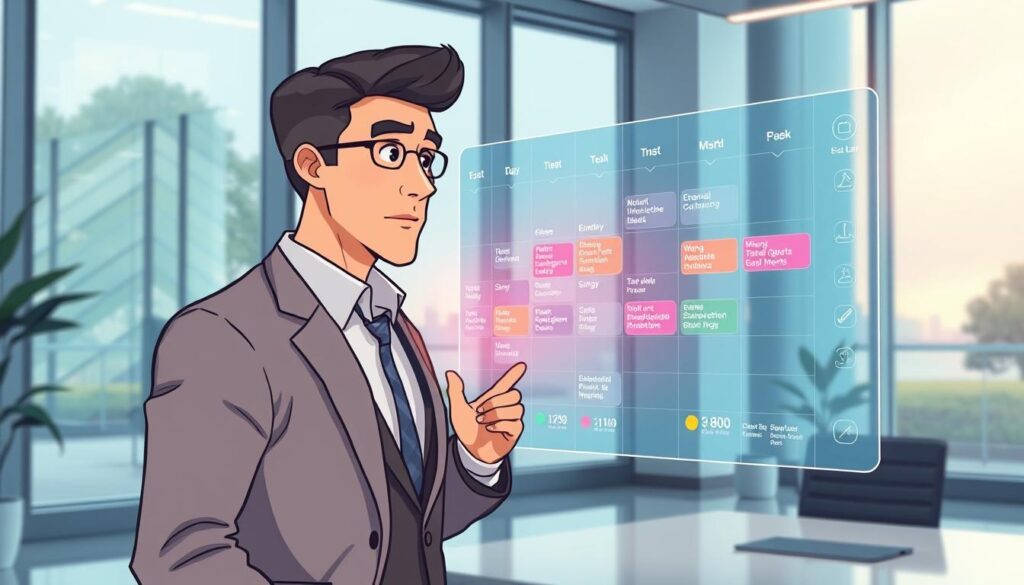
Intelligent Meeting Scheduling and Buffer Creation
AI scheduling is great at intelligent meeting scheduling. It finds the best times for meetings and suggests breaks between them. This stops meetings from running one after another, which can exhaust you.
Protecting Deep Work Sessions from Interruptions
AI also protects your deep work sessions from distractions. It blocks out time for focus and reduces interruptions. This is key in today’s work world, where focus is essential for complex tasks.
With AI scheduling, you can have a workday that fits your needs in real-time. It makes your day more balanced and productive.
Integrating Physical Wellbeing into Your Calendar
Your calendar can do more than help you stay organized. It can also boost your physical wellbeing. With AI, you can add physical activity, nutrition, and sleep to your daily plan.
AI-Scheduled Movement Reminders
Sitting too long is bad for your health. AI calendars now remind you to move with movement reminders. LifeAt helps you stay active and focused by adding movement to your day.
Nutrition Timing for Optimal Energy
When you eat affects your energy. AI looks at your schedule to suggest the best times for meals. This way, you’re ready for work and rest.
Sleep Optimization Through Schedule Analysis
Sleep optimization is key for feeling good. AI calendars check your schedule to find sleep patterns. This helps you sleep better and wake up feeling great.
Adding these features to your calendar helps you take care of your physical wellbeing. This leads to better health and more productivity.
Overcoming Implementation Challenges
Starting an energy-focused calendar system can face several hurdles. Knowing these challenges is key to making it a part of your daily life.
Dealing with Organizational Resistance
Resistance from your team or colleagues is a common challenge. This might come from not knowing the system or worries about how it affects work. To overcome this, explain the benefits of using an energy-based calendar. This includes better health and possibly more productivity over time.
Managing Calendar Conflicts with Colleagues
Dealing with calendar conflicts is another hurdle, mainly when others don’t use the same system. Being flexible is important. Be ready to find solutions that everyone can agree on.
Gradual Implementation Strategies
Start by slowly adding the new system to your daily life. Then, expand it to other areas or your team. This gradual approach helps reduce pushback and makes the transition smoother.
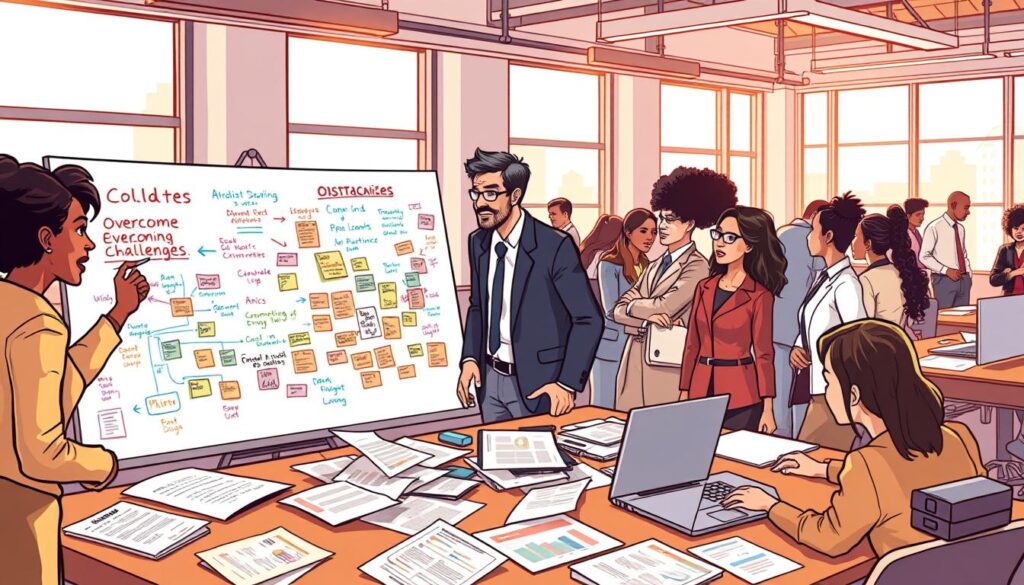
By tackling these challenges directly, you can smoothly switch to an energy-focused calendar system. This way, you can enjoy its benefits without too much disruption.
Managing Cognitive Load with Smart Scheduling
Smart scheduling can greatly lower cognitive load. This leads to better work quality and less stress. By planning your day well, you can use your mental energy more wisely.
Context Batching for Reduced Mental Switching
Context batching means doing similar tasks together. This method keeps you focused on one thing. It cuts down on the mental effort of switching between tasks.
Decision Fatigue Prevention Strategies
Decision fatigue happens when you make too many choices quickly. It drains your mental energy. To avoid this, automate simple decisions or limit how often you make choices.
Cognitive Recovery Techniques
It’s key to recover your mental energy to stay productive. Take breaks, practice mindfulness, and relax. These activities help you recharge and lower cognitive load.
Using these smart scheduling tips daily can help you manage your mental load. This improves your work performance.
Measuring Success: Beyond Productivity Metrics
When you start using AI for energy management, you need to rethink what success means. Traditional ways of measuring success don’t fully capture the impact of energy-based scheduling.
Energy Sustainability vs. Task Completion
Changing from task completion to energy sustainability is a big shift. Energy sustainability is about keeping your energy levels up over time, not just finishing tasks. It shows that steady energy is essential for lasting productivity and wellbeing.
Qualitative Wellbeing Indicators
Qualitative wellbeing indicators give a deeper look at your success. They include improved mood, less stress, and better satisfaction with your work-life balance. Tools like LifeAt help track these, giving you a clearer view of your wellbeing.
Long-term Career Sustainability Metrics
Long-term career sustainability metrics look at your career’s long-term health. They include career longevity, professional growth, and adapting to work demands. Focusing on these helps make sure your energy management supports your career goals.
Conclusion: Your Personalized Path to Sustainable Performance
You now have the tools to change your work life. By matching tasks with your natural energy, you can achieve sustainable performance. AI scheduling helps you plan your day to use your energy wisely, not just to be busy.
AI scheduling, combined with energy management, lets you create a system that works for you. It helps you focus on what matters most during your best times. This way, you work smarter, not harder.
Choosing to focus on energy first can improve your work-life balance. It also lowers the chance of burnout and boosts your overall health. As you follow this path, you’ll see better results in both your work and personal life.