For a small delivery business or bike-sharing operator, a maintenance dashboard is useful when it helps staff notice a problem and arrange the right service. It is not proof that a bike is safe to ride. AI can organize reports and support maintenance planning, but inspection, battery safety, and repair decisions remain essential.
Start with the records and responsibilities you already have. A dependable process for reporting a fault and taking a bike out of service can be more valuable than a prediction that nobody acts on.
A reminder, a diagnostic message, and a prediction differ
A scheduled reminder says a service date or mileage threshold has been reached. A diagnostic message reports a condition detected by the bike’s supported system. Predictive maintenance attempts to estimate a future maintenance need from patterns in available data. Do not assume that a service marketed as predictive performs all three.
Ask which bike models and components it supports, what data it receives, and which faults it can reasonably flag. A system cannot directly assess brake wear if it has no suitable measurement or inspection input. A battery display also does not establish the condition of the entire bicycle.
For an operator with limited records, AI may be most useful for categorizing repair notes, finding repeated complaints, or preparing a service summary. Those tasks can improve organization without claiming that every failure is predictable.
Make each bike’s history usable
Give every bike and interchangeable battery a clear identifier. Keep the manufacturer’s model information and manuals linked to the right equipment. Record service dates, work performed, reported symptoms, relevant error messages, and who authorized a return to use.
Distinguish rider observations from a technician’s confirmed findings. “Assistance stopped during a trip” describes an event; it does not identify the failed component. Preserve the original report so an AI summary cannot quietly turn uncertainty into a diagnosis.
Also record when a reading is missing. A lack of data must not become a green “healthy” status. When equipment changes, make sure the history follows the correct bike or battery instead of being merged with another unit.
Use an alert to arrange a check
In a fictional example, several reports show that one bike’s usable range has fallen. An AI summary could assemble the dates, routes, loads, weather notes, and service history for a technician. It should not conclude that the battery needs replacing from range alone.
Agree who reviews each type of alert and which reports require immediate removal from service. For a reported brake, steering, electrical, or battery concern, follow the manufacturer’s safety instructions and obtain appropriate professional assessment. Do not send someone out on a bike because software rates the overall fleet as low risk.
Trek’s electric-bike maintenance information directs owners to a qualified bike shop with mechanics who understand the relevant drive system. Apply that principle to the actual make and model in your fleet; expertise with one system does not establish compatibility with every other one.
Keep battery safety separate from availability targets
The U.S. Consumer Product Safety Commission’s micromobility guidance calls for manufacturer instructions, pre-ride damage checks, and the correct charger and replacement battery. It advises being present while charging and warns against packs modified by unqualified people or containing repurposed cells.
Build charging and storage procedures around the manufacturer’s instructions and applicable site requirements. Do not use AI-generated directions to open battery packs, bypass protection systems, improvise chargers, or authorize continued use of damaged equipment. Follow official recall or safety-warning instructions when they apply.
Qualified staff should also handle consequential mechanical and electrical work. A chatbot can help format a service request; it cannot inspect a brake, confirm correct assembly, or approve a battery for service.
Evaluate the service before expanding it
Trial recommendations alongside the existing maintenance process on a manageable part of the fleet. Keep required servicing and inspections in place. Compare predicted needs with technicians’ findings, including false alarms and problems the system missed.
- Did an alert arrive early enough to schedule useful work?
- How often did staff need to correct the bike, component, or fault named?
- Did the process reduce unplanned downtime without deferring necessary repairs?
- What did software, data collection, training, and extra inspections cost?
- Can you export the history and continue operating if the service stops?
Use only the rider information needed for maintenance and restrict access to location or employment records. Explain how records will be used. Continue when the pilot demonstrates useful decisions and manageable costs, not because a supplier promises a fixed percentage saving or an accident-free fleet.
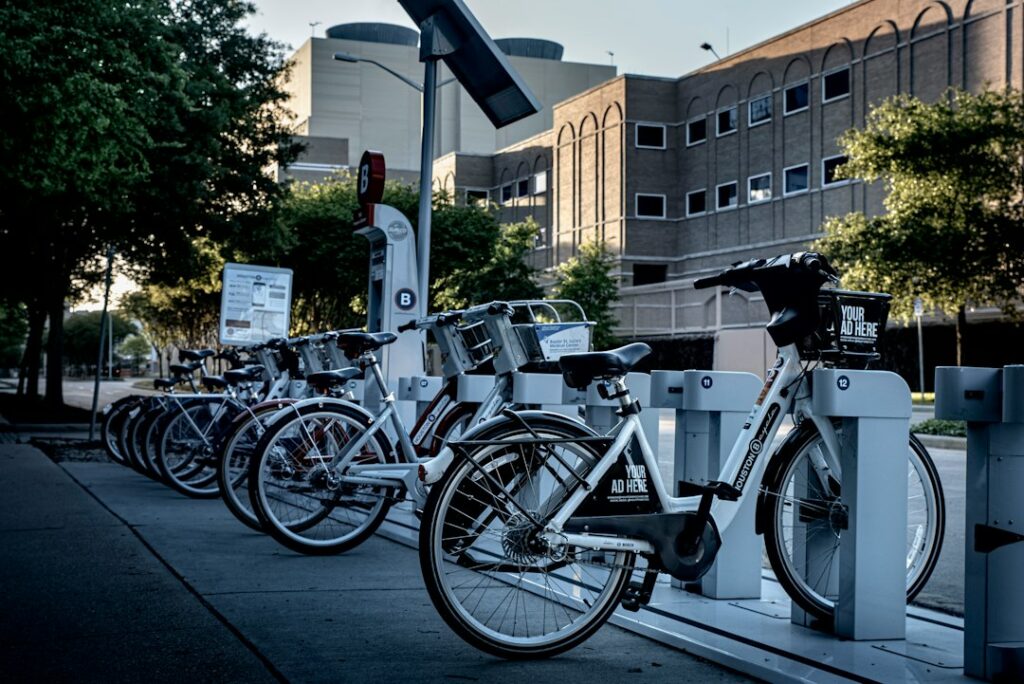
Featured photograph: Trac Vu via Unsplash. Illustrative bicycle fleet, not a tested AI-maintenance installation.
Updated September 26, 2026. This AI-assisted article draws on the linked sources. Hypothetical examples are labeled as illustrative. It is for general information; see our disclaimer.


